
Graduate of SDSU’s TESL/TEFL Program Shares Adventure of Teaching English in South Korea

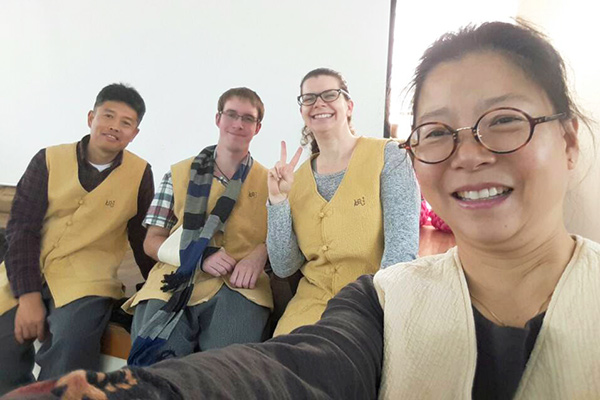
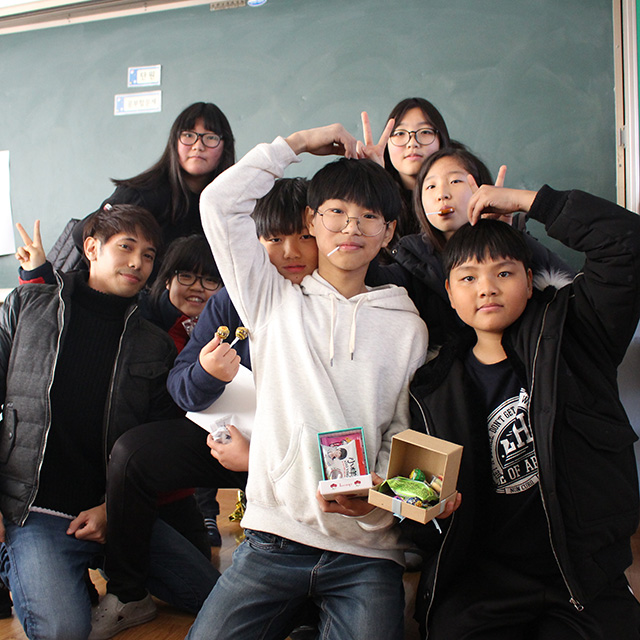
Andrew Toledo with Students
Andrew Toledo (bottom left) with his Advanced After-school English Club, in mid-Secret Santa gift-exchange.

Andrew Toledo had always wanted to teach abroad, so after he graduated from San Diego State University with a degree in psychology, he did a Google search and found that his alma mater had the very thing he was looking for — a TESL/TEFL Certificate program, through the American Language Institute.

Because he had a part-time job at the time, Toledo chose the 11-week nighttime program to complete the 130-hour certificate. (There’s also an accelerated daytime option of four weeks of intensive study.) Then he took advantage of the program’s free worldwide job placement assistance.

“It was great,” said Toledo. “I was able to get a job in South Korea on my first try. This could also be due to my facilitating experience with the Intensive English Program at the ALI, boosting my résumé and chance of getting hired.” He answered a few questions about the program, and his experience teaching English abroad.
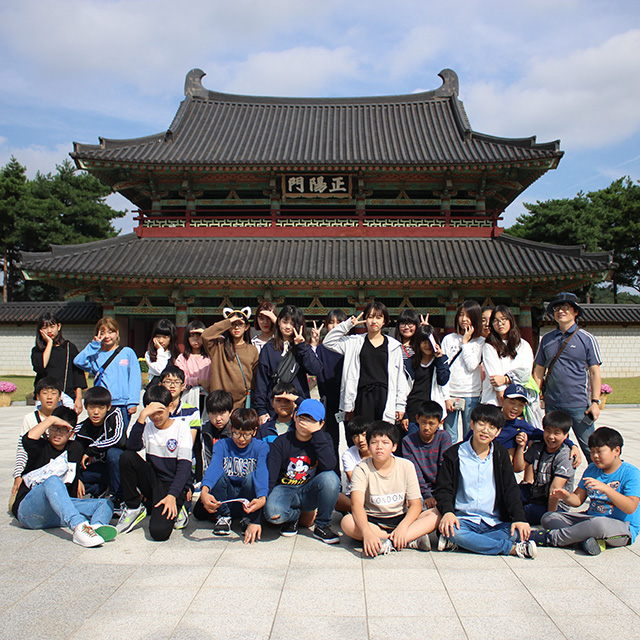
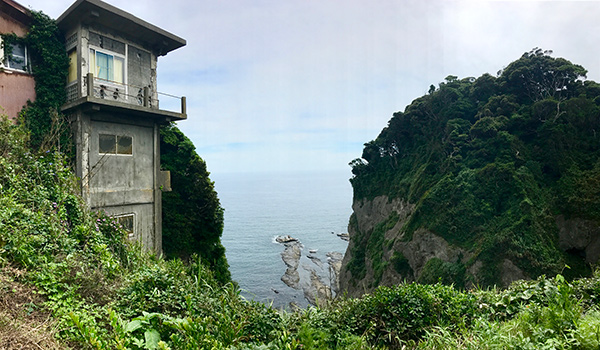
Gyeongbokgung Royal Palace
Andrew Toledo’s 6th grade students in from of the Gyeongbokgung Royal Palace in Jongno-gu, near the Seoul main district.

What made you choose South Korea?
I chose it because I somewhat studied the language independently and have several South Korean-American friends. I felt pretty comfortable with the culture and already enjoyed the food, so it was an easy choice. At first I wanted to try Taiwan, but it was quite difficult for an Asian-American to find a job there.

Why is it difficult for an Asian-American to find a job in Taiwan?
Lots of private English schools in Taiwan are still a business, so they require that “White American” look in order to sell their services to parents. I would look great on paper, however due to many CVs and resumes requiring a photo of yourself in Asia, I was turned down quite a bit. I even used my connections in Taiwan where my friend’s mother was able to ALMOST get me a job. They were in the process of hiring me, but once they saw that I wasn’t White (not fitting the American stereotype), I was quickly ghosted.

Where did you live in South Korea?
I lived in Geoje-Do, the second largest island in South Korea, just south of Busan. The island isn’t necessarily isolated from the mainland and is connected by a large bridge named Goga Daegyo. It’s an industrial island famous for its shipyards. My village (Hacheong-Myeon) was small, consisting of elders and Daewoo ship workers. It’s an old traditional farming village reminiscent of Korea in the 1980s. I invited some of my Korean friends from Seoul to my village, and they were amazed and said it looked like a movie set! Although it was quite rural, I enjoyed every single day and did not necessarily feel lonely at all. It was refreshing to see kids playing outside, elders taking walks, people using the bus system constantly, all while being surrounded by nature. It was a great mixture of nature and social life. Keep in mind it’s a village, so stores and restaurants don’t stay open very late. That being said, all I had to do was hop on a bus and head to the downtown area, which was only 15 minutes away, if I felt like having a nightlife. If I wanted to go to Busan (second largest city in Korea), I could just hop on a bus and be there in about 1 hour. By the way, buses are always on time. It’s great!

What did a typical day look like?
I would wake up at 6:30 am to have breakfast in my apartment and walk a whopping 1/4 mile to work, which started at 8:30 am. I liked waking up early because I don’t like rushing to get myself ready. I worked at three schools in three different villages. Because I built such a strong relationship with my co-workers, I was offered rides to work and didn’t need to rely on the bus for my morning commutes. My students were all elementary students with very little English skills and pure hearts. I have heard great things about rural children compared to those who live in the city, and I believe it. Although students were a little hyper and rowdy, they were interested in learning, usually respectful, and enjoyed interacting with me (both in and out of the classroom). I still wonder about them today and hope they are getting a quality education.

Were there TESL/TEFL instructors from other countries at your school?
Nope, I was the only foreigner at my school. In fact, the whole village only had two foreigners in total! It was a challenge, but my Korean language skills definitely improved and I made several South Korean friends that I still keep in touch with today.

Jinju Light Festival
The annual Jinju light festival.

Do you have anecdotes to share: small world occurrences, unexpected humor, places you explored?
Two years in Korea, so I have sooooo many! I’ll only report about two briefly.
1) I was there for the impeachment of Park-Geun-Hye. [Editor’s note: The 11th president of South Korea, 2013–2017, and the first woman.] It was actually illegal for me to be near protests, but you can’t stop the protest from coming to you. I was on the bus heading to Seoul when some protesting farmers decided to walk their cows on the freeway as a form of demonstration. It was interesting and I couldn’t avoid it, but it did hold up traffic and I reeeally needed to use the bathroom.

2) My first instance of homesickness was somewhere in my first two months of South Korea. My co-workers wanted to play volleyball (we played every week), but I wasn’t emotionally willing on this particular day. I had feelings of loneliness, missing home, and culturally isolated. My co-workers went outside without me and I could hear them having fun, but I stayed in my office to work on lessons to keep my mind busy. All of a sudden, I heard my name being yelled from outside. My windows were closed, so the voices were faint. I opened the window and saw my school yelling for me to come out and play. It was heart-touching and I couldn’t say no after seeing that! So I ran out and joined them for volleyball. I ended up losing because I’m terrible at volleyball, but it was worth it!

How was the food?
I love Korean food! I loved it here in San Diego, and I liked it even better in Korea! The meat was so fresh and had a distinct quality that only South Korea has. It is probably impossible to replicate here due to the way our food is processed in the U.S. My new favorite dish is a pork soup called Dwaeji-Gukbap.
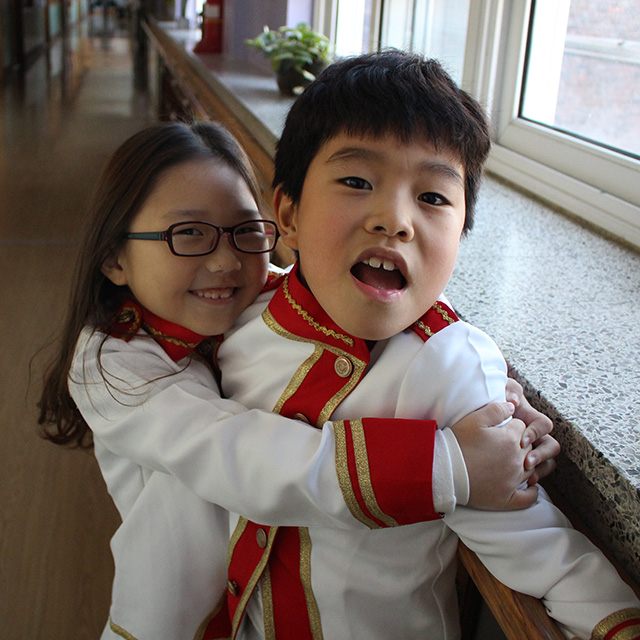
First-grade students
First-grade students in their music festival uniforms.

Tell us about some of the friendships you made.
So many! My co-workers, previous students I facilitated at the ALI, friends of friends, my boss from my part-time job in the U.S. and her friends, the random people I met in the cities and villages. I was quite social and enjoyed the amount of people I met. More importantly, I valued the few friends who I built strong relationships with. I still contact them to this day and we talk about visiting each other again almost every month.

What do you think are the biggest strengths of the ALI’s TESL/TEFL Certificate program?
The activities and how they support their graduates through facilitation opportunities. I have a notebook of all the different games and activities that I learned through the ALI.

What are you doing now?
I’m pursuing my M.A. in International Education at SIT Graduate Institute in Vermont. I hope to work with International students coming into the U.S., preferably at the ISS (International Student Services) center at a university. I’m in my practicum phase at the moment and will be doing a 6–9 month internship at Colby-Sawyer College in New Hampshire.

Anything you’d like to add?
Two things!
1) Reverse culture-shock is real. One way I have been battling it is through food. I learned how to cook several South Korean dishes, so I like to bring those to parties and potlucks. It’s a great way for me to re-visit my experience and show others about my experiences without feeling pretentious. Let’s put it this way, I spent two years in Korea and when someone asks “What was it like?” they’re mostly saying “tell me in less than 5 minutes.” There is no way I can do that justice, and a majority of my story and experiences cannot be told without them losing interest. The only people who understand this feeling are those who have worked/studied abroad as well. Food is a great bridge to connect others to your experiences.

2) For anyone else thinking of working in South Korea, it’s not always easy. There are social norms you must respect, many South Koreans are quite shy, and socializing takes a bit of effort. Just remember, you are a guest in a new country, and sometimes guests are scary! There will be rocky times, and times where it is smooth sailing. With effort, a good heart, and a strong will to stand back up and try again, your journey will have more positive moments than negative ones.
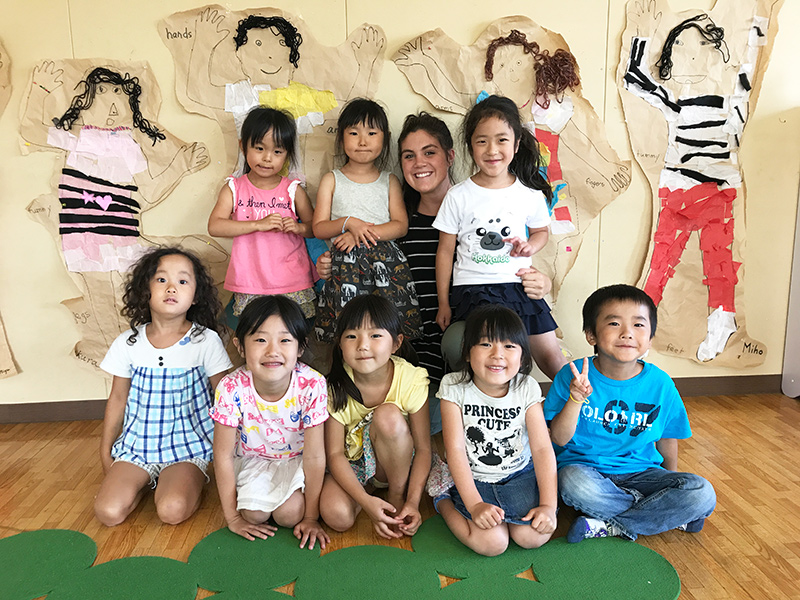

Teaching English Abroad Addresses Trifecta of Interests for Graduate of SDSU’s TESL/TEFL Program

Chandler Marshall with some of her students.

In preparation for a study abroad program in her senior year at San Diego State University, Chandler Marshall made a few visits to SDSU Global Campus, through which the program is administered. It’s there that she saw an American Language Institute flyer for Teaching English as a Second Language, which spoke to all her interests — her lifelong desire to teach, and her passion for travel and experiencing other cultures.

“I went home and did some online research,” said Marshall. “Soon after, I went and spoke with my counselor to get an overview of the program. She gave me a lot of information and contact to the ALI assistant director of teacher training.”

Shortly after graduating with a B.A. in social science, Marshall enrolled in the TESL/TEFL certificate program, choosing the accelerated daytime schedule — four weeks of intensive study. “It was so fun and informational that the time actually went by very fast,” said Marshall. The 130-hour certificate program also has the option of 11 weeks of nighttime courses.

“This program is one-of-a-kind and one of the best decisions I could have made after graduating from SDSU,” said Marshall. She answered a few questions about the program, and her experience teaching English in Japan.

Kindergarten 1 class.

How did the TESL/TEFL program’s free worldwide job placement assistance work?
The worldwide job placement assistance is one of the best benefits of the TESL program through the ALI. I never expected to get so much help and support from a program as I did from the TESL/TEFL certificate program coordinator, the program director, and the rest of the professors. The team does an amazing job of being available to help and guide you in the direction that is best suitable for you. Throughout the program, the instructors give you a ton of information on locations, cultural differences, salaries, and all else you would need to know prior to living and teaching abroad.

After graduation, the directors and professors from the ALI are so helpful and supportive. I went into the office many times to meet with the program coordinator and he would have brochures, and contact information for jobs in the location I was interested in. Since I wanted to work in Japan, and the program coordinator actually lived in Japan for many years, he had many recommendations. Not only that, but he would constantly check in to see how the job hunting was going and to offer more ideas. On top of that, they are able to write letters of recommendation when I was applying to jobs. They continue to frequently send other job offerings and information on events that are good to attend for future work.

Snowy day fun in Japan!

How soon after completing the program were you teaching English abroad?
I completed the program in August 2016, and I moved to Japan in June 2017. I wanted to stay in San Diego for around a year after completing and take my time in the job hunt.

What made you choose the country you chose?
The main reason I wanted to live in Japan was I wanted to experience an extreme culture difference. Japan is an amazing country in so many aspects. The level of respect that the Japanese people have toward one another as

well as their country was very interesting and exciting to me. I knew from the start I wanted to teach in Asia. After doing the TESL program, it was solidified that I wanted to work in Japan. I met many incredible students from all over the world, but I really admired my Japanese students and all that they had to say about Japan as a whole.

Utsunomiya, Tochigi, where Chandler Marshall lived while teaching abroad.

Where did you live?
I lived in the Tochigi Prefecture. The city I lived in was Utsunomiya, which is the capital of Tochigi. It’s a short 50-minute Shinkansen (bullet train) ride to Tokyo.

What did a typical day look like?
I worked for a private school where the program coordinator was good friends with the owner/boss. Two times a week I would have Baby Class (2–3 years old) from 9 am–12 pm. I would get to the school anywhere between 7:30/8 am to set up and prepare. Every day from 12–2pm I had a lunch break/time to lesson plan or prepare for classes. From 2:20–4:30 pm I taught my kindergarten class (5–6 year olds). From 4:30–6:30 pm I taught an elementary class (7–8 year olds). Once or twice a week I had an evening class until 7:30. These kids were ages 9–12 depending on the class or week.

Were there TESL/TEFL instructors from other countries at your school?
I worked at a small private school so the teachers I taught with were from America. In Utsunomiya, I met many expats/TESL instructors from all over the world.

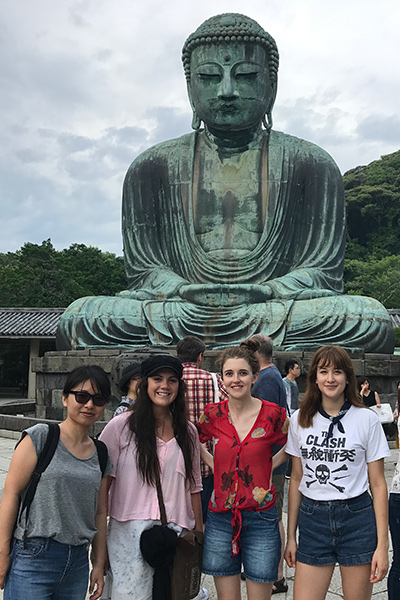
The Great Buddha (“Daibutsu”) of Kamakura is one of Japan’s most fascinating historical landmarks.

Do you have anecdotes to share: small world occurrences, unexpected humor, places you explored?
Something that was amazing to me was the level of respect in Japan. For example, no one talks on their phone on the trains out of respect for others who may want to sleep or just simply want it quiet. Also going up and down escalators was so intriguing because everyone stays on the left side so that if people want to walk, they have plenty of room on the right side. Also ALL THE VENDING MACHINES WERE LIFE SAVERS! Haha. They have sodas, teas, coffees, espresso, flavored waters, and even hot drinks in vending machine all throughout the country. You can’t walk more than 100 meters without running into a vending machine. Which is great because anytime you’re thirsty or need some coffee, the drinks are super accessible. (They even have some with beer and alcohol.) I explored many parts of Japan as well as many other countries in Asia. We had a good amount of time off, which made it very easy to travel and see what Japan and other countries in Asia had to offer.

How was the food?
The food is absolutely amazing. Options are endless when it comes to food in Japan. Whether you want an amazing sit-down restaurant, to street food/street markets, they have it all. People in Japan truly take pride in their food and very rarely did I have a meal that I wasn’t completely impressed with.

Tell us about some of the friendships you made.
I made many lifelong friendships here in Japan. First off, I have a wonderful relationship with my boss and we plan to stay connected throughout the future. On top of that, the teachers I worked with were great and friends that I will have forever. Outside of work, I met many amazing people from all over. I have friends who are from Japan, and friends who are teaching here as well. Its something really special to teach abroad and meet people you would never get to meet otherwise. These friends truly impact your experience and will be lifelong friends.

How long were you abroad, and what are you doing now?
I was here in Utsunomiya for a year. Though I could have renewed my contract, I will be heading home because there are some big family events happening in the near future. I am looking into other teaching jobs in Asia as well as Europe for the 2019 year. I know that I will return to Japan at some point in the near future and this country holds a special place in my heart.

Marshall with summer school students.

What do you think are the biggest strengths of the TESL/TEFL Certificate program at SDSU?
I truly don’t think there is another program like the one at SDSU. It is so hands-on when it comes to observing and actually teaching in the classroom. On top of that, you have a new lesson daily on either English or how to teach English. You also present a lesson at the end of the week to show what you learned, and get constructive criticism to help for the future. It’s very unique compared to many certificates because it isn’t online and you get to practice in front of professionals and people who have been doing this for many years. Not only that, but post TESL certification, you receive so much support and help that can be very hard to do on your own. Which makes it so much easier to find the perfect job for yourself. This program is one-of-a-kind and one of the best decisions I could have made after graduating for SDSU.

Graduate of SDSU’s TESL/TEFL Program Finally Finds Her Dream Career (and a Bonus Feline Friend)

Susan Zyphur in Autumn Foliage
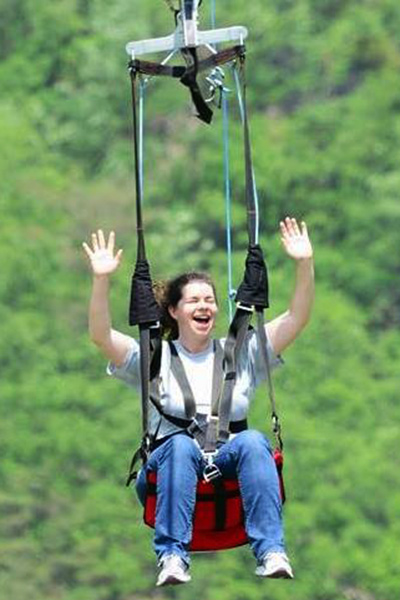
Susan Zyphur Zipline
Ziplining at the Arii Hills Skywalk in Jeongseon, Gangwondo, Korea, after the 2016 Annual NET (Native English Teacher) Kickball event.

“Despite being successful in school and at work, and even attaining significant financial security, I never hit upon a career that seemed to fit me,” said Susan Zyphur, a 2006 graduate of UCSD. All that changed when she decided to teach English abroad. In a Google search, she found the SDSU American Language Institute, and within three months of completing the TESL/TEFL certificate program, was teaching in Korea.

“Attending SDSU’s ALI was one of the best decisions I’ve ever made, and it was the best money I’ve ever spent,” said Zyphur. “I would absolutely do it again, and I highly recommend it.”

She answered a few questions about her journey through the program, and her adventures in Korea and Japan.

Please give us a brief overview of your education and career.
I received my bachelor’s in psychology from UCSD. I did well in school, but every career I set as a goal never really worked out. My mother had always told me that I should be a teacher because I really enjoyed tutoring, but after seeing the difficulty my sister had in finding a job, not to mention her low salary, I never seriously considered it as a career. I tried studying other subjects at community college to find a career that spoke to me, and also tried working in business in various fields.

Why did you choose the TESL/TEFL Certificate program at SDSU’s American Language Institute?
I knew that I wanted to attend physical classes for my certificate and looked for a program that would provide in-class teaching experience. I had originally planned to enroll in UCSD’s certificate program, but after attending their open house I knew that it wasn’t for me. I did a Google search and found SDSU’s ALI program, and after emailing and meeting with the program director, I knew that SDSU’s ALI program would be perfect for me. The people I spoke with were friendly and liked their jobs, the students I met were happy to be there, the program could accommodate my full-time work schedule, and I could be teaching within a few months — there were no downsides!

How long did it take to complete?
I attended the evening program and finished in about 3 months.

How did the program’s free worldwide job placement assistance work?
It proved very helpful for me. The teacher training program coordinator provided me with the necessary documents to apply for the English program in Korea (EPiK). After teaching for a year in Korea, I found a job in Japan thanks to a job notification email from the program director. Just prior to returning home, I received another job notification email from the program director about a position in San Diego, and am now working at that school.

How soon after completing the program were you teaching English abroad?
I completed the program in November 2015 and left for Korea in mid-February 2016.

What made you choose the country you chose?
Being new to teaching, I wasn’t sure if I’d want to do it for more than a year. So, I wanted my first contract to be in a country that paid well, provided benefits and housing, and would pay for my flight to and from the country. I also wanted to work for a program with a good reputation so I wouldn’t worry about losing my job for reasons such as funding, etc. Korea’s government-sponsored EPiK was a good fit. Plus, I was looking forward to experiencing a culture that’s very different from my own.

Where did you live?
I lived in a tiny village in Gangwon-do in Korea, about 90 minutes from the North Korean border. In Japan, I lived in the city of Koriyama, in Fukushima province.

Susan Zyphur Temple
Templestay (sampling temple life) in Korea with foreign and native Korean friends.

What did a typical day look like?
In Korea I taught elementary and middle school students at several schools, and I went to a different school every day. But I never taught more than 20 “teaching hours” (40–45 minute blocks) per week, and no more than 40 hours per week (teaching hours + office hours). In Japan I taught ages 2–12, with 40 hours per week of actual teaching (preparation was done on my own time). I taught 2–4 year olds two mornings per week for 3 hours, and always taught ages 5–12 in the afternoons. One day a week I went to a local kindergarten and taught 3 different classes in the morning, and two days a week I had private lessons in the evenings. My weekends were always free.

Were there TESL/TEFL instructors from other countries at your school?
Yes! In Japan I worked with teachers from South Africa and the Netherlands. I was the only instructor at my schools in Korea, but there was another teacher in my village who taught at a few local elementary schools. He was from Canada.

Do you have anecdotes to share: small world occurrences, unexpected humor, places you explored?
I honestly can’t list all of the crazy, funny, interesting things that happened to me in Korea. It was an incredible experience and the culture is very different. For the most part, my experiences were good and the people were very friendly and kind. In Japan, I found the culture to be unique but more Western than Korea, so it felt a little more like home.

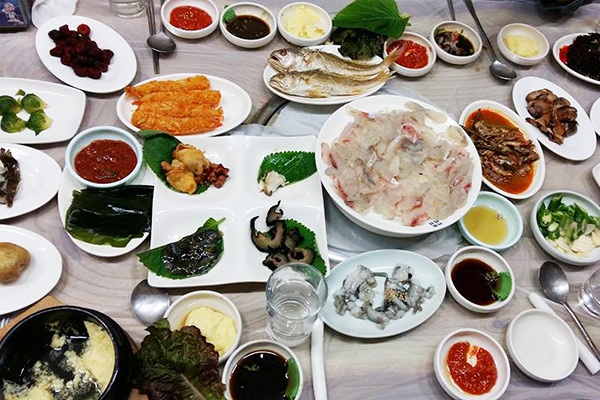
Susan Zyphur Dinner in Korea
What dinner looks like in Korea.

How was the food?
I miss Korean food a lot! I’ll never forget the mudfish soup a local restaurant made — it doesn’t sound very appetizing, but it was delicious! I like spicy food so I adapted very easily to the food there. Unfortunately, I had a bad sushi experience in the U.S. years ago, so I’m not a big sushi fan. But I love onigiri (rice balls), and I have to say that the Japanese really know how to make good desserts. You can buy delicious eclairs everywhere, including every convenience store. I miss milk pudding, it was my favorite!

Susan Zyphur with Asha the Cat
Asha the cat, born in Korea, now a U.S. citizen.

Tell us about some of the friendships you made.
I made incredible friendships in Korea that will stay with me forever. The other teacher who lived in my village became like my little brother, and we still talk. The Korean teachers that I worked with, and the Korean friends that I made, all have an open invitation to come stay with me in San Diego. They also became valuable resources when I applied to graduate school — all of my letters of recommendation came from my Korean coworkers. I even made a very unique friendship that followed me to Japan and then back to the U.S. — my cat, Asha, was born on a farm next to one of my schools in Korea. I also really valued my co-workers in Japan, who I still talk to, but I didn’t have as much time for socializing while I was there.

How long were you abroad?
I lived in Korea for a year and then in Japan for a year.

What are you doing now?
I’m back in San Diego for graduate school (I’ll be studying TESOL), and I’m working at an English school in Little Italy called Q International School. I love getting paid to do something I enjoy!

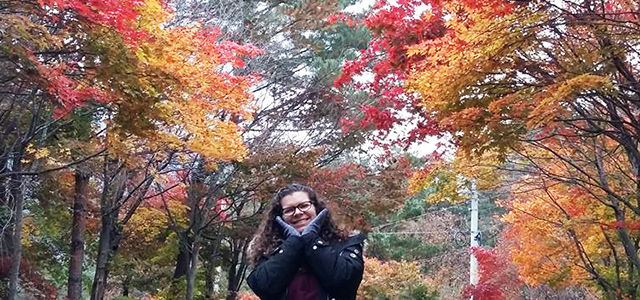
Susan Zyphur in Autumn Foliage
Autumn foliage in Injegun, Gangwondo, Korea.

What do you think are the biggest strengths of SDSU’s TESL/TEFL Certificate program?
The fact that all of the instruction is in-class makes a big difference; I was better prepared and had fewer problems because of it. The instructors are experienced and knowledgeable, and they can answer any questions you might have about the material you’re learning or the experience of teaching abroad. The evening program was also a huge factor in choosing SDSU’s ALI because I was working full time and my work schedule wasn’t very flexible. But the biggest benefit for me was the in-class experience requirement — learning by doing, with real students. My mentor, an ALI instructor, was very helpful and supportive, and I learned a lot from her.

Anything you’d like to add?
My life changed a lot after completing the program, and although my experiences abroad weren’t always fun, they were always interesting. I’ve grown so much as a person as a result of living and working abroad, and I’ve finally found a career that I feel passionate about. I owe part of that to the program director, the program coordinator, and the other ALI instructors for helping to prepare me to be a great EFL teacher.

South Campus Plaza Adds New Elements of Awesome to Campus Life

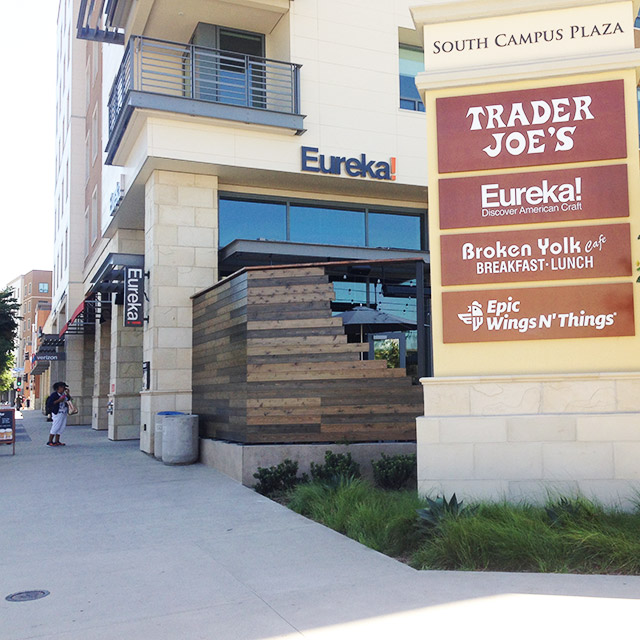
South Campus Plaza
South Campus Plaza
South Campus Plaza at the intersection of College Avenue and Lindo Paseo

The most perfectly located grocery store in America opened on May 19. At the intersection of College Avenue and Lindo Paseo, in the southeast corner of South Campus Plaza, is a gleaming new Trader Joe’s. Students had already left for summer break, so they don’t yet know the glory of this proximity to amazing food and drink from around the globe, plus free daily samples of treats like spicy gochujang-favored almonds, or mango and sticky-rice spring rolls.

More recently, on August 21, the California-based Eureka! opened on the north end of the plaza. This “All-American Scratch Kitchen & Craft Bar” specializes in gourmet burgers and American classics with a twist, such as Mac N’ Cheese Balls with beer cheese sauce and Fresno chiles, or Falafel Tacos. They also have 40 craft beers on tap – 22 are permanent, 19 are from local breweries, and one is from Redlands, in homage to the home of the first Eureka! restaurant, in northern California. The 3,000 square-foot outdoor patio overlooks the park next door, and will no doubt be a popular gathering place after live music or sporting events on campus.

Coming soon to South Campus Plaza is Which Wich Superior Sanwiches, Broken Yolk Café for breakfast and lunch, and Epic Wings N Things.

Not new but certainly exciting is the Viejas Arena on the west end of campus, with its continuous line-up of live entertainment events. At the ticket office, students can also get discounted theme-park tickets to SeaWorld, Legoland, the San Diego Zoo, the San Diego Zoo Safari Park (formerly the Wild Animal Park), Six Flags Magic Mountain (Santa Clarita), Knott’s Berry Farm (Buena Park), and Universal Studios (Los Angeles). Transit passes (trolley and bus) are also available, as are AMC theater tickets good for movies that have been in theaters for at least two-weeks.

The Aztec Recreation Center (ARC) has world-class facilities — a state-of-the-art gym plus classes ranging from yoga and spin, to kickboxing and kayaking. Across the street is the Aztec Aquaplex with a 20-person spa and two large outdoor solar-heated pools — one with a gently sloping “beach entry” and the other with an inflatable obstacle course. There are also tennis courts  next door.

On the east end of campus, the Conrad Prebys Student Union is yet another epicenter of fun, with the ARC Express satellite fitness center, and the Aztec Lanes bowling and games center with 12 bowling lanes, five professional-grade billiards tables, two professional-grade table tennis tables, and eight big-screen TVs.

For adventures beyond SDSU, the on-campus trolley is a quick and easy way to get to the Mission and Fashion Valley shopping centers, as well as watch SDSU football games at Qualcomm Stadium.

Additional Area Restaurants

  • The Daily Grind – A popular family-owned breakfast café (til 4 pm) with college-friendly prices.
  • Woodstock Pizza – A college favorite with great pizza, pints, and events such as Trivia Tuesdays at 8:30 pm.
  • Trujillos Taco Shop – This is a late-favorite, with unique burritos such as the Sigma Pi — a carne asada- or pollo asada-stuffed quesadilla wrapped in a giant burrito with French fries, guac, salsa, and sour cream.
  • Yogurtland – A mere mile away, this after-school hotspot has decadent frozen-yogurt flavors and fresh toppings plus a student discount.
  • Bangkok Poco Thai – Enjoy fantastic Thai and Asian Fusion food at affordable prices. Don’t miss the weekday lunch special.
  • Bistro Sixty & San Diego Desserts – Homey digs and a patio for simple upscale eats, from pasta to truffle fries, plus desserts and wine.
  • PHO Fifth Avenue – Traditional Vietnamese cuisine, from banh mi sandwiches to Pho noodles soups, plus smoothies and boba teas.
  • Just Sushi To Go – Don’t let the name fool you. You can eat in at this cozy, super-fresh sushi spot.Welcome back and enjoy the fall 2017 semester at SDSU!

Meet ALI Student Saad Alajmi

Mubarak and Saad Alajmi

When Saad Alajmi graduated from Al Jahra High School in June 2016, he decided to study in the United States and, after extensive googling, chose San Diego. “It has the best setting in America,” said Alajmi, who is from the town of Al Jahra in Kuwait, 20 miles west of Kuwait City.

Months later he landed in America’s Finest City for the start of the fall 2016 semester at SDSU’s American Language Institute. He enrolled in the English for Academic Purposes program, designed for students who plan to enter an American college or university at the undergraduate level.

Alajmi already had a command of the English language — students in his native country begin studying English in first grade — but he enthusiastically embraced his new opportunity to use it. “My favorite class is [Academic] Speaking because I speak English all the time,” he said. “The most I speak Arabic is with my friends and my brother.”

He also “really loves” his teachers. “They are really friendly and my two best teachers in ALI are Joel [Ortiz] and Elizabeth Osmund,” said Alajmi. “They are both funny and friendly and they smile all the time. They make the class fun with games and activities.” One example is the Kahoot! app, a game-based learning platform that makes it fun for students to see who can be the first to get the right answer.

Alajmi also took advantage of the free additional English-language support available to ALI students. “I was using the Homework Lab a lot for my essays,” he said. “It’s very helpful. I was asking the teachers for my mistakes.” Students can also benefit from the Pronunciation Clinic and the Grammar Lab.

Cultural immersion is another important aspect of the ALI, and Alajmi participated in many activities through the Student Life Office. He went to baseball games, football games, a community clean-up, and even fed the homeless downtown. Alajmi’s favorite outing was to the San Diego Zoo. “I saw animals I never saw before, like the panda and flamingo,” he said.

How does San Diego compare to Al Jahra? “The weather is mostly the same, but San Diego is much better because they have a lot of beaches and a lot of things to do,” said Alajmi. “The people are friendly and all the places are really cool. I like it.” After a pause, he added with a laugh, “I LOVE it. I’ve met people from all over the world and they’re really nice. It’s cool we can understand each other in English because we all have a different language.”

Alajmi graduated this summer from the ALI and, although SDSU was his first choice, he was accepted into Cal State Fullerton where he plans to major in computer engineering.

“I recommend ALI because it has a perfect location next to the SDSU campus … they have a lot of things to do … and I have great memories with my international friends,” he said. “They are from China, Japan, Vietnam, Korea, Taiwan, and Venezuela.”

Fare thee well Saad Alajmi.

Neighborhood Spotlight – Downtown San Diego/Gaslamp

Gaslamp Quarter in San Diego

Gaslamp Quarter in San DiegoThere are always many activities in Downtown San Diego and its famous Gaslamp Quarter.

From April through September, the San Diego Padres baseball team plays more than 80 home games at Petco Park. This facility also hosted the World Baseball Classic semifinals in March, featuring the Dominican Republic, Puerto Rico, United States, and Venezuela.

Comic-Con International: San Diego hosts 130,000 visitors each July at the San Diego Convention Center. This multi-genre entertainment and comic convention offers close to 700 special events featuring comics and all aspects of the popular arts. Forbes magazine refers to Comic-Con as “the largest convention of its kind in the world,” and “the granddaddy of pop culture festivals in the U.S.”

Dining in the Gaslamp includes a culinary journey of dishes from all over the world, with restaurants ranging from casual to upscale. The annual Taste of Gaslamp, San Diego’s original culinary and cultural tour, takes place each June and showcases the excellent dining, live music, art gallery, and retail options available in this vibrant district.

The annual San Diego Mardi Gras/Gaslamp Quarter Parade & Celebration each February has a New Orleans touch that features food offerings from 20 restaurants. Visitors collect plenty of beads just in time to deck themselves out for Fat Tuesday.

Seaport Village is a waterfront shopping and dining complex adjacent to San Diego Bay that has more than 50 one-of-a-kind shops, 13 casual dining eateries, four fine dining waterfront restaurants, and is located in close proximity to local hotels. The USS Midway Museum is a maritime museum that honors the legacy of those who have served America and features an awe-inspiring flight deck.

The San Diego International Film Festival in October is one of the leading stops on the independent festival circuit. This five-day event features 100-plus independent films, studio premieres, panels with celebrities and industry insiders, red carpet events, parties, all-star tributes, and filmmaker awards.

The annual Port of San Diego Holiday Bowl Parade is held each year the week between Christmas and New Year’s Day and is known as “America’s largest balloon parade.” More than 100,000 people line the streets for this parade that is the same day as the Holiday Bowl football game between two of America’s top major college teams.

Downtown San Diego recently added two parks. Waterfront Park, located at the County Administration Center, offers an opportunity to beat the heat with an 830-foot-long fountain with 31 jets that shoot water 14 feet into the air before it falls in a shallow splash area. Horton Plaza Park includes an amphitheater for live music acts, retail Pavilions and a new, interactive fountain.

It all adds up to many exciting events in the Downtown/Gaslamp area.

Downtown Dining

Attractions

Feature Story – San Diego State University Athletics

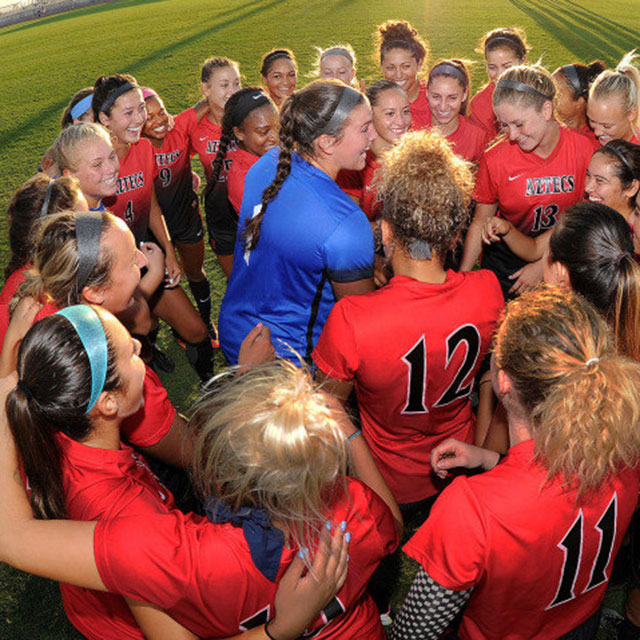
Aztec Women's Soccer SDSU

Aztec Women's Soccer SDSUSan Diego State University has one of the top athletic programs in America and all SDSU students, including ALI students, get free admission to the football and basketball games, as well as all other athletic events on campus.

Since the 2010-11 school year, the Aztecs have the third-best combined record in the country for their men’s basketball and football teams.

The basketball team played 11 straight seasons in postseason games in the National Collegiate Athletic Association (NCAA) and National Invitational Tournament (NIT) tournaments, which are reserved for the top teams in America. SDSU, which sells out every home game at the 12,414-seat Viejas Arena has twice made the prestigious Sweet 16 in the NCAA Tournament (meaning it’s among the top 16 out of more than 350 universities).

In football, the Aztecs play in their seventh straight bowl game in December 2016 or early January 2017. These games are primarily for teams that win at least half of their games during a season. SDSU plays at Qualcomm Stadium, the same site as the San Diego Chargers of the National Football League.

In the last four sports seasons, the Aztecs won 32 conference championships, more than any other in the 12-team Mountain West Conference. The Mountain West teams come from an area that spans about 3,400 miles (more than 5,400 kilometers) from Hawaii to the Rocky Mountain region of Colorado and Wyoming.

Here are some other facts about SDSU athletics:

  • Women’s soccer won three out of the last four Mountain West Conference championships before this season
  • Women’s softball made the NCAA Tournament nine straight seasons until 2016, and won at least 30 games in 11 straight seasons
  • Women’s golf earned a place in the NCAA Tournament six of the last seven years
  • Women’s water polo finished among the top eight in America last season
  • Men’s baseball played in the NCAA Tournament three straight years before 2016. Its stadium is named after former coach Tony Gwynn, who died in 2015 and is in the Major League Baseball Hall of Fame.
  • Men’s golf finished among the top five teams in the nation last spring
  • Ashley Henderson of SDSU finished second nationally in the NCAA Outdoor Track and Field Championships last spring
  • Fourteen members of the women’s swimming and diving team were named to the all-Mountain West Conference team for finishing in the top eight during the finals

On top of it all, SDSU set a school record for the second straight year with 72 student-athletes earning Mountain West All-Academic honors for the spring 2016 semester. This year’s spring total surpasses the old record of 69, which was set in spring 2015.

To be eligible for selection, student-athletes must have completed at least one academic term at SDSU while maintaining a cumulative grade-point average of 3.0 (B or better), and be a starter or significant contributor on their team.

Neighborhood Spotlight – Del Mar

Del Mar, California

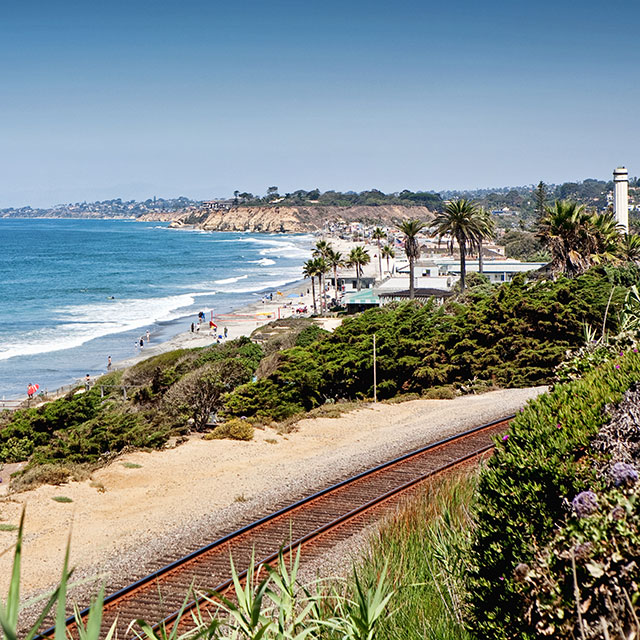
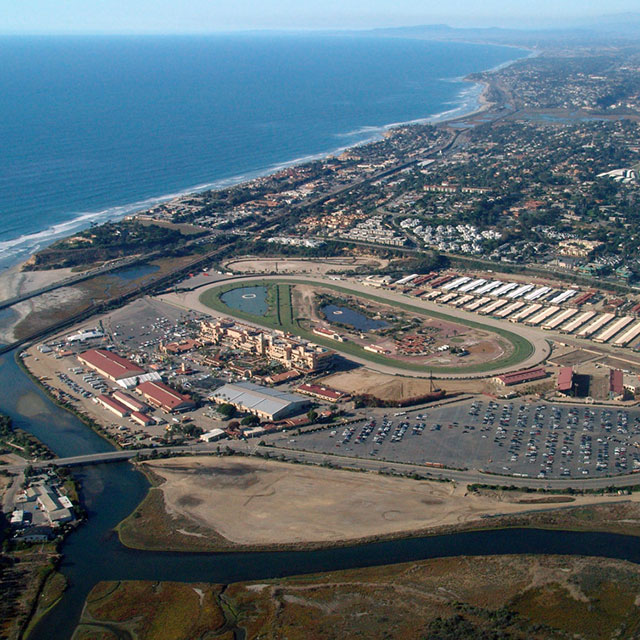
Del Mar, CaliforniaThere is a lot to do in Del Mar, such as going to the San Diego County Fair, summer horse races, and the beach.

About 1.6 million people attend the San Diego County Fair each June and July. While there, you can eat various foods such as French toast bacon, fried pizza, deep fried nachos, fresh fried chips, lasagna and grilled cheese sandwiches, many different types of hamburgers and hot dogs, deep fried twinkies, ice cream, and kettle corn.

You can also attend concerts, take part in a variety of rides and games, view livestock, and visit halls where you’ll see products like sharpeners, slicers, peelers, woodworking, gems, minerals, quilts, and sewing demonstrations. The 2017 San Diego County Fair runs June 2-July 4 and features a “Wild, Wild, West” theme.

Del Mar Race Track and Fair GroundsThe Del Mar Thoroughbred Club is the place to watch horse racing each year from late July through early September. Gather at the seaside racetrack to bet on your favorite horses and maybe even get a look at famous stars who often come to the track from Hollywood, located just over 100 miles (160 kilometers) north of Del Mar. Enjoy free concerts after each of the Friday races.

The city also has popular beaches: North Del Mar City Beach, considered by many as San Diego’s finest beach; South Del Mar City Beach, a long, cliff-lined, and isolated area that is great for long walks or jogs; and The River Mouth (Dog Beach), which is broad, wide, and dog-friendly.

Del Mar Village offers outdoor shopping, a dining promenade, and many art galleries surrounded by sculptures and fountains. At the Farmers Market on Saturday, there are organic and pesticide-free fruits and vegetables, flowers and orchids, international cuisine, eggs, seafood, cheese, hummus, guacamole, bread and baked goods including gluten free products.

At Del Mar Plaza, there are spectacular ocean views and more than 30 fine shops, boutiques, and restaurants for your enjoyment.

If you like golf, the Grand Golf Club will challenge you with its rolling hills and many bunkers hidden within those hills. Nearby La Jolla features the Torrey Pines Golf Course, which hosts the professional Farmers Insurance Open each February.

Del Mar Dining
Americana Restaurant
Beesalt Balcony
Board & Brew
Brigantine Seafood Restaurant
Bully’s
Burger Lounge
China Café
Del Mar Pizza
Jake’s Del Mar
Milton’s Deli Restaurant
Pacifica Del Mar
Sbicca
Searsucker
Seasalt
Smashburger
Taste of Thai
Tio Leo’s Mexican Restaurant
Villa Capri

Del Mar Attractions
Beaches & Parks
Del Mar Fairgrounds
Del Mar Farmers Market
Del Mar Golf Courses
Del Mar Plaza
Del Mar Thoroughbred Club
Del Mar Village
Dog Parks
San Diego County Fair
San Dieguito Lagoon

‘I’ve lived more in the last few years than most people have in their lifetimes.’

Carissa Baird
Carissa Baird
Carissa Baird, graduate of the TESL/TEFL teacher training program at SDSU’s American Language Institute

“What did I get myself into?!” was Carissa Baird’s first impression upon arriving in Riyadh, Saudi Arabia in 2013 to teach English as a second language. By the time she left, six months later, she would write on her blog:

From the expats to the locals, fellow teachers and students alike, I have experienced some of the most genuine kindness I’ve ever come across in my life … I’ve received countless gifts and other expressions of gratitude and kindness from people I’ve only known a few months, sometimes just a few hours. I’ve been invited to their homes, their workplaces, and their social gatherings. If they cannot offer you food, they will always be ready with a smile, a greeting, a kiss. Their generosity is compelling.

“The TESL/TEFL teacher training program at the ALI [SDSU’s American Language Institute] opened me up to a world that I didn’t even know existed,” said Baird. “Teaching English was just going to be a means for travel at the time I started, but I realized that it provided so much more. Not only have I been able to work and travel both domestically and abroad, but this certification made me realize that I LOVE teaching as a profession, and now I’m pursuing my master’s degree in TESOL (Teaching English to Speakers of Other Languages). The program at ALI put me in touch with some great people, including my assigned mentor who I still seek out for advice now, three years later.”

Baird shares her journey from trepidation to exhilaration:

Where did you go to school and how did you find out about the TESL/TEFL Certificate program at SDSU’s American Language Institute?
I graduated from San Francisco State University in 2010 with a B.A. in art with an emphasis in art history. In 2012, I heard about teaching English as a second-language and researched programs to obtain my teaching certificate. I enrolled in the ALI program in spring 2012 and completed it 11 weeks later. I was a facilitator in the ALI classes for a few months until I got my first job teaching abroad.

How did the program’s free worldwide job placement assistance work?
I would receive emails from Van [Hillier, program director] about teaching opportunities and apply for the ones I thought might be interesting. When the email for Saudi Arabia came through, I just thought … WHY NOT!? How many people do you meet that can say they lived there? So I went for it out of sheer curiosity and potential bragging rights. (And the money was good). Also, before I left, they put me in touch with another teacher that was also going, so it was nice to have someone else along for the ride.

Carissa Baird on the KSA
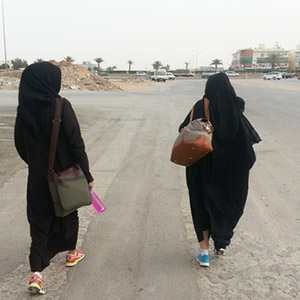
Baird (left) and another ESL teacher in Saudi Arabia walking to the main road from their apartment, on their way to the DQ — Riyadh’s Diplomatic Quarter. (“It was the only compound where we could run/exercise outside, without having to wear an abaya,” said Baird. “Note our running shoes, haha!”)

How soon after completing the program were you teaching English abroad?
Six months, however it could have been a lot sooner if I’d pursued it more aggressively.

Where did you live?
The company I worked for arranged our housing and had us staying in our own apartments, which was basically a long-term-stay hotel out in the middle of nowhere. We weren’t on a compound or anything. Our housing was paid for but we didn’t have a choice as to where/what it was.

What did a typical day look like?
Be picked up by a driver in a van full of other female teachers at 7 a.m. and be taken to Saudi Electronic University to start classes at 8 am. (There’s no mass transportation other than taxis, and women aren’t allowed to drive, so transportation was provided by the company.) When I first started I had only one class per week, but as time went on I had more and more classes both at the original school and then at Princess Nora University. Classes — with all female students — were about 2-4 hours long, depending on the class, and levels ranging from beginning to advanced.

Some days, toward the end of my stay, I would teach two or three classes and then go to my private tutoring classes in the evenings. (Which is exhausting after a full day of regular classes, but a good way to make extra cash.) But staying busy in Saudi Arabia was a blessing, as there wasn’t much else to do. After school, the driver would come back to pick us up and then drop us off at home, making several stops along the way since not all the teachers lived in the same place. Usually we would stay home after that, making dinner, watching TV, sleeping, or whatever.

KSA [Kingdom of Saudi Arabia] wasn’t too accommodating when it came to entertainment or other recreational activities, especially for single, Western women without family nearby. Going to the mall or the grocery store was a common outing, or any events that the foreign embassies were putting on in the evenings, which were lifesaving, but hard to get into.

Carissa Baird
Baird with two of the four children she tutored privately in Saudi Arabia. (“I don’t have many photos from teaching in Saudi Arabia because the women weren’t allowed to take photos of their faces,” said Baird. “So mostly you get photos of their hands forming ‘peace’ signs. Children are allowed to be shown because they haven’t hit puberty yet and aren’t required to cover up.”)

Why were foreign embassy events hard to get into and what kind of events were they?
Saudi Arabia is a “dry” country, so there is no alcohol or bars. Also, there are no movie theaters or live music/concerts (secular music) or dancing venues. A lot of the entertainment options we take for granted here are practically non-existent there, unless you have a hook-up at an embassy. The foreign embassies were like an underground social scene for expats in KSA. There were bars, live concerts, dancing and DJs, special dinners and festivals, etc. BUT to get into them, you usually had to have someone directly involved with the embassy to “sponsor” you, which basically meant they’d vouch for you to be allowed in, understanding that you wouldn’t do anything stupid. When you entered the event you had to be on a list, show a valid passport, check your cell phone at the door (no pictures allowed), then go through a physical screening process — metal detectors, etc. — before being allowed in. Once inside though, it’s like Pleasure Island from Pinocchio!

Were there TESL/TEFL instructors from other countries at your school?
Yes, there were instructors from the USA, the UK, Scotland, and even from Saudi Arabia, Jordan, and Oman. I’ve also met instructors from Australia and India.

Do you have anecdotes to share: small world occurrences, unexpected humor, places you explored?
Oh my gosh! I could go on and on about these things! Living abroad for the first time was insanely difficult in the beginning, but incredibly rewarding in the end. The cultural exchange and personal growth, as well as friendships that come out of it are invaluable. I have too many stories, but I’ll direct you to my blog: carissasade.tumblr.com.

An excerpt:

I met a guy in Saudi Arabia who happened to be staying at my hotel (although we weren’t really allowed to speak to each other) who was from San Diego, received his TEFL at ALI, went to school in San Francisco at the same time I was there, and then took his first job teaching abroad in Saudi with the same company as mine. We ended up becoming great friends and traveling together a lot. After losing touch for a year or two, we ran into each other again in San Diego, teaching at the same language school! SMALL WORLD INDEED!

How was the food?
Food in Saudi Arabia, when you can find the authentic stuff, is great! I really liked the traditional Saudi dish kabsa which is basically meat, rice, and sauce — but with lots of spice and flavors! Something typical that the girls would bring to class is Saudi “coffee,” which was basically cardamom tea that I grew accustomed to, but didn’t like at the beginning! This was usually accompanied by dates — a staple in the country — and lots and lots of sweets, candy, cakes, etc. Also, grape leaves stuffed with olives and drenched in olive oil were delish! However, it seemed that the more “popular” places to dine were American restaurant chains, ironically! Applebee’s and a cheesy Italian place called Pietto’s were hot spots. But sometimes when you’re craving a little bit of home, this was nice.

Tell us about some of the friendships you made.
Gosh, I’ve made a lot of great friends both with colleagues and students alike over the past few years. In Saudi Arabia, I made great friends with a few teachers — male and female — that I got to travel with a lot while we were there, to Dubai, Sri Lanka, and Bahrain. The students I’ve had at the schools I’ve taught at in the U.S. have had such a significant impact on me. I still talk to many of them even now, almost two years later, and they tell me about their marriages, their moves to other parts of the country, and their newest educational and professional endeavors. (Facebook is a wonderful tool in this field of work!)

What do you think are the biggest strengths of SDSU’s TESL/TEFL Certificate program at SDSU?
Taking a similar class right now, I have to say that the SDSU program completely surpasses it on so many levels. I liked the support both in and out of the classroom, and I enjoyed the variety of instructors whose strengths were highlighted in different presentations throughout the program. The variety in teaching and learning new strategies was so awesome! It was great to be able to learn straight from the experts of specific aspects involved in ESL teaching. Also, being able to schedule and observe classes at the ALI was so great! In the class I’m in now, we have to go out and try to find our own classes to observe, which can be grueling. The ALI program was very hands-on and helpful in finding me a job after the program, even if it was as a facilitator there at SDSU. I felt very prepared.

Where are you pursuing your master’s in TESOL and where would you like to teach?
CSU-Fullerton. I’m hoping to obtain this master’s to have the ability to teach at a community college or university here in California, however I might have it in me to go abroad once again! Not sure where, but the possibilities are endless and that excites me!

Carissa Baird
Baird and her students at International House – San Diego, a private language school in Fashion Valley where she worked after returning from Saudi Arabia.

Who was your mentor during the SDSU program and why do you still seek out him out for advice three years later?
Ken Levin was my mentor and yes, I still contact him from time to time, and even just meet up for coffee every once in a while! He’s great for intelligent conversation about the field and excellent advice. I’ve even had him help me out by writing recommendation letters for both graduate schools and professional opportunities. He’s always been super supportive and able to relate to the wacky world of international work.

Anything you’d like to add?
Teaching English has introduced me to some amazing people from all over the world that I’ve formed lasting friendships with — students, co-workers, and administrators. There’s a whole world of people that ESL teaching has opened me up to, with endless opportunities, and I’m so grateful that I fell into this amazing community! I really hope this helps and inspires anyone who is looking to go down this road. It seriously brings tears to my eyes and so much joy to think about what this little certificate has brought to my life! I’ve lived more in the last few years than most people have in their lifetimes and I’m thankful to TESOL for providing me with the confidence and means to pursue these otherwise overlooked opportunities. Travel and teaching are two passions I never thought would guide my life’s path, but now, I can’t think of any other way. Thank you to ALI for being the catalyst to this life of adventure!

For more information on the 130-hour TESL/TEFL Certificate program at SDSU Global Campus, visit ali.sdsu.edu/teslteflcertificate

Neighborhood Spotlight – Chula Vista

Chula Vista California

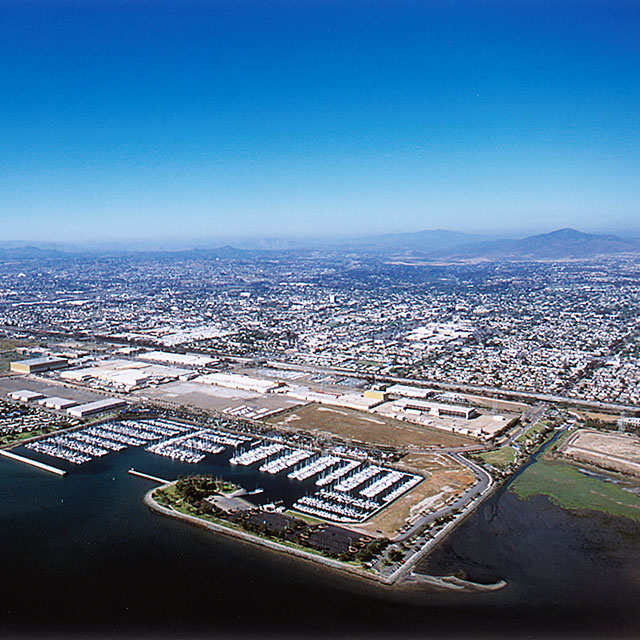
Chula Vista CaliforniaLocated in the South Bay area of San Diego County, Chula Vista is the second largest city in the county and the 14th largest in California.

The U.S. Olympic Training Center in Chula Vista, which opened in 1995, has facilities for archery, beach volleyball, canoeing/kayaking, cycling, field hockey, rowing, rugby, soccer, tennis, track & field, triathlon, and cross-training for various winter sports. Athletes are provided housing, dining, local transportation, recreational facilities, and professional development programs.

Music enthusiasts enjoy Sleep Train Amphitheatre, one of the largest live-music concert venues in San Diego. The outdoor facility can accommodate approximately 20,000 people and offers about 25 events per year. This summer’s lineup includes the Dixie Chicks (July 15), Kenny Chesney (Aug. 4), Snoop Dogg (Aug. 27), and the Doobie Brothers (Aug. 30).

In the heart of historic downtown Chula Vista is Third Avenue Village, featuring shops, restaurants, businesses, services, a boutique bed and breakfast, and rental halls. Activities along Third Avenue include a weekly Farmers Market, the Lemon Festival, Village Street Fair, Holiday in the Village, and the Starlight Parade.

The Chula Vista Marina provides boaters with a peaceful atmosphere away from the busyness of downtown. The area is a tropical paradise with spectacular sunsets.

Aquatica, Sea World’s Waterpark, offers three different slides, a beach with 43,000 square feet of sand, and a large wave pool. Tying into Aquatica’s sea-life theme, dozens of freshwater turtles make their home in the park.

Golf is also a popular South Bay activity. Courses include the San Diego Country Club, Eastlake Country Club, Chula Vista Municipal Golf Course, and Salt Creek Golf Club.

Chula Vista Dining
Canada Steak Burger
Ciao Italian Restaurant
El Patio Restaurant
Island Restaurant
Jersey Mike’s
Karina’s Mexican Seafood
LaBella’s Pizza Garden
La Quinta Grill & Cantina
Lolita’s Taco Shop
L&L Hawaiian Barbecue
Mi Terra
Miguel’s Cocina
Olive Garden
Rubio’s
Sushi House
Teriyaki Grill
Vega Café
Zorba’s Greek Restaurant


Chula Vista Attractions
Aquatica, Sea World’s Water Park
Chula Vista Library
Chula Vista Marina
Chula Vista Municipal Golf Course
Eastlake Country Club
Lemon Festival – August 7
Len Moore Skate Park
Living Coast Discovery Center
Otay Valley Regional Park
Salt Creek Golf Club
Sleep Train Amphitheater
The US Olympic Training Center
Third Avenue Village
Weekly Certified Farmers Market

Program Spotlight – ALI Students Raise $800 to Help Syrian Refugees

IBE Peace tshirt

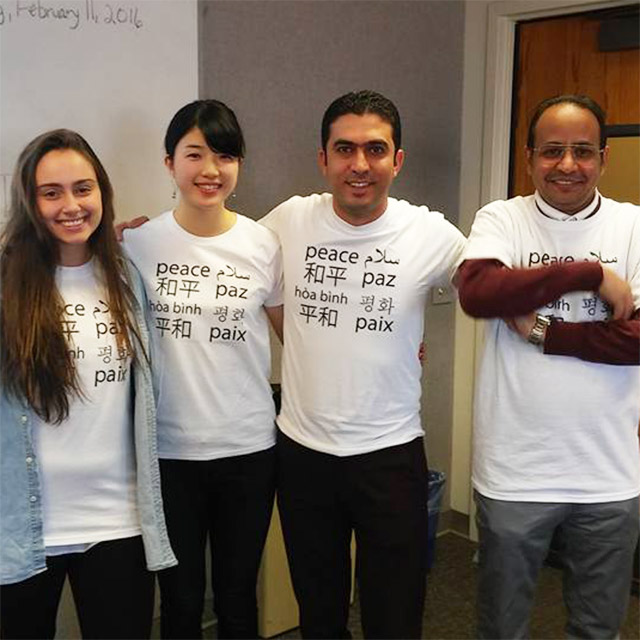
IBE Peace tshirtStudents from an oral communications class at SDSU’s American Language Institute took a project one step further by making it literal rather than theoretical.

The group of four students, from a class of 15, decided to create a real-life project and raised $800 to help Syrian refugees by creating and selling T-shirts with “Peace” written on them in their eight native languages: Arabic, English, French, Japanese, Korean, Mandarin, Portuguese, and Vietnamese. Fittingly, they called themselves “The Humanity Group.”

Instructor Bobby Smith, who taught the class through the International Business English (IBE) program, said the students  were assigned to come up with a solution to a real-world problem. After discussing the project, The Humanity Group members decided they wanted to help less fortunate people and started a page at GoFundMe.com/thgbuildashelter – with the assistance of their instructor – to help Syrian refugees.

“This particular group did something outside of what they were required to do,” Smith said. “When they talked about Syrian refugees, they discussed everything from the international economy to terrorism.”

The Humanity Group subsequently designed the “Peace” T-shirt and reached out through one-on-one talks and social media to family, friends, classmates, and ALI staff, among others. The suggested selling price was $25, but students took whatever donations individuals chose to give, ultimately ranging from about $5 to nearly $100.

Smith sent the funds to USA for UNHCR (United Nations High Commissioner for Refugees), The UN Refugee Agency. The organization responded by letter to Smith with the following:

“Your gift is providing warm blankets for freezing children, emergency food, and shelter from rain, snow, and wind. You are helping us provide emergency treatment for the ill and injured. And you are helping UNHCR be on the scene to protect refugees’ rights and connect them to assistance programs.”

“We did it because we wanted to make a difference to the community while working hard for a good cause,” said student Isabela Zaremba of Brazil, the group manager. “When we discovered that we raised more than our goal of $600, we were amazed.

“It was an indescribable feeling to know that we were helping these people for real. I couldn’t be more proud about my group and my teacher’s work.”

Neighborhood Spotlight – La Jolla

Village of La Jolla

Village of La JollaLa Jolla is one of the most popular beach locations in California because of its beautiful coastline and spectacular views. It’s surrounded by the ocean with the slopes of picturesque Mt. Soledad in the background.

The La Jolla Cove is a favorite spot for swimming, snorkeling and diving, as well as providing a nice area for biking and kayaking. La Jolla Shores features a long, wide beach with soft sand, clean water and gentle waves, and is a great spot for families, sunbathers and beginner surfers.

La Jolla Village is near the Torrey Pines State Natural Reserve, where you’ll find some of the best hiking trails in San Diego. There are many easy hikes about two miles long that will take about an hour to explore and offer breathtaking views of the Pacific Ocean.

Looking from La Jolla to La Jolla ShoresCloser to the La Jolla Village area, the La Jolla Coast Walk Trail runs from La Jolla Shores beach to the La Jolla Cove. This is another easy walk in a very scenic area.

The Birch Aquarium is the public outreach area for the Scripps Institution of Oceanography and has more than 400,000 visitors each year. It features more than 3,000 animals representing 380 species and is located on a hilltop with a spectacular view of the Pacific Ocean.

Shopping in La Jolla ranges from inexpensive items to the most expensive and luxurious brands in the world. You may even see some American celebrities in downtown La Jolla.


La Lolla from Torrey PinesGolf is also a popular activity at the Torrey Pines Golf Course, La Jolla Country Club Golf Course, and the Spindrift Course at La Jolla Beach & Tennis Club. The Farmers Insurance Open includes the top golfers in the world and normally takes place the last week of January at Torrey Pines Golf Course.

La Jolla Dining
Alfonso’s of La Jolla
Bubba’s Smokehouse BBQ
Burger Lounge
Café LaRue
George’s At The Cove
Lean and Green Café
Little Korea
Marine Room
Mary’s English Kitchen
NINE-TEN Restaurant
Pizza on Pearl
Richard Walker’s Pancake House
Rimel’s Rotisserie
Sammy’s Woodfired Pizza
Smash Burger
The Shores Restaurant

La Jolla Attractions and Events
Fourth of July Fireworks at La Jolla Cove
La Jolla Concours d’Elegance
La Jolla Half Marathon
La Jolla Music Society
La Jolla Playhouse
La Jolla Symphony & Chorus
Relay for Life of La Jolla
The Farmers Insurance Open

Neighborhood Spotlight – Julian

Julian - California

Julian - CaliforniaNestled in a forest, the beautiful mountain town of Julian is about a one-hour drive from San Diego. Among other things, it is famous for its apple pie, gold mining, and hiking.

Each year, Julian hosts its Apple Days Celebration in early October. During the month, 10,000 apple pies a week are baked, when tourists come from all over Southern California to enjoy the fall colors, cool breezes, and frontier-town atmosphere.

Mom’s Pie House, located on the town’s main street, is the place where visitors gather to enjoy apple pie, ice cream, and coffee. During the fall season, when Julian attracts its most visitors, the line sometimes goes out the door as people wait to have Julian’s most popular treat.

Julian is also known for its Gold Rush Days, which normally take place the last weekend in May. The event celebrates the discovery of gold in 1869 in the community and invites visitors to learn more about its history, with entertainment including gold panning, tomahawk throwing demonstrations, skits, candle dipping, and more.

In the winter of 1869, former slave Fred Coleman discovered gold in a small creek just outside of Julian. Within a few weeks, more than 800 prospectors from all over the country were headed to Julian in search of gold.

Hiking and biking are also popular in and around Julian. Trails range from the Stonewall Peak Trail, which can be finished within a couple hours, to the much more challenging Three Sisters Waterfalls Trail that is recommended only for very experienced hikers.

Downtown Julian features specialty shops lining the historic streets, including the Bird Watcher gift store and the Julian Cider Mill, which features jams, jellies, and a variety of nuts. The entire main street is only a few blocks long, so visitors can see all of the stores even if they take their time at each location.

The streets of downtown Julian additionally feature horse-drawn carriages where you can ride through the area in 20 minutes. There is also a western-era cowboy demonstration that takes place each weekend afternoon.

Julian Dining
Apple Alley Bakery
Buffalo Bill’s Restaurant
Candied Apple Pastry Company
Granny’s Kitchen
Heroes
Jeremy’s on the Hill California Bistro
Julian Café and Bakery
The Julian Grille
Julian Tea & Cottage Arts
Miner’s Diner
Mom’s Pie House
Poncho Villas
Romano’s Italian Restaurant
Rongbranch Restaurant
Soups & Such Café
Wynola Pizza & Bistro

TESL/TEFL Student Continues His English Teaching Career

Joe Candelario

Joe CandelarioEditor’s note: The ALI will be updating its student profiles to let you know what some of our former students are doing today. Here is the original blog on Joe Candelario, posted Aug. 16, 2013, along with a look at his current status. Today Joe Candelario is on a clear career path – he recently came back from teaching English in the Czech Republic, and is working as a facilitator at the American Language Institute (ALI) at San Diego State University (SDSU). However, after graduating college Candelario wasn’t so sure of a direction. When a friend told him about the ALI, he decided to take a chance and move forward with his future. “I thought the teacher training program sounded like a good idea, so after thinking about it for a couple months, I decided to go through with it and enrolled in the TESL/TEFL certificate program,” he said. After graduating from the program, Candelario found a position as an English teacher in the Czech Republic. He taught young children from the age of kindergarten to third grade, and credits the ALI teacher training program with helping him teach English successfully. “One of the most important things that I got from Van [director] was to be prepared, have contingency plans, and always be flexible, so you can pull something out of your hat if something goes wrong. I can’t tell you how many times I forgot to bring my lesson plans or English cards. I would have to think of something on the spot, so that flexibility and multifaceted skill-set really helped out teaching in the Czech Republic.” Candelario has taught at a summer camp in France and still plans to teach abroad either in Europe or South America. He definitely recommends the program for “anyone who is adventurous and is always looking to learn new things.” He also advises that, “It pays off to know, to meet, and to network when you are living abroad because you never know what is in your future.” Czech Republic

Update on Joe

Did you get to teach in Europe or South America? If so, how did it work out? I taught in Podebrady and Nymburk, Czech Republic, which were less than an hour from Prague. It went really well for a first job teaching children. The most difficult thing was creating my own curriculum for five different age groups. I also taught at an English immersion camp in France called “American Village” for two summers. Those were both great experiences. Will you share an anecdote or two of your experiences? In the Czech Republic, I remember teaching a group of 5-6 kindergarteners who were by far my most difficult group at that level. There were two boys who were quite rowdy, a couple well-behaved children, and one little girl who was always silent during the lessons. A few months into teaching this group – right when I’d just about had it – the little girl finally responded in English. It made everything all worthwhile. In the American Village, it was like going off to Neverland. My first summer, I worked at a gorgeous, centuries-old Burgundian Chateau which was loaded with history. Surrounding the stone walls of the grounds were rolling vineyard hills. Each day after breakfast we’d teach ESL, then put on skits, followed by different “American” games and activities. The counselors were a vibrant mix of travelers, linguists, raconteurs, intellectuals, musicians, and people in search for meaning in life. I’d do it again in a heartbeat. How long did you teach as a facilitator at ALI, and how did it help you? I taught as a facilitator for a couple months in 2012 and again in 2013 upon returning from Europe. It was a good opportunity to observe skilled teachers and to gain experience working with international students. What are you doing nowadays? Since then, I’ve been teaching at EF (Education First) San Diego. (Editor’s note: This is an international language school in San Diego where students come to study English.) It’s a solid job. I work with Allen Yang, who also did the TEFL program and worked as a facilitator at ALI. How much of a factor has the TESL/TEFL program been in your life? I’m grateful for my experience doing the teacher training program and facilitating at ALI. The staff were supportive and encouraging and were invaluable in helping me in my job hunt early on.

Program Spotlight – Community Service Recognition

Community Service at ALI

Community Service at ALIServing the local community is an important part of life for many international students at San Diego State University’s American Language Institute (ALI).

To acknowledge those who are volunteering regularly, the ALI recently launched a Community Service Recognition program. Students who consistently make a difference in the community now earn an embossed seal on their academic certificate or on a letter of recognition.

Jesus Carrillo from Colombia has been actively involved in community service for many years. During his time as a student at the ALI, he has served food at St. Vincent de Paul Village that provides temporary housing to those in need, volunteered with Boys and Girls Clubs, helped to restore Chollas Creek, and danced with senior adults at the College Avenue Center.

“Before I came to San Diego, I knew that ALI was promoting volunteering activities,” he said. “It was not difficult for me to accept the invitation from the Student Life office and its team. I am very surprised about the commitment of these people, as well as the diversity of partners they have. Besides the volunteering, activities promote sharing with students from all over the world and improving English skills.”

Fellow Colombian Claudia Toca has participated in activities such as canyon restoration, community garden maintenance, health and wellness programs for San Diego-area youths, and serving meals at St. Vincent de Paul. She also took part in volunteer projects before attending the ALI.

“In my present and future, these kind of activities help me to feel satisfaction and tranquility,” she said. “These activities are part of my social and environmental consciousness.”

The Community Service Recognition program is available to students in the following programs: Intensive English for Communication (IEC), International Business English (IBE), Social Entrepreneurship (SE), English for Academic Purposes (EAP), Pre-MBA and Pre-Master’s, and Semester at SDSU.

Alan Schuchman, the ALI Student Life Coordinator, oversees the ALI community service program. He said that the ALI takes its inspiration from SDSU’s strategic plan and the goal of being a good neighbor to the surrounding community.

“We see how eager our students are to do positive things while they’re here and we’re happy to connect them with projects organized by local nonprofits,” Schuchman explained. “The students are directly involved; they connect with local residents and develop real-life communication skills. As they help build a better community, it’s clear their lives are also being enhanced.”

ALI Student Profile – Yanying “Toto” Deng

Yanying Toto Deng
Yanying Toto Deng
Yanying “Toto” Deng

Chinese native Yanying “Toto” Deng came to SDSU’s American Language Institute to improve her English through the Intensive English for Communication (IEC) and International Business English (IBE) programs.

Little did she know she would stay longer than planned to help improve other people’s lives by taking part in the first Social Entrepreneurship (SE) class at ALI, which focuses on creating businesses that solve social problems.

After spending 15 months in San Diego, Toto left in early June to complete the final year of her master’s degree in cross-cultural communications at a Japanese university. Then she will head into the working world in corporate communications and continue her SE work through volunteer cross-cultural programs.

While at the ALI, she showed her entrepreneurial spirit by organizing a multi-cultural event for more than 100 students from local community colleges and universities. Among the countries represented were Brazil, Japan, Saudi Arabia, Africa, Switzerland, Turkey, and Mexico.

During the festivities, Toto played a Chinese guitar, known as a pipa.

“It’s really a special instrument,” she said. “I played it to introduce my culture. The people in Japan were interested when I played it there, too.”

The event was among many reasons Toto believed it was special to have stayed at ALI four extra months to take part in the first semester of the SE program.

“We were like a family,” she said. “We did a lot of things together. We went to lunch, dinner, hung out together, and traveled to Las Vegas.”

Always the adventurous and outgoing type, Toto first began displaying her personality early in elementary school. She was selected by her second-grade teacher to emcee an event on campus.

“She picked me and asked me to speak loudly,” Toto said. “I didn’t feel afraid. I became the emcee for two years at our school.”

The Beijing native continued her education through high school in China, then moved to Tokyo as an undergraduate to major in business management. She finished the first of two years working toward a master’s degree in Japan before coming to the ALI to learn English.

“My English has improved a lot since I came here,” she said. “Some of my teachers say it is a miracle for me. My goal was to study English so I would be able to work for an international company and be able to travel the world focusing on speaking and communication.”

Toto hopes to be an organizer in the entertainment business, perhaps helping develop commercials for the Internet. When that happens, she will fondly recall developing her skills at the ALI.

“I really liked San Diego,” she said. “I felt very comfortable. I was able to have a more open personality in San Diego. The people were really friendly.”

Being friendly is a trait that certainly matches her personality.

Feature Story – Around California

ALI Students in San Francisco

ALI Students in San FranciscoWhen students attend the American Language Institute (ALI) at San Diego State University, they are going to school at a beautiful location in California with many fun places nearby to visit.

Lots of students love to visit the beaches that stretch for miles. For an entire day of activity, they may also visit such tourist attractions as the San Diego Zoo, Sea World, Safari Park, and Legoland California.

There are numerous other places within driving distance in California, including Los Angeles (two hours away) and San Francisco (about an eight-hour drive).

Las Vegas, Nevada, a popular tourist destination, is about a five-hour drive. The Grand Canyon in Arizona is within a long day’s drive.

The ALI offers many trips to its students through various local companies. Aztec Adventures on the San Diego State campus also hosts numerous excursions.

ALI Students at the Grand CanyonALI student Natalia Mityushina, an International Business English (IBE) student from Russia, drove to San Francisco along with five friends from the ALI. She described her group as “six people in one car with jokes, music, long talks, and fun, fun, fun!”

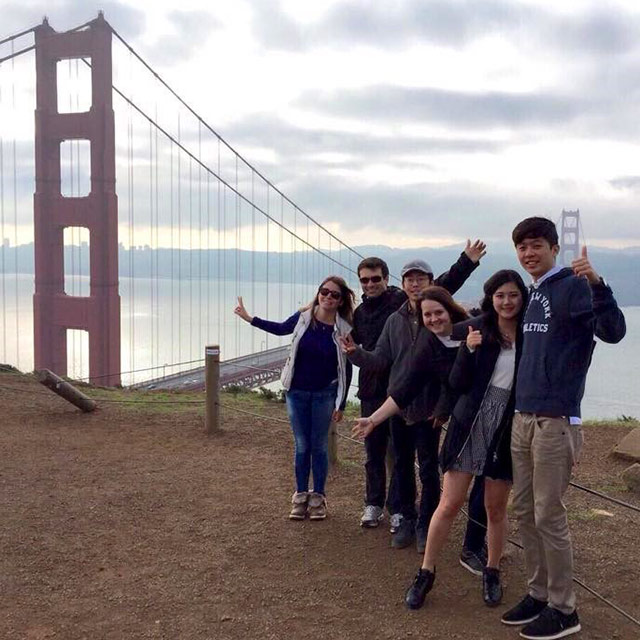
“San Francisco is one of the most beautiful cities in the world,” she said. “It’s small, but has its own charisma and style. It’s not like other American cities; it’s more European. Also, in San Francisco you can find a lot of stuff to do and to see like the Golden Gate Bridge and Pier 39. Just to walk around is nice, and you see lots of colorful districts.”

Her group also enjoyed riding the cable car (an open train trolley). She said it was interesting to stand up all the way while riding the cable car.

Natalia added that a big part of the adventure was the car trip. “I totally recommend to do a road trip through California State Route 1. It’s an amazing route: the road runs between the ocean and mountains.”

Sibel Can Uzun from Turkey, an IEC/IBE student, took the short drive to Los Angeles.

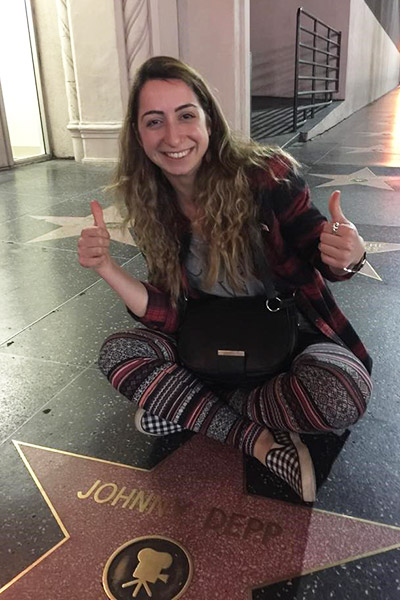
Hollywood Boulevard“When I went to LA, I was walking on the Hollywood Boulevard and everybody was taking pictures with the stars. I did the same,” she said. “Lots of people were wearing costumes like Spider-Man and Captain Jack Sparrow. My favorite was Captain Jack Sparrow because I love (actor) Johnny Depp.

“A lot of tourists were there, too, in front of the Chinese Theater taking pictures. I looked at all the famous artists’ names. It was amazing.”

Amy Sakurai is an IEC student from Japan who visited the Grand Canyon, a spectacular place to see in northern Arizona.

“I really loved the Grand Canyon,” she said. “It was so amazing. I went there with SDSU friends and spent three nights together during the Thanksgiving holiday. We talked and laughed a lot. I have a lot of good memories from there.”

The same can be said for so many ALI students who take advantage of the wonderful areas that surround San Diego, California.

Neighborhood Spotlight – Balboa Park

Balboa Park Neighborhood

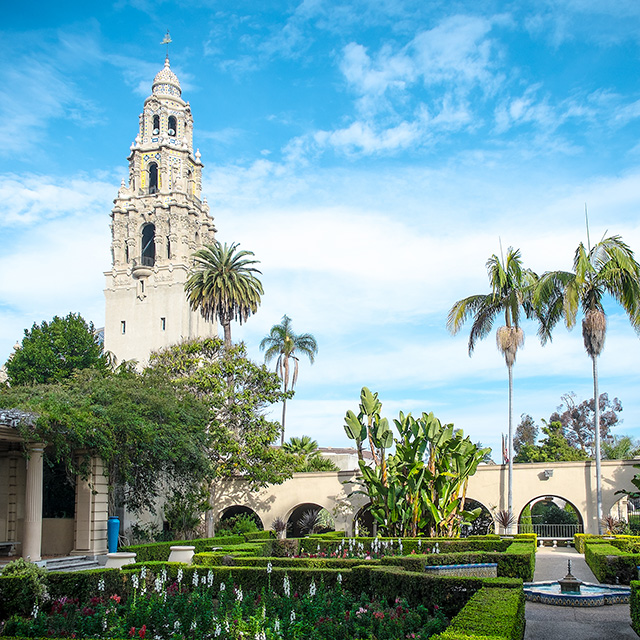
Balboa Park NeighborhoodBalboa Park is celebrating the 100th anniversary of hosting the 1915 Panama-California Exhibition by upgrading exhibits and having special events throughout the year.

Upgrades include expanding the Japanese Friendship Garden and reopening the California Tower – which provides 360-degree views of San Diego – after it was closed for 80 years. There are also improvements such as new lights along the El Prado area and nearly 40 new signs to help you find your way around the park.

Balboa Park covers more than 1,000 acres and offers 15 museums, various gardens, arts and international culture associations, plus the San Diego Zoo. The park’s museums feature displays of art treasures, exotic animal species, unique model railroads, world folk art, sports memorabilia, and rare aircraft.

In addition, Balboa Park is known for its beautiful seasonal flowers, shady groves of trees, and walking paths winding through fascinating areas. Many of the museums are in magnificent Spanish Colonial Revival buildings, which were built for Panama-California Exhibition 100 years ago.

Balboa Park is also home to The Old Globe Theatre, which produces a year-round season of 15 plays and musicals on its three stages, including its highly-regarded Shakespeare festival.


Balboa Park Museums
Japanese Friendship Garden
Marston House
Mingei International Museum
Museum of Photographic Arts
Reuben H Fleet Science Center
San Diego Air & Space Museum
San Diego Automotive Museum
San Diego Hall of Champions
San Diego History Center
San Diego Model Railroad Museum
San Diego Museum of Man
San Diego Natural History Museum
San Diego Museum of Art
Timken Museum of Art
Veterans Museum and Memorial Center

Balboa Park Attractions and Performing Arts
House of Pacific Relations International Cottages
San Diego Civic Youth Ballet
San Diego Junior Theatre
San Diego Youth Symphony
San Diego Zoo
Spanish Village Art Center
Spreckels Organ Pavilion
The Old Globe

Full-Time Requirement and Extra Units

SDUS ALI Blog Thumbnail

Reminder to all students:  To be in status with your F-1 visas, you must be enrolled full-time.  Full time is defined as 12 undergraduate units or 9 graduate units.

There is a per-unit charge of $282 (undergraduate) and $342 (graduate) for any units above 12 undergraduate or 9 graduate.

If you are enrolled in more than 12 undergraduate units or 9 graduate units after the schedule adjustment deadline of February 2nd at 7:59 p.m. , you will have to pay for the additional units.

Questions?  Please contact semester.ces@sdsu.edu

Parking Permit Information for Semester at Students

Calendar

If you wish to purchase a parking permit for the Spring 2021 semester, the permit cost is $174. You will need the vehicle license number, make, and model to purchase one.

You may purchase a semester a parking permit online with SDSU Parking Services, but you must have a credit card and a valid San Diego mailing address since the permit will be mailed to you. Students who do not yet have a local San Diego mailing address, please contact the ALI for further assistance.

If you wish to purchase the parking permit in person, the Parking Services Office is located in the Public Safety Building on campus. In Spring 2021, please call or email them to confirm their opening hours.

Tel:619-594-6671
Email: parking@sdsu.edu


Safety Message from the Chief of Police, SDSU Police Department

Student Services West at SDSU

Student Services West at SDSU

On behalf of the University Police Department, welcome to the new semester.  Your safety is our top priority.  We encourage you to review the following safety information and reminders.


  • Call 9-1-1 from your cell phone or any campus phone to report a crime in progress or life-threatening emergency. “Blue Light” emergency phones are located throughout campus and can be used for reporting emergencies.
  • Call 619-594-1991 to report non-emergencies or to contact the police department.
  • Be aware of your surroundings and avoid distractions such as talking on your cell phone. Walk in groups whenever possible and report suspicious activity by calling 9-1-1.
  • Aztec Shield App is a free app for text and video reporting of crimes and other police-related issues.  You may download this app from your app store.
  • Secure your belongings by locking your doors and windows, including properly locking your bike and keeping valuables out of sight.
  • Free bicycle U-locks are available when you register your bike at the SDSU Police Department.
  • Do not leave valuables unattended such as backpacks, laptops or cellphones.
  • Use the Safety Escort Service available from dusk to dawn to and from on-campus locations by calling 619-594-6659.  The SDSU library shuttle also operates from the library to any on-campus location or parking area.
  • SDSU Alert is the primary way the campus communicates during emergencies.  You may register to receive emergency text messages at sdsu.edu/SDSUAlert.

  • Follow us on Facebook, Instagram and Twitter

The University Police Department is located at the intersection of 55th Street and Remington Road, across from the Aztec Recreation Center.

The police department is operational 24 hours a day, seven days a week.

The Parking Office and Key Issue Office are also housed in the University Police Department and operate during normal business hours.
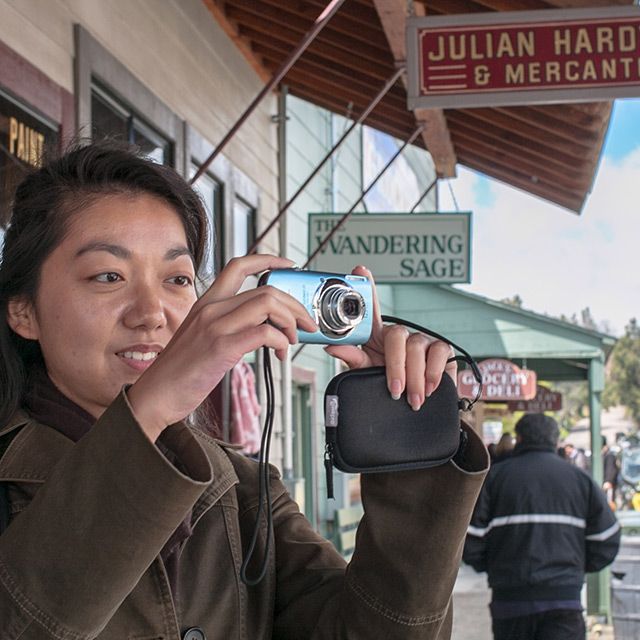
Emergency:            9-1-1
Non-emergency:   619-594-1991
Parking Office:       619-594-6671
Escort Service:      619-594-6659

Please visit our website for additional information at police.sdsu.edu.

 

From Aerospace to Teaching English Abroad

Mosque in Tangier
Mosque in Tangier
Mosque in Tangier

After working in aerospace satellite engineering for more than 20 years, Kyle and Angela Roessler were ready for a change. “We wanted a job where we can travel the world, see different places and meet interesting people,” said Kyle.

From the SDSU website, the Roesslers learned about the American Language Institute’s 130-hour TESL/TEFL certificate program, which they completed in just four weeks by choosing the intensive daytime program. (There’s also the option of 11 weeks of nighttime courses.) Two months later, the Roesslers were teaching English in Casablanca. Talk about taking action on a dream.

Kyle Roessler answered a few questions about their experience abroad.

How did the program’s free worldwide job placement assistance work?
We received lots of interesting options from the ALI assistant director of teacher training the program coordinator, but in the end we found our job in Casablanca from Dave’s ESL Café [a popular, free web resource for English as a Foreign Language teachers all over the world].

What made you choose Morocco?
We wanted somewhere we had never been and that sounded exotic. Casablanca fit those two requirements.

Where did you live?
We rented an apartment near the center of town. Our apartment was near a tram stop, as was the school, so it was easy to get to work.

Dades Gorge
Dades Gorge, near Ouarzazate in south-central Morocco

What did a typical day look like?
We taught at all different times and in different locations, at school and at different businesses. Saturday was our busiest day when we both had three classes (two two-hour classes and one three-hour class). We taught kids aged 7–18 and adults, business English and general, and also SAT and GMAT prep. So we got a lot of different teaching experiences in our nine months.

Were there TESL/TEFL instructors from other countries at your school?
Yes, from Canada, England, Scotland, and Morocco.

Do you have anecdotes to share: small world occurrences, unexpected humor, places you explored?
The kids we worked with loved watching Mr. Bean cartoons. They’re nearly silent, so they’re easy for ESL students to understand and enjoy. Also, we had a tough time initially understanding when to get certain dishes from restaurants. Eventually, we figured out that they only serve couscous on Fridays. That was a surprise, but it fits in with how Moroccans make and serve couscous in their homes (only on Friday, too).

How was the food?
Terrific. We had couscous every Friday, Moroccan tea, and tajine — it’s usually chicken or beef cooked with a variety of vegetables over charcoal in a clay pot. Very yummy. We were in Morocco for Ramadan so got to try many of the sweets that are made especially for that season, like for Christmas.

Tell us about some of the friendships you made.
We lived in the same building as one of our fellow teachers and got to know him well. However, the most surprising friendship is with a young woman we met on the tram. She helped us get new SIM cards for our cell phones when we first arrived, and we got together for lunch about once a month. She even invited us to her parent’s house for lunch.

Hassan II Mosque
Hassan II Mosque in Casablanca

Was teaching abroad everything you hoped it would be?
It was interesting, it was challenging, but it was a lot of fun. We had expected to teach rich and poor alike, but we really only taught business people and kids from rich families. I am not convinced I made a difference in anyone’s life, but who can tell that right away? I only had one class where I felt like everyone was enthusiastic and really learning things; that was a great feeling and it told me I should be teaching beginners more because they are so excited to be learning something new every day. But I think a lot of those issues were due to where we chose to teach.

What do you think are the biggest strengths of the TESL/TEFL Certificate program at SDSU?
The fact we got to spend so much time in classrooms with real ESL students made me feel much more comfortable when I had a two-hour class to prepare for and run on my very first day at the school.

What words of advice do you have for anyone contemplating teaching English abroad?
Go for it! You can’t really tell if it’s for you until you try it out. And anytime you get to travel when someone else is paying you, it’s a good deal.

Anything you’d like to add?
I’m an author of four self-published novels, the most recent entitled, The Navel of the World. I’m working on a new novel that could be of interest to ALI folks because it will introduce the world to my suggestions of how English can be simplified to make it a more useful international language.

Neighborhood Spotlight – Ocean Beach

Ocean Beach

Ocean BeachThis beachfront neighborhood, known to locals as O.B., Ocean Beach is located about 10 miles west of San Diego State University and is easily accessible by car or public transportation.

One of the highlights of O.B. is the countless mom-and-pop shops, i.e., small and independent businesses. The main street, Newport Avenue, started developing when many family-owned businesses opened in the 1930s. The residents are so community-focused that they actively oppose chain businesses – meaning you will find it difficult to find a McDonalds or a Hilton hotel.

Apart from the local business focus, the area has a laidback beach atmosphere. A visitor will probably see shirtless and shoeless surfers going to the beach, and young adults enjoying food at the many open-front restaurants. Other sites and activities are: the kite festival; the Summer OB Street Fair and Chili Cook-off; Oktoberfest; weekly farmer’s market with live bands; and surfing competitions.

Highlights

Dog Beach – Located at the northernmost end of Ocean Beach, this dog retreat has been around for generations. Dogs can run leash-free, dig in the sand, and swim in the ocean.

OB Pier – Almost 2,000 feet long, this pier is the longest on the West Coast.

Point Loma Light House – This landmark and museum allows visitor viewing.

Sunset Cliffs Park – This park includes 50 acres of hillside trails that provide visitors panoramic ocean views.

Robb Field – A park to satisfy the entire family, enjoy its many baseball fields, soccer and football areas, tennis courts, handball courts, a workout gym, basketball courts and skateboard park.

Favorite Restaurants and Bars

South Beach Bar and Grille – known for its fish taco, sit at the wooden bar and watch the sun set.

OB Noodle House – try Asian fusion noodles as well as Vietnamese bbq and Japanese teriyaki.

Azucar – fresh desserts and Cuban specialties like croquetas, pastelitos, and Cuban sandwiches.

Pizza Port – a classic menu of pizza and chicken wings with a San Diego twist.

Hodad’s – visit one of the top 5 hamburger restaurants in the nation, but prepare to stand in line because this place is popular.

Getting There

Car: Parking near the beaches and storefronts are free and abundant.

Bike: Biking in O.B. is good fun – you will see plenty of Beach Cruisers!

Bus: There are three buses (Routes 15, 35 and 923) that leave SDSU’s campus and drop you off on Newport Avenue. And the cost is only $2.25.