Feature Story – San Diego State University Campus Events

Cox Arena Basketball at SDSU

Cox Arena Basketball at SDSUThere are many outstanding events on the San Diego State University campus that are open to students from the American Language Institute (ALI).

The 12,000-seat Viejas Arena hosts events from concerts to comedies, along with the SDSU men’s basketball team, which is traditionally among the top teams in America.

Recording artist Toby Mac performed at the arena Feb. 28, and comedian Jeff Dunham brings his act March 12. English singer, songwriter, and multi-instrumentalist Ellie Goulding performs on stage April 23. Famous singer and songwriter Rihanna will perform at Viejas Arena on May 9.

SDSU’s basketball team plays 16 home games from mid-November until its final regular season game March 5 against its top rival from the University of Nevada Las Vegas. The Aztecs have been among the top 16 teams out of more than 350 in the nation twice in the last five years.

The SDSU Theater features student work in state-of-the-art facilities. Spring events are: Best of the Best Film Fest, Feb. 11-12; The Drowsy Chaperone, March 4-13; The Big Friendly Giant, April 22-May 1; and Emerging Filmmakers Showcase, May 11.

The Cal Coast Credit Union Open Air Theater is a great place to watch concerts under the stars primarily during the summer months. The schedule includes: Walk the Moon, May 26; Halsey, July 16; Shawn Mendes, July 23; and Ray Lamontagne, Sept. 13.

Arts Alive SDSU promotes ongoing events on campus. Among the activities are jewelry and metalwork displays, an energy forum, world music series, SDSU opera, and SDSU symphony.

The Tony Gwynn Baseball Classic took place Feb. 26-28 in honor of the former SDSU baseball coach, who died almost two years ago and is a member of the Major League Baseball Hall of Fame. Universities entered include SDSU, Bryant, Kentucky, Santa Barbara, San Diego, Nebraska, Tulane, and Arizona.

All in all, there are plenty of activities and events to keep ALI students busy on the SDSU campus.


Neighborhood Spotlight – La Jolla

Village of La Jolla

Village of La JollaLa Jolla is one of the most popular beach locations in California because of its beautiful coastline and spectacular views. It’s surrounded by the ocean with the slopes of picturesque Mt. Soledad in the background.

The La Jolla Cove is a favorite spot for swimming, snorkeling and diving, as well as providing a nice area for biking and kayaking. La Jolla Shores features a long, wide beach with soft sand, clean water and gentle waves, and is a great spot for families, sunbathers and beginner surfers.

La Jolla Village is near the Torrey Pines State Natural Reserve, where you’ll find some of the best hiking trails in San Diego. There are many easy hikes about two miles long that will take about an hour to explore and offer breathtaking views of the Pacific Ocean.

Looking from La Jolla to La Jolla ShoresCloser to the La Jolla Village area, the La Jolla Coast Walk Trail runs from La Jolla Shores beach to the La Jolla Cove. This is another easy walk in a very scenic area.

The Birch Aquarium is the public outreach area for the Scripps Institution of Oceanography and has more than 400,000 visitors each year. It features more than 3,000 animals representing 380 species and is located on a hilltop with a spectacular view of the Pacific Ocean.

Shopping in La Jolla ranges from inexpensive items to the most expensive and luxurious brands in the world. You may even see some American celebrities in downtown La Jolla.


La Lolla from Torrey PinesGolf is also a popular activity at the Torrey Pines Golf Course, La Jolla Country Club Golf Course, and the Spindrift Course at La Jolla Beach & Tennis Club. The Farmers Insurance Open includes the top golfers in the world and normally takes place the last week of January at Torrey Pines Golf Course.

La Jolla Dining
Alfonso’s of La Jolla
Bubba’s Smokehouse BBQ
Burger Lounge
Café LaRue
George’s At The Cove
Lean and Green Café
Little Korea
Marine Room
Mary’s English Kitchen
NINE-TEN Restaurant
Pizza on Pearl
Richard Walker’s Pancake House
Rimel’s Rotisserie
Sammy’s Woodfired Pizza
Smash Burger
The Shores Restaurant

La Jolla Attractions and Events
Fourth of July Fireworks at La Jolla Cove
La Jolla Concours d’Elegance
La Jolla Half Marathon
La Jolla Music Society
La Jolla Playhouse
La Jolla Symphony & Chorus
Relay for Life of La Jolla
The Farmers Insurance Open

Feature Story – San Diego State Ranks Among Top Universities in America

SDSU's Hepner Hall

SDSU's Hepner HallWhen students worldwide attend the American Language Institute (ALI) at San Diego State University, they are enrolling in an institution that ranks high in America for its achievements and distinctions.

SDSU is currently ranked in the top 150 national universities and in the top 80 public universities, according to U.S. News & World Report’s annual ranking of America’s Best Colleges.

Additionally, SDSU’s international business undergraduate program is ranked No. 10 in the nation and several graduate programs are standouts in their fields. They include rehabilitation counseling (No. 9), speech language pathology (No. 25), clinical psychology (No. 26), audiology (No. 27), nursing midwifery (No. 29), and public health (No. 30).

SDSU’s campus is a hub of student invention and innovation, led by the Lavin Entrepreneurship Center and the Zahn Innovation Center. FORBES magazine ranked SDSU No. 23 on its list of America’s Most Entrepreneurial Universities.

The Carnegie Foundation classifies SDSU as a doctoral-granting institution with high research activity funded by the National Institutes of Health and the National Science Foundation. Undergraduate students have many opportunities to work with faculty mentors on exciting projects in SDSU’s campus labs and research centers.

For the second consecutive year, SDSU was selected a recipient of INSIGHT Into Diversity Higher Education Excellence in Diversity Award. The national honor recognizes U.S. colleges and universities that demonstrate outstanding commitment to diversity and inclusion. U.S. News and World Report ranked SDSU in the top 20 nationally for ethnic diversity.

In addition, SDSU ranks No. 22 in the nation for the number of students studying abroad, in the latest Institute for International Education’s Open Doors report. More than 2,100 students have international experiences each year, choosing from nearly 400 programs in 52 countries.

On the local level, Aztec Athletics unites the San Diego community. In 2014, SDSU teams won nine Mountain West Conference championships. The football team competed in a fifth consecutive bowl game, ranking it among only 29 universities nationwide that have taken part in such a prestigious game each of the last five years. The men’s basketball team earned a spot among the top 16 in the nation twice in the last five seasons, and Shanieka Thomas won two NCAA triple jump titles – the fourth and fifth national titles for SDSU track and field in the last three years.

All in all, SDSU is a great place to attend for students from any country.

ALI Student Profile – Oleksandr Iakovenko

Oleksandr Iakovenko
Oleksandr Iakovenko
Oleksandr Iakovenko

Oleksandr Iakovenko has always been into adventures of his own and others.

Growing up, the Ukraine native enjoyed skiing and snowboarding in his homeland and several surrounding countries.

Then, after attending a private Ukrainian university as a business administration major, he went to work as a manager in the airline business.

His adventure from there? He is enrolled in the pre-MBA program at the San Diego State University American Language Institute with hopes of one day obtaining his business MBA.

“After years of working, I realized that I needed more knowledge for my career,” he said. “I observed information on the Internet and found that the ALI pre-MBA and pre-Master’s programs are among the best in the United States. That’s why I came here.”

Oleksandr plans to return to his Ukrainian home, located about 40 kilometers (25 miles) from the Russian border, after attending one semester at ALI. His goal is to work back home for several months, then return to America and enroll in an MBA program, possibly at SDSU.

“The university here is very nice, especially the campus and the teachers” he said. “The teachers are the best feature of the program; they are great. Everyone here is really kind and willing to help students.”

Among other items, Oleksandr has been pleased with how much ALI instructors have helped him with his English pronunciation and grammar. He speaks four languages: Ukrainian, Russian, English, and French.

According to Oleksandr, he has been helped greatly being surrounded in his classes by students from more than 20 countries such as Brazil, South Korea, Saudi Arabia, and China.

“It has been very useful to exchange stories and ideas with students from other countries,” he said. “It’s a different approach; it’s more than just learning from books.”

No matter where his career takes him, there are certain to be many more adventures for the Ukrainian student.

Neighborhood Spotlight – Julian

Julian - California

Julian - CaliforniaNestled in a forest, the beautiful mountain town of Julian is about a one-hour drive from San Diego. Among other things, it is famous for its apple pie, gold mining, and hiking.

Each year, Julian hosts its Apple Days Celebration in early October. During the month, 10,000 apple pies a week are baked, when tourists come from all over Southern California to enjoy the fall colors, cool breezes, and frontier-town atmosphere.

Mom’s Pie House, located on the town’s main street, is the place where visitors gather to enjoy apple pie, ice cream, and coffee. During the fall season, when Julian attracts its most visitors, the line sometimes goes out the door as people wait to have Julian’s most popular treat.

Julian is also known for its Gold Rush Days, which normally take place the last weekend in May. The event celebrates the discovery of gold in 1869 in the community and invites visitors to learn more about its history, with entertainment including gold panning, tomahawk throwing demonstrations, skits, candle dipping, and more.

In the winter of 1869, former slave Fred Coleman discovered gold in a small creek just outside of Julian. Within a few weeks, more than 800 prospectors from all over the country were headed to Julian in search of gold.

Hiking and biking are also popular in and around Julian. Trails range from the Stonewall Peak Trail, which can be finished within a couple hours, to the much more challenging Three Sisters Waterfalls Trail that is recommended only for very experienced hikers.

Downtown Julian features specialty shops lining the historic streets, including the Bird Watcher gift store and the Julian Cider Mill, which features jams, jellies, and a variety of nuts. The entire main street is only a few blocks long, so visitors can see all of the stores even if they take their time at each location.

The streets of downtown Julian additionally feature horse-drawn carriages where you can ride through the area in 20 minutes. There is also a western-era cowboy demonstration that takes place each weekend afternoon.

Julian Dining
Apple Alley Bakery
Buffalo Bill’s Restaurant
Candied Apple Pastry Company
Granny’s Kitchen
Heroes
Jeremy’s on the Hill California Bistro
Julian Café and Bakery
The Julian Grille
Julian Tea & Cottage Arts
Miner’s Diner
Mom’s Pie House
Poncho Villas
Romano’s Italian Restaurant
Rongbranch Restaurant
Soups & Such Café
Wynola Pizza & Bistro

Program Spotlight: Social Entrepreneurship Students Hold Fundraiser to Help People Worldwide

Social Entrepreneurship Fundraiser

Social Entrepreneurship FundraiserAccording to Paloma Gouveia, “the thing we need most now in the world is compassion.”

A Brazilian student in the groundbreaking Social Entrepreneurship (SE) certificate program at SDSU’s American Language Institute, she was among 20 classmates who spread compassion during the summer semester.

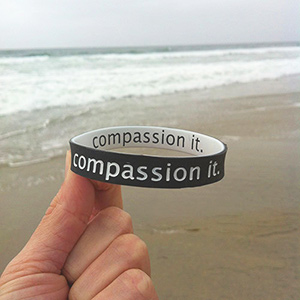
Through the selling of Compassion It bracelets, the SE students raised $1,000 to help the following individuals make their dreams become reality:

  • A farming woman in Armenia growing fruits and vegetables
  • A single mother in Colombia developing her own clothing shop
  • A fisherman in the Philippines buying additional nets and accessories for his boat
  • A woman in Kenya purchasing a dairy cow

“If I explain to someone what social entrepreneurship is, I will use the Compassion It fundraiser as a perfect example,” Gouveia said. “You care about others, think about good actions, and share all the love you have. In doing so, you help others live their lives in a better way.”

Sara Schairer, founder of San Diego-based Compassion It, provided the bracelets at a reduced cost for the SE students’ fundraiser. Her organization is a nonprofit global-social movement that inspires compassionate actions and attitudes.

The Compassion It bracelets are intended primarily for fundraisers. At an affordable cost, communities, schools, businesses, and even families can raise money using the bracelets,  influence positive behaviors through a pass-it-on ripple effect, and have an impact of peace and mindfulness that affects everyone.

All money for the initial purchase of wristbands is recycled back into Compassion It operations and programs, including compassion education, communication efforts, and, of course, producing more wristbands that will travel the globe.

The four gifts provided by the SE fundraiser were made possible through Kiva, a nonprofit organization whose mission is to connect people through lending to help alleviate poverty. Kiva enables individuals to lend as little as $25 to create opportunity around the world.

Students participating in the SE fundraiser were from Brazil, Columbia, Italy, Japan, Saudi Arabia, South Korea, Taiwan, and Turkey.

The Compassion It bracelets were black on one side and white on the other. Students began the day with the bracelet showing its black side. Once they performed a compassionate act, they would flip their bracelet from black to white. Compassionate acts included volunteering, providing food/money to a homeless person, helping an elderly person across the street, placing coins in a parking meter that was almost expired, sending someone flowers, and taking a fellow classmate to the airport, among other things.

“In the history of mankind, too many people just answer the world’s problems by saying, ‘who cares?’” noted Italian student Matteo Marchisio. “Now, social entrepreneurship gives a possible way to stop this thinking.”

Kelly Shah, ALI social entrepreneurship program director, said the summer fundraiser took place for several reasons: providing students with social involvement, practicing English with a purpose, the business aspect of learning to pitch an idea, and having a real-life occurrence.

“We were looking for something outside of the classroom to provide a great experience for our students,” she said.

The SE program focuses on creating businesses that solve social problems. A prime example is TOMS Shoes, which matches every pair of shoes purchased with a pair of new shoes for a person in need.

Students are each creating a project along social entrepreneurship lines. For instance, Gouveia enjoys photography and is putting together a website to sell her photos, with part of the profit being donated to animal institutions and zoos. Marchisio has developed a plan to sell a sci-fi book he has written with a portion of the income being donated to a foundation focused on fighting illiteracy.

“I studied TOMS Shoes and really appreciated the organization’s attempt to help people,” he said. “I am trying to fight a social disadvantage and help people who need it.”


TESL/TEFL Student Continues His English Teaching Career

Joe Candelario

Joe CandelarioEditor’s note: The ALI will be updating its student profiles to let you know what some of our former students are doing today. Here is the original blog on Joe Candelario, posted Aug. 16, 2013, along with a look at his current status. Today Joe Candelario is on a clear career path – he recently came back from teaching English in the Czech Republic, and is working as a facilitator at the American Language Institute (ALI) at San Diego State University (SDSU). However, after graduating college Candelario wasn’t so sure of a direction. When a friend told him about the ALI, he decided to take a chance and move forward with his future. “I thought the teacher training program sounded like a good idea, so after thinking about it for a couple months, I decided to go through with it and enrolled in the TESL/TEFL certificate program,” he said. After graduating from the program, Candelario found a position as an English teacher in the Czech Republic. He taught young children from the age of kindergarten to third grade, and credits the ALI teacher training program with helping him teach English successfully. “One of the most important things that I got from Van [director] was to be prepared, have contingency plans, and always be flexible, so you can pull something out of your hat if something goes wrong. I can’t tell you how many times I forgot to bring my lesson plans or English cards. I would have to think of something on the spot, so that flexibility and multifaceted skill-set really helped out teaching in the Czech Republic.” Candelario has taught at a summer camp in France and still plans to teach abroad either in Europe or South America. He definitely recommends the program for “anyone who is adventurous and is always looking to learn new things.” He also advises that, “It pays off to know, to meet, and to network when you are living abroad because you never know what is in your future.” Czech Republic

Update on Joe

Did you get to teach in Europe or South America? If so, how did it work out? I taught in Podebrady and Nymburk, Czech Republic, which were less than an hour from Prague. It went really well for a first job teaching children. The most difficult thing was creating my own curriculum for five different age groups. I also taught at an English immersion camp in France called “American Village” for two summers. Those were both great experiences. Will you share an anecdote or two of your experiences? In the Czech Republic, I remember teaching a group of 5-6 kindergarteners who were by far my most difficult group at that level. There were two boys who were quite rowdy, a couple well-behaved children, and one little girl who was always silent during the lessons. A few months into teaching this group – right when I’d just about had it – the little girl finally responded in English. It made everything all worthwhile. In the American Village, it was like going off to Neverland. My first summer, I worked at a gorgeous, centuries-old Burgundian Chateau which was loaded with history. Surrounding the stone walls of the grounds were rolling vineyard hills. Each day after breakfast we’d teach ESL, then put on skits, followed by different “American” games and activities. The counselors were a vibrant mix of travelers, linguists, raconteurs, intellectuals, musicians, and people in search for meaning in life. I’d do it again in a heartbeat. How long did you teach as a facilitator at ALI, and how did it help you? I taught as a facilitator for a couple months in 2012 and again in 2013 upon returning from Europe. It was a good opportunity to observe skilled teachers and to gain experience working with international students. What are you doing nowadays? Since then, I’ve been teaching at EF (Education First) San Diego. (Editor’s note: This is an international language school in San Diego where students come to study English.) It’s a solid job. I work with Allen Yang, who also did the TEFL program and worked as a facilitator at ALI. How much of a factor has the TESL/TEFL program been in your life? I’m grateful for my experience doing the teacher training program and facilitating at ALI. The staff were supportive and encouraging and were invaluable in helping me in my job hunt early on.

TESL/TEFL – Changing Your Life Can Change Many Other Lives

Alicia Wszelaki, TESL/TEFL Certificate Graduate

Editor’s note: The ALI will be updating its student profiles twice monthly to let you know what some of our former students are doing today. Here is the original blog on Alicia Wszelaki, along with a look at her current status.

Alicia Wszelaki, TESL/TEFL Certificate GraduateIf you’re like most people, you are probably wondering how you can travel the world, make a difference, and still make a living doing so. One way to see the world and pay the bills is through teaching English overseas. A way to start is completing a TEFL certificate program. This program focuses on the development of effective and innovative teaching methods for an international classroom, with the added benefit of helping graduates find jobs overseas.

Alicia Wszelaki completed the TESL/TEFL program at SDSU’s American Language Institute (ALI), then traveled the globe teaching English. She shares her experiences here.

The Program
The program teaches you how to be a teacher. They prepare you to go someplace where you are a foreigner and now you have to become a part of that culture. So the program goes over, not only the essentials of how to teach students a language, but also how to be a part of, and respect that culture. You learn methodologies about teaching and you go through a lot of the theories. This helps you not only in the classroom, but also outside the classroom since you’re communicating everywhere that you go.  I recommend the program at ALI to anybody thinking of changing their career because it gives you a chance to change yourself too, to challenge yourself. The program builds a lot of confidence in people. Before I took it, I was totally afraid to speak in front of a group of people. It became my vehicle to change my life.

Best Candidates for Success
I think the program is a great opportunity for somebody who is willing to take a challenge and willing to step out of their safety role. The program can be for everyone. And I think, in general, if someone is looking into the program, they already have what it takes to go because they’ve already thought about it. Somewhere the seed has been planted and they have what it takes to do it.

Change Your Life
I feel like I started again. I felt like I was going to school for the first time and I really wanted to be there. It empowered me to go out and do something different. Those four weeks really changed my perspective and gave me a lot of confidence. I think that’s the main thing. I think the program gives you confidence because I’ve never taught before. They give you everything that you need; all of the tools. In the morning, you’re in the classroom, then in the afternoon you are in another classroom where you’re actually watching a teacher firsthand and you are interacting with the international community.

Proudest Moment
I was teaching in Japan. I had a group of about 30 kindergartners. Teaching kindergartners involves a lot of songs and activities. There was one girl that would sit in the back of the room and stare at me. She didn’t sing a word, she didn’t clap her hands, she didn’t do ‘head, shoulders, knees and toes;” nothing. I didn’t know how to break through. Then one day the girl was screaming at the top of her lungs. Every single word that I ever taught in the class – every single word to every single song, and doing all the motions. I was like, “Wow, everybody gets it when they’re ready to get it.”

Advice
Just do it. It’s a bit scary to change your life, to say I’m going to leave everything behind and try this without having a safety net. It’s so easy once you do it. People want everything answered for them when they go abroad and start teaching. And sometimes, you just can’t do that because everybody is going to have a different experience. Answers will come when you get there. Put yourself out there and everything will come to you. I encourage anybody to try the program, because even if you never leave the country, the program gives you tools to being a successful communicator. In our country, you still have to work with international people, so even if you don’t step outside or get a stamp in your passport, the program still makes you change.

UPDATE ON ALICIA

Alicia WszelakiWhat is your current occupation?
I’m owner of Path 88 Productions, a media production company located in San Diego. In addition to producing documentaries, we specialize in photography and video projects for the travel industry, corporations, and private businesses. Some of our recent films include, Camino The Journey to Santiago and Long Distance.

We understand you are doing a documentary on a Japanese woman who ran an English newsletter for 30 years. Please tell us about that.
Our latest film, The Newsletter, tells the story of a group of women in Kure, Japan who for the last 30 years have published Parkway, an English-language newspaper with global readership. It is a tale of passion, friendship and how life happens between the lines.

This short documentary is a direct result of taking the TESL/TEFL program at the American Language Institute. It is through my time teaching in Japan that I was introduced to the staff of Parkway, who asked me to be their English editor, a position that I have enjoyed since 2008.

You have traveled the world since you were an ALI student. How much of a factor was the TESL/TEFL program in getting you started as a globetrotter?
Being a graduate of the TESL/TESFL program has given me added confidence to travel.  It has opened up opportunities to work and live in other countries. Since my graduation in 2003, I have had the chance to visit, live, work, and teach in over 30 countries.

Do you continue to stay in touch with any of your former classmates or the staff at ALI?
There is a bond with individuals who make the decision to become ESL instructors, whether they stay at home or travel abroad. Teachers share an underlying sense of adventure and a desire to make a difference in people’s lives. It inspires and motivates me to know that my closest friends are the ones I have met abroad and at the ALI.

Do you still consider the TESL/TEFL program a life changer?
Taking The TESL/TEFL program at ALI started a chain of events that have led me to where I am today. I frequently travel the world and interact with various cultures. I tell other people’s stories through photography and motion pictures; my passions. Would this have happened without the course? No. A life Changer, Yes! And thank you.

Becoming an Expatriate. ALI: The Keys to the Kingdom.

Zachary York

By Zachary York

Zachary York
Zachary York

My transition into a professional life from that of academia is riddled with twists and turns, as it is for most people that I know. Throughout my undergrad at the University of Arizona, I studied creative writing and the Italian language. It was there that I got my first taste of being abroad; study abroad in Italy was an eye-opening experience.

After I completed my degree, I sought direction and took to the open road. I backpacked around Europe for two months with my best friend. It was somewhere on our train journey through Italy and France that I decided to return to school and pursue a master’s in Special Education.

I found a program at SDSU and made quick work of taking the prerequisite courses. During said courses, I was afforded the opportunity to take a short internship at the Western Academy of Beijing, where I gained firsthand experience in international classrooms, building scaffolding for the students with different learning styles.

During some off time, I was able to observe an ESL/ EFL class; I was bitten by the bug. When I returned to the U.S. after what seemed like a couple days but in actuality was five weeks, I switched my focus to Teaching English as a Foreign language. It just so happens that SDSU has the American Language Institute (ALI) and I started to get my things in order so I could start the program.

Among those things was the realization that the trailhead in front of me was the culmination of my language education and my desire to elevate the everlasting itch for all things foreign, to paraphrase Melville. Most of all, however, this job utilizes my empathetic personality and strong drive to help people.

This is where I played my hand and committed to studying at the ALI; easily one of the best choices of my young life. The curriculum included everything that will start me on my path to become a global educator and to expatriate-hood. One of the best parts, in my opinion, was the mentorship program. I have always aligned myself with those from whom I can learn. The mentorship program was just what I needed to build that personal bridge in-between what I was learning and the production stage. I first started having an academic mentor in high school; haven’t looked back. This type of relationship really works for me and my style of learning.

With the wide program of classes offered by the ALI, I now step forward to my job at a local school in the land of 1000 smiles [Thailand] with a strong confidence and preparedness. I was able to utilize the network I cultivated here in America to build a relationship with the powers that be at that school, in addition to some expatriates in other countries.

John Dewey said, “To find out what one is fitted to do, and to secure an opportunity to do it, is the key to happiness.” ALI has given me those opportunities and, helped me to hone my focus to embrace my itchy feet.

As I look forward into the very near future of my adoption of an expatriate lifestyle, I see many tasks and hoops to jump through. But as the time draws close and my ducks get in their rows,

I am afforded a view of my new home: the Far East. This lifestyle has always been one that I dreamt of adopting and, I credit the ALI with helping me to find the tune which makes my heart sing.

Follow Zachary York’s expat adventures at zacyork.wordpress.com

Program Spotlight – Community Service Recognition

Community Service at ALI

Community Service at ALIServing the local community is an important part of life for many international students at San Diego State University’s American Language Institute (ALI).
To acknowledge those who are volunteering regularly, the ALI recently launched a Community Service Recognition program. Students who consistently make a difference in the community now earn an embossed seal on their academic certificate or on a letter of recognition.

Jesus Carrillo from Colombia has been actively involved in community service for many years. During his time as a student at the ALI, he has served food at St. Vincent de Paul Village that provides temporary housing to those in need, volunteered with Boys and Girls Clubs, helped to restore Chollas Creek, and danced with senior adults at the College Avenue Center.

“Before I came to San Diego, I knew that ALI was promoting volunteering activities,” he said. “It was not difficult for me to accept the invitation from the Student Life office and its team. I am very surprised about the commitment of these people, as well as the diversity of partners they have. Besides the volunteering, activities promote sharing with students from all over the world and improving English skills.”

Fellow Colombian Claudia Toca has participated in activities such as canyon restoration, community garden maintenance, health and wellness programs for San Diego-area youths, and serving meals at St. Vincent de Paul. She also took part in volunteer projects before attending the ALI.

“In my present and future, these kind of activities help me to feel satisfaction and tranquility,” she said. “These activities are part of my social and environmental consciousness.”

The Community Service Recognition program is available to students in the following programs: Intensive English for Communication (IEC), International Business English (IBE), Social Entrepreneurship (SE), English for Academic Purposes (EAP), Pre-MBA and Pre-Master’s, and Semester at SDSU.

Alan Schuchman, the ALI Student Life Coordinator, oversees the ALI community service program. He said that the ALI takes its inspiration from SDSU’s strategic plan and the goal of being a good neighbor to the surrounding community.

“We see how eager our students are to do positive things while they’re here and we’re happy to connect them with projects organized by local nonprofits,” Schuchman explained. “The students are directly involved; they connect with local residents and develop real-life communication skills. As they help build a better community, it’s clear their lives are also being enhanced.”