Nov. 20 Mother Goose Parade
The largest parade in San Diego County takes place in the East County city of El Cajon and features celebrities, floats, clowns, bands, equestrians, and more.
Now-January 1 SeaWorld’s Christmas Celebration
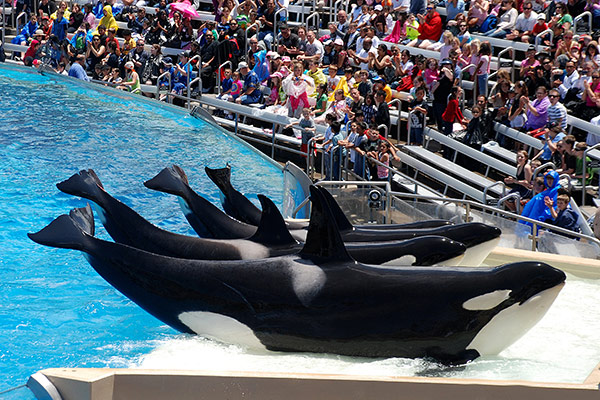
The theme park features Santa’s Reindeer, sea lions, snow, a nightly lighting of Christmas tree lights, the Christmas Village, and much more.
December
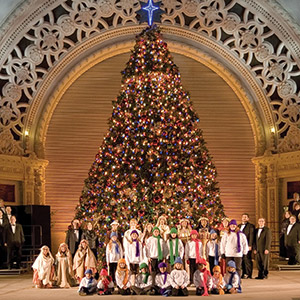
Dec. 2 and 3 Balboa Park December Nights
This annual event brings families and friends together to spread holiday joy, learn more about the cultural value of Balboa Park, and kick off the “most wonderful time of the year.”
Dec. 4 La Jolla Christmas Parade and Holiday Festival
Marching bands, floats, equestrians, vintage automobiles, and more parade down the streets of La Jolla. The parade ends with a holiday festival featuring craft booths, carnival rides, food, entertainment, and a tree lighting ceremony.
Dec. 10-11 and 16-24 Nutcracker
Audiences of all ages will enjoy the magical story of Clara, who dreams that her new toy nutcracker soldier has come to life, in this classic ballet at the San Diego Civic Theater.
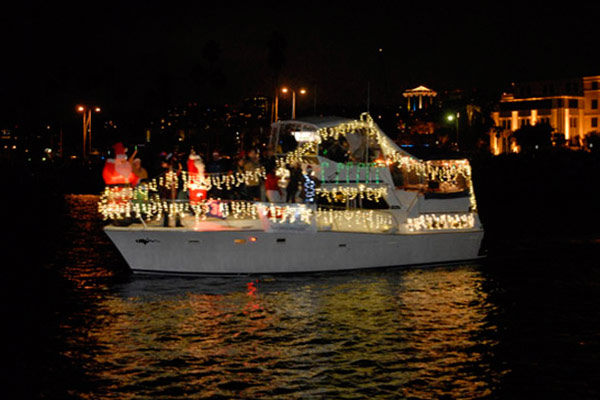
Dec. 11 and Dec. 18 45th annual San Diego Bay Parade of Lights
More than 80 boats are decorated for this holiday boat parade of lights on San Diego Bay. This year’s theme is “It Began with a Roar – San Diego Zoo Celebrates 100 Years.” The Parade proceeds from Shelter Island past Harbor Island, the Embarcadero, Seaport Village, the new Pier and then across the bay to Coronado and Ferry Landing in Coronado.
Dec. 27 Port of San Diego Big Bay Balloon Parade
A harborside parade along Harbor Drive in downtown San Diego is followed by a major college football bowl game at Qualcomm Stadium in Mission Valley featuring teams from the Pac 12 and Big Ten conferences. The exciting gridiron action also has spectacular pregame and halftime pageantry.
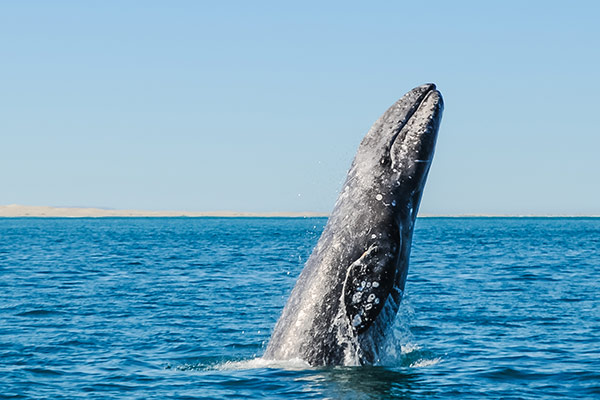
November-April Whale Watching
The California gray whales make their annual migration from the Arctic waters to the warm lagoons in the Gulf of California for breeding. These peaceful giants of the sea come within miles of San Diego’s coastline and can be viewed during daily whale watching excursions and from the Cabrillo National Monument on Point Loma.
January
Dec. 29-Jan. 2 San Diego International Auto Show
This popular annual show at the San Diego Convention Center features the widest variety of new vehicles under one roof. Visitors can also participate in exciting family entertainment and interactive activities.
Jan. 12-16 Borrego Springs Film Festival
The festival features five days of independent films. Networking events and parties take place at various local resorts throughout the weekend.
Carissa Baird, graduate of the TESL/TEFL teacher training program at SDSU’s American Language Institute
“What did I get myself into?!” was Carissa Baird’s first impression upon arriving in Riyadh, Saudi Arabia in 2013 to teach English as a second language. By the time she left, six months later, she would write on her blog:
From the expats to the locals, fellow teachers and students alike, I have experienced some of the most genuine kindness I’ve ever come across in my life … I’ve received countless gifts and other expressions of gratitude and kindness from people I’ve only known a few months, sometimes just a few hours. I’ve been invited to their homes, their workplaces, and their social gatherings. If they cannot offer you food, they will always be ready with a smile, a greeting, a kiss. Their generosity is compelling.
“The TESL/TEFL teacher training program at the ALI [SDSU’s American Language Institute] opened me up to a world that I didn’t even know existed,” said Baird. “Teaching English was just going to be a means for travel at the time I started, but I realized that it provided so much more. Not only have I been able to work and travel both domestically and abroad, but this certification made me realize that I LOVE teaching as a profession, and now I’m pursuing my master’s degree in TESOL (Teaching English to Speakers of Other Languages). The program at ALI put me in touch with some great people, including my assigned mentor who I still seek out for advice now, three years later.”
Baird shares her journey from trepidation to exhilaration:
Where did you go to school and how did you find out about the TESL/TEFL Certificate program at SDSU’s American Language Institute?
I graduated from San Francisco State University in 2010 with a B.A. in art with an emphasis in art history. In 2012, I heard about teaching English as a second-language and researched programs to obtain my teaching certificate. I enrolled in the ALI program in spring 2012 and completed it 11 weeks later. I was a facilitator in the ALI classes for a few months until I got my first job teaching abroad.
How did the program’s free worldwide job placement assistance work?
I would receive emails from Van [Hillier, program director] about teaching opportunities and apply for the ones I thought might be interesting. When the email for Saudi Arabia came through, I just thought … WHY NOT!? How many people do you meet that can say they lived there? So I went for it out of sheer curiosity and potential bragging rights. (And the money was good). Also, before I left, they put me in touch with another teacher that was also going, so it was nice to have someone else along for the ride.
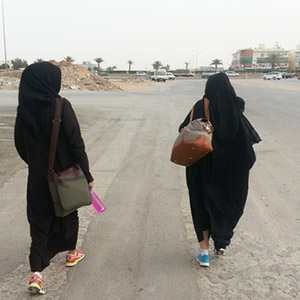
Baird (left) and another ESL teacher in Saudi Arabia walking to the main road from their apartment, on their way to the DQ — Riyadh’s Diplomatic Quarter. (“It was the only compound where we could run/exercise outside, without having to wear an abaya,” said Baird. “Note our running shoes, haha!”)
How soon after completing the program were you teaching English abroad?
Six months, however it could have been a lot sooner if I’d pursued it more aggressively.
Where did you live?
The company I worked for arranged our housing and had us staying in our own apartments, which was basically a long-term-stay hotel out in the middle of nowhere. We weren’t on a compound or anything. Our housing was paid for but we didn’t have a choice as to where/what it was.
What did a typical day look like?
Be picked up by a driver in a van full of other female teachers at 7 a.m. and be taken to Saudi Electronic University to start classes at 8 am. (There’s no mass transportation other than taxis, and women aren’t allowed to drive, so transportation was provided by the company.) When I first started I had only one class per week, but as time went on I had more and more classes both at the original school and then at Princess Nora University. Classes — with all female students — were about 2-4 hours long, depending on the class, and levels ranging from beginning to advanced.
Some days, toward the end of my stay, I would teach two or three classes and then go to my private tutoring classes in the evenings. (Which is exhausting after a full day of regular classes, but a good way to make extra cash.) But staying busy in Saudi Arabia was a blessing, as there wasn’t much else to do. After school, the driver would come back to pick us up and then drop us off at home, making several stops along the way since not all the teachers lived in the same place. Usually we would stay home after that, making dinner, watching TV, sleeping, or whatever.
KSA [Kingdom of Saudi Arabia] wasn’t too accommodating when it came to entertainment or other recreational activities, especially for single, Western women without family nearby. Going to the mall or the grocery store was a common outing, or any events that the foreign embassies were putting on in the evenings, which were lifesaving, but hard to get into.
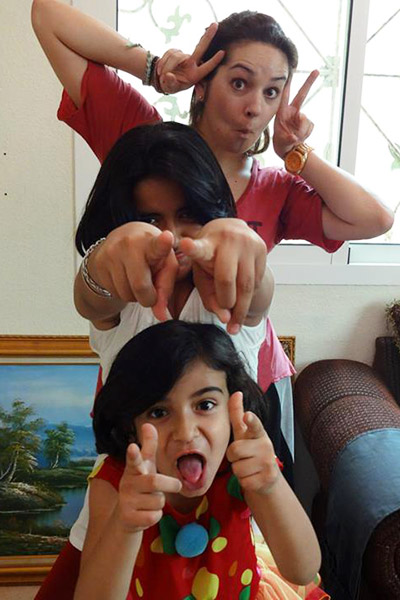
Baird with two of the four children she tutored privately in Saudi Arabia. (“I don’t have many photos from teaching in Saudi Arabia because the women weren’t allowed to take photos of their faces,” said Baird. “So mostly you get photos of their hands forming ‘peace’ signs. Children are allowed to be shown because they haven’t hit puberty yet and aren’t required to cover up.”)
Why were foreign embassy events hard to get into and what kind of events were they?
Saudi Arabia is a “dry” country, so there is no alcohol or bars. Also, there are no movie theaters or live music/concerts (secular music) or dancing venues. A lot of the entertainment options we take for granted here are practically non-existent there, unless you have a hook-up at an embassy. The foreign embassies were like an underground social scene for expats in KSA. There were bars, live concerts, dancing and DJs, special dinners and festivals, etc. BUT to get into them, you usually had to have someone directly involved with the embassy to “sponsor” you, which basically meant they’d vouch for you to be allowed in, understanding that you wouldn’t do anything stupid. When you entered the event you had to be on a list, show a valid passport, check your cell phone at the door (no pictures allowed), then go through a physical screening process — metal detectors, etc. — before being allowed in. Once inside though, it’s like Pleasure Island from Pinocchio!
Were there TESL/TEFL instructors from other countries at your school?
Yes, there were instructors from the USA, the UK, Scotland, and even from Saudi Arabia, Jordan, and Oman. I’ve also met instructors from Australia and India.
Do you have anecdotes to share: small world occurrences, unexpected humor, places you explored?
Oh my gosh! I could go on and on about these things! Living abroad for the first time was insanely difficult in the beginning, but incredibly rewarding in the end. The cultural exchange and personal growth, as well as friendships that come out of it are invaluable. I have too many stories, but I’ll direct you to my blog: carissasade.tumblr.com.
An excerpt:
I met a guy in Saudi Arabia who happened to be staying at my hotel (although we weren’t really allowed to speak to each other) who was from San Diego, received his TEFL at ALI, went to school in San Francisco at the same time I was there, and then took his first job teaching abroad in Saudi with the same company as mine. We ended up becoming great friends and traveling together a lot. After losing touch for a year or two, we ran into each other again in San Diego, teaching at the same language school! SMALL WORLD INDEED!
How was the food?
Food in Saudi Arabia, when you can find the authentic stuff, is great! I really liked the traditional Saudi dish kabsa which is basically meat, rice, and sauce — but with lots of spice and flavors! Something typical that the girls would bring to class is Saudi “coffee,” which was basically cardamom tea that I grew accustomed to, but didn’t like at the beginning! This was usually accompanied by dates — a staple in the country — and lots and lots of sweets, candy, cakes, etc. Also, grape leaves stuffed with olives and drenched in olive oil were delish! However, it seemed that the more “popular” places to dine were American restaurant chains, ironically! Applebee’s and a cheesy Italian place called Pietto’s were hot spots. But sometimes when you’re craving a little bit of home, this was nice.
Tell us about some of the friendships you made.
Gosh, I’ve made a lot of great friends both with colleagues and students alike over the past few years. In Saudi Arabia, I made great friends with a few teachers — male and female — that I got to travel with a lot while we were there, to Dubai, Sri Lanka, and Bahrain. The students I’ve had at the schools I’ve taught at in the U.S. have had such a significant impact on me. I still talk to many of them even now, almost two years later, and they tell me about their marriages, their moves to other parts of the country, and their newest educational and professional endeavors. (Facebook is a wonderful tool in this field of work!)
What do you think are the biggest strengths of SDSU’s TESL/TEFL Certificate program at SDSU?
Taking a similar class right now, I have to say that the SDSU program completely surpasses it on so many levels. I liked the support both in and out of the classroom, and I enjoyed the variety of instructors whose strengths were highlighted in different presentations throughout the program. The variety in teaching and learning new strategies was so awesome! It was great to be able to learn straight from the experts of specific aspects involved in ESL teaching. Also, being able to schedule and observe classes at the ALI was so great! In the class I’m in now, we have to go out and try to find our own classes to observe, which can be grueling. The ALI program was very hands-on and helpful in finding me a job after the program, even if it was as a facilitator there at SDSU. I felt very prepared.
Where are you pursuing your master’s in TESOL and where would you like to teach?
CSU-Fullerton. I’m hoping to obtain this master’s to have the ability to teach at a community college or university here in California, however I might have it in me to go abroad once again! Not sure where, but the possibilities are endless and that excites me!
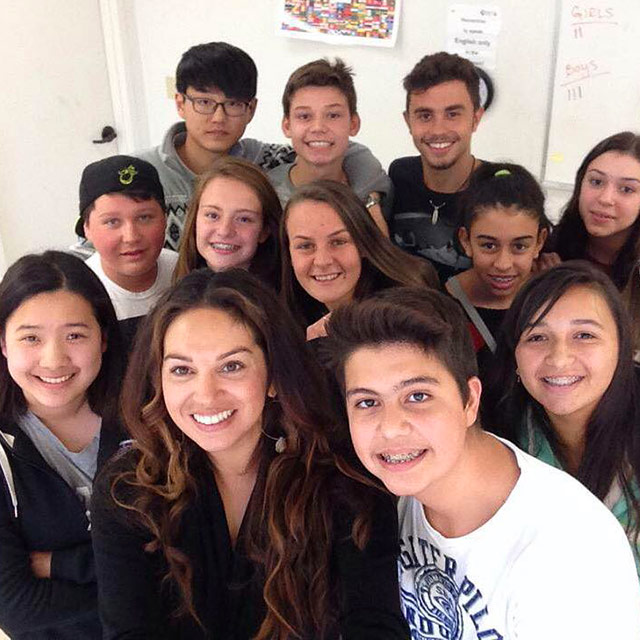
Baird and her students at International House – San Diego, a private language school in Fashion Valley where she worked after returning from Saudi Arabia.
Who was your mentor during the SDSU program and why do you still seek out him out for advice three years later?
Ken Levin was my mentor and yes, I still contact him from time to time, and even just meet up for coffee every once in a while! He’s great for intelligent conversation about the field and excellent advice. I’ve even had him help me out by writing recommendation letters for both graduate schools and professional opportunities. He’s always been super supportive and able to relate to the wacky world of international work.
Anything you’d like to add?
Teaching English has introduced me to some amazing people from all over the world that I’ve formed lasting friendships with — students, co-workers, and administrators. There’s a whole world of people that ESL teaching has opened me up to, with endless opportunities, and I’m so grateful that I fell into this amazing community! I really hope this helps and inspires anyone who is looking to go down this road. It seriously brings tears to my eyes and so much joy to think about what this little certificate has brought to my life! I’ve lived more in the last few years than most people have in their lifetimes and I’m thankful to TESOL for providing me with the confidence and means to pursue these otherwise overlooked opportunities. Travel and teaching are two passions I never thought would guide my life’s path, but now, I can’t think of any other way. Thank you to ALI for being the catalyst to this life of adventure!
For more information on the 130-hour TESL/TEFL Certificate program at SDSU Global Campus, visit ali.sdsu.edu/teslteflcertificate
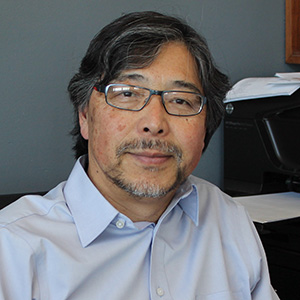
When Kotaro Nakamura came from Yokohama to learn English at SDSU’s American Language Institute (ALI) in 1977, he thought he’d be on campus for a couple years before going back to Japan.
Nearly four decades later, he’s still on campus now, as the director of SDSU’s School of Art and Design.
After passing the TOEFL test through ALI, Nakamura became a graduate student at the School of Art and Design from 1978-80. A professor convinced him to stick around for a year and complete his practical training by teaching.
“At that point, I planned on going back to Japan,” he said. “Then I met a girl on campus and decided to stay.”
The girl, Katherine, was an English major. She and Nakamura have been married 36 years.
“This is not how I planned it,” he said. “Things happened that way. I had planned on going back to Japan to be with my friends and family. In hindsight, I’m very lucky to be here.”
Nakamura remembers coming to the ALI when classes were held in a two-story apartment building near the former SDSU student health center, which was across Campanile Drive from the modern Gateway Center that now hosts the ALI.
“The teachers were great,” he said. “They really cared about students. They helped you make the transition from a foreign student to a native speaker. I appreciated their care.”
Their nurturing extended beyond the classroom. Nakamura noted that his teachers even helped him with tasks such as using a checkbook.
Nakamura came to SDSU before the days of the internet, discovering the campus through a Tokyo travel agency brochure. He said he was attracted to the university because of its environmental design program.
When Nakamura arrived at SDSU, he could not speak English even though he had studied the language for several years through middle school, high school, and three years at a Japanese university.
“The Japanese education is based on reading and writing, not speaking,” he said. “I hung around Japanese students and spoke Japanese because I was scared. My English became much better after I met my girlfriend.”
Even after all these years in San Diego, Nakamura sometimes wonders what life back in Japan would have been like for him.
“Once in a while, I do get to go back,” he said. “My friends there seem so old. It’s a very tough life in Japan. The stress level there is much higher versus San Diego.”
Nakamura advanced to the level of interim director at SDSU’s College of Art and Design in 2013, and became the permanent director in 2015.
Outside of SDSU, Nakamura is the owner of RNT Architects, an architectural design and master planning business.
“My teaching and practice feed off each other,” he said. “What I teach in the classroom is directly influenced from my practice. If I was just teaching, I wouldn’t learn what is going on in the practice of design.”
Nakamura also reaches out to advanced level ALI students at their orientation to enroll in regular courses on campus.
“I tell the students that I was once one of them,” he concluded. “It’s interesting to look at the students and see myself from years ago.”
San Diego State University’s American Language Institute (ALI) is part of SDSU Global Campus, whose motto is “Never Stop Learning.”
ALI student Fadi Sassine is a perfect example of the slogan.
At age 37, the Lebanon native came to ALI a month ago to improve his strategic digital and internet skills through the International Business English (IBE) program.
“I came here for the essence,” Sassine said. “You should never stop learning.”
Sassine studied business and economics at Lebanese University. He spent the next 14 years in Kuwait, five years in the banking industry and nine as a advertising director for the BBDO Advertising Agency.
He had vacationed in California two years ago and thought San Diego would be a perfect place to study.
“We lacked digital and internet skills in the Middle East,” Sassine said. “I decided to resign and go study English to improve my content and writing skills in parallel with the technical. I needed to write English every minute. I wanted to improve myself, which is what I believe in.”
He discovered SDSU and the ALI through a Google search.
“I like the entire family of SDSU,” he said. “You can go to the pool, watch kids play basketball, play football (soccer), or go to the gymnasium. It’s not only an educational institution, it’s a lifestyle.”
After finishing his education in San Diego, Sassine will have the option of either going back to any of the Gulf Cooperation Council (GCC) countries or Lebanon.
“As a digital marketer, there are a lot of opportunities,” he said. “Generally, whatever you learn and bring from the West can be an added value to any local or international corporate place.
Sassine said he really enjoys the mild weather in San Diego compared to the “microwave” of Kuwait. He also likes American food such as hot dogs, hamburgers, french fries, ice cream, and chocolate.
Most of all, he’s happy to be learning skills necessary to the higher-management level.
“You should always learn and improve yourself, regardless of your age,” he said. “Life can change quickly.”
JULY
July 4 – Independence Day (office is closed)
July 5 – Summer 2016 IEC/IBE/SE Session B Begins
July 11 – Summer 2016 TESL/TEFL Certificate Day Sessions Begins
July 18 – IEC/IBE/SE Flex Entry Date
AUGUST
August 5 – Summer 2016 TESL/TEFL Certificate Day Sessions Ends
August 8 – IEC Summer Session: Discover California Begins
August 11 – Summer 2016 IEC/IBE/SE Full Term and Session B Ends
August 12 – Summer 2016 EAP/Pre-MBA and Pre-Master’s Ends
August 15-19 – Academic Break (no classes for English language program students)
August 15 – Fall 2016 Semester at SDSU Begins
August 15 – IEC Summer Session: Discover California Flex Entry Date
August 22 – Fall 2016 EAP/Pre-MBA and Pre-Master’s/IEC/IBE/SE Full Term and Session A Begins
August 22 – IEC Summer Session: Discover California Flex Entry Date
August 29 – IEC/IBE Flex Entry Date
August 30 – Fall 2016 TESL/TEFL Certificate Night Sessions Begins
SEPTEMBER
Sept. 5 – Labor Day (office is closed)
Sept. 12 – IEC/IBE Flex Entry Date
Sept. 26 – Semester at SDSU Business Programs Spring 2017 Application Deadline
OCTOBER
Oct. 13 – Fall 2016 IEC/IBE Session A Ends
Oct. 17 – Fall 2016 IEC/IBE Session B Begins
Oct. 24 – IEC/IBE Flex Entry Date
Oct. 24 – Semester at SDSU General Courses Spring 2017 Application Deadline
Comic-Con International: San Diego, the most popular annual event in town, will take place July 21-24 at the San Diego Convention Center. This multi-genre entertainment and comic convention offers close to 700 special events featuring comics and all aspects of the popular arts.
Each year, the 130,000 visitors’ badges sell out in a matter of minutes online. Forbes magazine refers to Comic-Con as “the largest convention of its kind in the world,” and “the granddaddy of pop culture festivals in the U.S.”
Much of the excitement comes from the guests, who dress as their favorite fictional characters, called cosplaying. Visitors have been known to dress up as characters from Star Wars, Game of Thrones, Batman, Avatar, The Walking Dead, and numerous comic book personalities, among others.
Comic-Con is used by many film studios, comics publishers, and other entertainment companies to preview or announce new movies, series, or other types of comic-related products, such as toys. As examples at this year’s convention, Mattel is showing off its “Ghostbusters” Light & Sound pack and Wonder Woman Barbie, while Diamond Comic Distributors will offer more than 25 previews of its exclusive comic covers and new toys.
Annual events include an eclectic film program, screening rooms devoted to Japanese animation, and more than 300 hours of programming that cover all aspects of comic books and pop culture. At night, there are awards ceremonies, the annual masquerade costume contest, and an international film festival showcasing movies that creators are still hoping to have picked up by the entertainment industry. There is also a celebrity autograph area.
Comic-Con started as the one-day San Diego’s Golden State Comic-Minicon, on March 21, 1970, drawing 100 people. The event was designed to raise funds and generate interest for a larger convention. Soon thereafter, an event called San Diego’s Golden State Comic-Con was held August 1-3, 1970, with more than 300 attendees.
After one more name change (San Diego’s West Coast Comic Convention in 1972), the show officially became the San Diego Comic-Con in 1973. The nonprofit event changed its name to Comic-Con International: San Diego in 1995.
Because Comic-Con attracts 100,000-plus visitors annually, it has grown to include satellite locations such as local hotels and outdoor parks. Programming events, games, anime, and the Comic-Con International Independent Film Festival all take place outside of the Convention Center, making downtown the happening place in San Diego during Comic-Con.
Since space is maxed out in San Diego, other cities have tried to take Comic-Con away from the city. However, Comic-Con recently signed a contract to stay in San Diego through 2018.
Located in the South Bay area of San Diego County, Chula Vista is the second largest city in the county and the 14th largest in California.
The U.S. Olympic Training Center in Chula Vista, which opened in 1995, has facilities for archery, beach volleyball, canoeing/kayaking, cycling, field hockey, rowing, rugby, soccer, tennis, track & field, triathlon, and cross-training for various winter sports. Athletes are provided housing, dining, local transportation, recreational facilities, and professional development programs.
Music enthusiasts enjoy Sleep Train Amphitheatre, one of the largest live-music concert venues in San Diego. The outdoor facility can accommodate approximately 20,000 people and offers about 25 events per year. This summer’s lineup includes the Dixie Chicks (July 15), Kenny Chesney (Aug. 4), Snoop Dogg (Aug. 27), and the Doobie Brothers (Aug. 30).
In the heart of historic downtown Chula Vista is Third Avenue Village, featuring shops, restaurants, businesses, services, a boutique bed and breakfast, and rental halls. Activities along Third Avenue include a weekly Farmers Market, the Lemon Festival, Village Street Fair, Holiday in the Village, and the Starlight Parade.
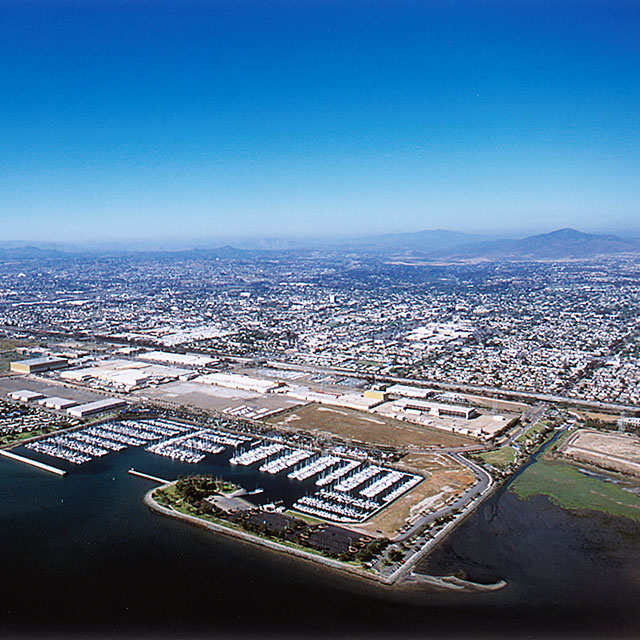
The Chula Vista Marina provides boaters with a peaceful atmosphere away from the busyness of downtown. The area is a tropical paradise with spectacular sunsets.
Aquatica, Sea World’s Waterpark, offers three different slides, a beach with 43,000 square feet of sand, and a large wave pool. Tying into Aquatica’s sea-life theme, dozens of freshwater turtles make their home in the park.
Golf is also a popular South Bay activity. Courses include the San Diego Country Club, Eastlake Country Club, Chula Vista Municipal Golf Course, and Salt Creek Golf Club.
Students from an oral communications class at SDSU’s American Language Institute took a project one step further by making it literal rather than theoretical.
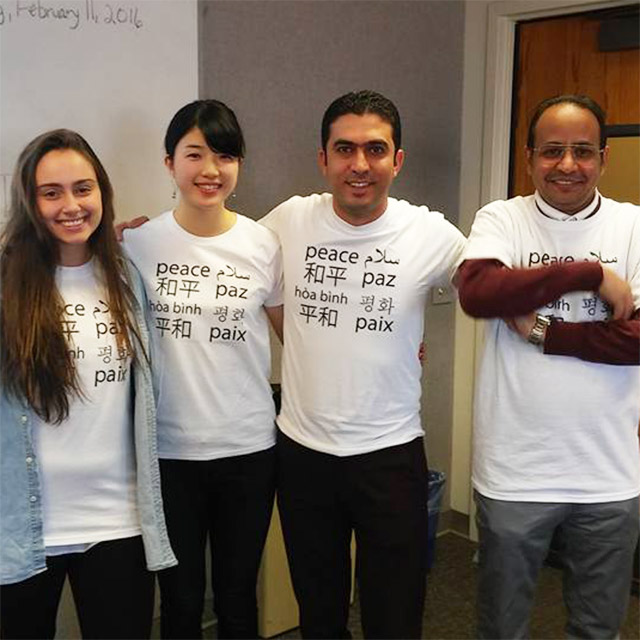
The group of four students, from a class of 15, decided to create a real-life project and raised $800 to help Syrian refugees by creating and selling T-shirts with “Peace” written on them in their eight native languages: Arabic, English, French, Japanese, Korean, Mandarin, Portuguese, and Vietnamese. Fittingly, they called themselves “The Humanity Group.”
Instructor Bobby Smith, who taught the class through the International Business English (IBE) program, said the students were assigned to come up with a solution to a real-world problem. After discussing the project, The Humanity Group members decided they wanted to help less fortunate people and started a page at GoFundMe.com/thgbuildashelter – with the assistance of their instructor – to help Syrian refugees.
“This particular group did something outside of what they were required to do,” Smith said. “When they talked about Syrian refugees, they discussed everything from the international economy to terrorism.”
The Humanity Group subsequently designed the “Peace” T-shirt and reached out through one-on-one talks and social media to family, friends, classmates, and ALI staff, among others. The suggested selling price was $25, but students took whatever donations individuals chose to give, ultimately ranging from about $5 to nearly $100.
Smith sent the funds to USA for UNHCR (United Nations High Commissioner for Refugees), The UN Refugee Agency. The organization responded by letter to Smith with the following:
“Your gift is providing warm blankets for freezing children, emergency food, and shelter from rain, snow, and wind. You are helping us provide emergency treatment for the ill and injured. And you are helping UNHCR be on the scene to protect refugees’ rights and connect them to assistance programs.”
“We did it because we wanted to make a difference to the community while working hard for a good cause,” said student Isabela Zaremba of Brazil, the group manager. “When we discovered that we raised more than our goal of $600, we were amazed.
“It was an indescribable feeling to know that we were helping these people for real. I couldn’t be more proud about my group and my teacher’s work.”
MARCH 2016
March 7 – Spring 2016 IEC/IBE/SE Session B Begins
March 14 – IEC/IBE/SE Flex Entry Date
March 28-Apr. 1 – Spring Break (no classes for students)
March 31 – Cesar Chavez Day (office is closed)
APRIL Apr. 11 – IEC/IBE/SE Flex Entry Date Apr. 18 – Semester at SDSU Fall 2016 Application Deadline
Apr. 21 – TESL/TEFL Certificate Night Sessions Ends
MAY
May 12 – Spring 2016 IEC/IBE/SE End
May 13 – Spring 2016 EAP/Pre-MBA and Pre-Master’s/Semester at SDSU Ends
May 16-20 – Academic Break (no classes for EAP/Pre-MBA and Pre-Master’s/IEC/IBE/SE students)
May 23 – Summer 2016 EAP/Pre-MBA and Pre-Master’s/IEC/BGEP/SE Full Term and Session A Begin
May 30 – Memorial Day (office is closed)
JUNE
June 6 – TESL/TEFL Certificate Day Sessions Begins
June 6 – IEC/IBE/SE Flex Entry Date
June 30 – Summer 2016 IEC/IBE/SE Session A Ends
Natalia Mityushina came to SDSU’s American Language Institute for the first time in 2012 at the advice of her mother’s friend in San Diego, who told her how wonderful of a place it is to live.
Natalia certainly did enjoy the area and her education during her two months of studying Intensive English for Communication (IEC) to improve her English and find a good job in her hometown of Moscow, Russia.
Little did she know that, a little more than two years later, she would be back at the ALI in the International Business English (IBE) program after working in Russia’s financial world.
“I wanted to make changes in my life,” she said. “I wanted to study business in a U.S. university. I needed a lot of preparation to be accepted.”
Natalia started back at the ALI in January 2015 with IBE. When that session ended, she heard about the new Social Entrepreneurship (SE) program and wanted to give it a try. The SE program focuses on creating businesses that solve social problems.
“Some of my classmates were involved and liked it,” she said. “I tried it and loved the program.”
The SE program taught her the importance of helping other people. “SE showed me how people can be more successful in business and how you can help improve lives throughout the world,” she said.
Natalia’s proposed SE project was to one day open a fitness school for people who had never tried it before, remembering how it was when she first went to a gymnasium and felt out of place.
She also took the Pre-MBA and Pre-Master’s programs in hopes of building up her resume to obtain a Ph.D. in business through an American university. Natalia just completed the TESL/TEFL (Teaching English as a Second Language/Teaching English as a Foreign Language) program with hopes of one day teaching English to non-native speakers either in the U.S. or abroad.
“Non-native speakers come with a lot of issues in English,” she said. “Learning English is important. I want to be able to help them.”
Natalia added that the ALI has been of significant help to her.
“I’ve met a lot of great people here,” she said. “The ALI has great instructors who have helped me a lot. I like the atmosphere. The teachers don’t only talk, they listen to what students have to say. ALI attracts wonderful, enthusiastic, and hard-working students who want to communicate as much as possible in school and out of school. It’s a fantastic learning community, where I want to study and work in the future. I’m lucky to be here.”

 Nov. 20
 Now-January 1
 Dec. 2 and 3
 Dec. 4
 Dec. 10-11 and 16-24
 Dec. 11 and Dec. 18
 Dec. 27
 November-April
 Dec. 29-Jan. 2
 Jan. 12-16

 When Kotaro Nakamura came from Yokohama to learn English at SDSU’s American Language Institute (ALI) in 1977, he thought he’d be on campus for a couple years before going back to Japan.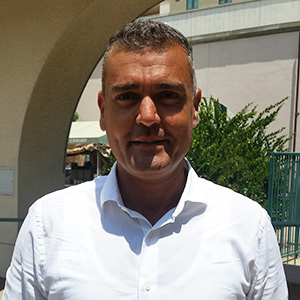
 San Diego State University’s American Language Institute (ALI) is part of SDSU Global Campus, whose motto is “Never Stop Learning.”

 Comic-Con International: San Diego, the most popular annual event in town, will take place July 21-24 at the San Diego Convention Center. This multi-genre entertainment and comic convention offers close to 700 special events featuring comics and all aspects of the popular arts.