
From Aerospace to Teaching English Abroad

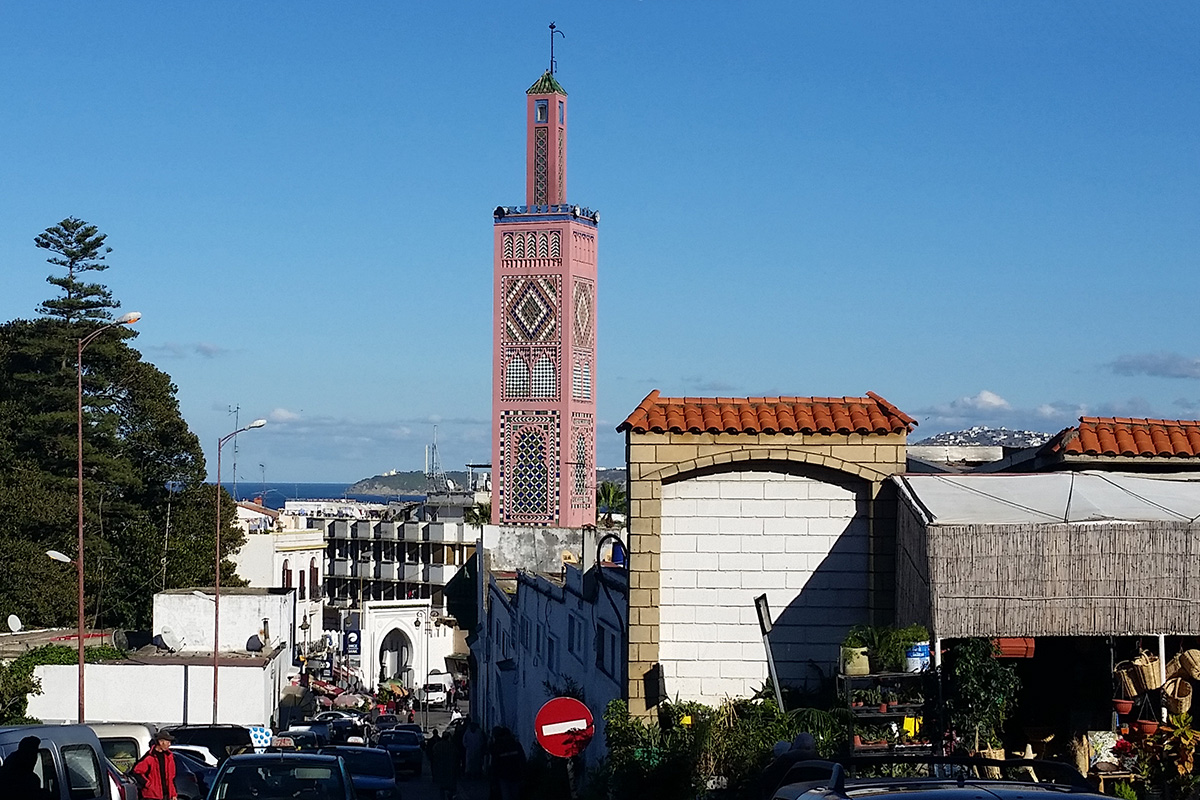
Mosque in Tangier
Mosque in Tangier
Mosque in Tangier

After working in aerospace satellite engineering for more than 20 years, Kyle and Angela Roessler were ready for a change. “We wanted a job where we can travel the world, see different places and meet interesting people,” said Kyle.

From the SDSU website, the Roesslers learned about the American Language Institute’s 130-hour TESL/TEFL certificate program, which they completed in just four weeks by choosing the intensive daytime program. (There’s also the option of 11 weeks of nighttime courses.) Two months later, the Roesslers were teaching English in Casablanca. Talk about taking action on a dream.

Kyle Roessler answered a few questions about their experience abroad.

How did the program’s free worldwide job placement assistance work?
We received lots of interesting options from the ALI assistant director of teacher training the program coordinator, but in the end we found our job in Casablanca from Dave’s ESL Café [a popular, free web resource for English as a Foreign Language teachers all over the world].

What made you choose Morocco?
We wanted somewhere we had never been and that sounded exotic. Casablanca fit those two requirements.

Where did you live?
We rented an apartment near the center of town. Our apartment was near a tram stop, as was the school, so it was easy to get to work.
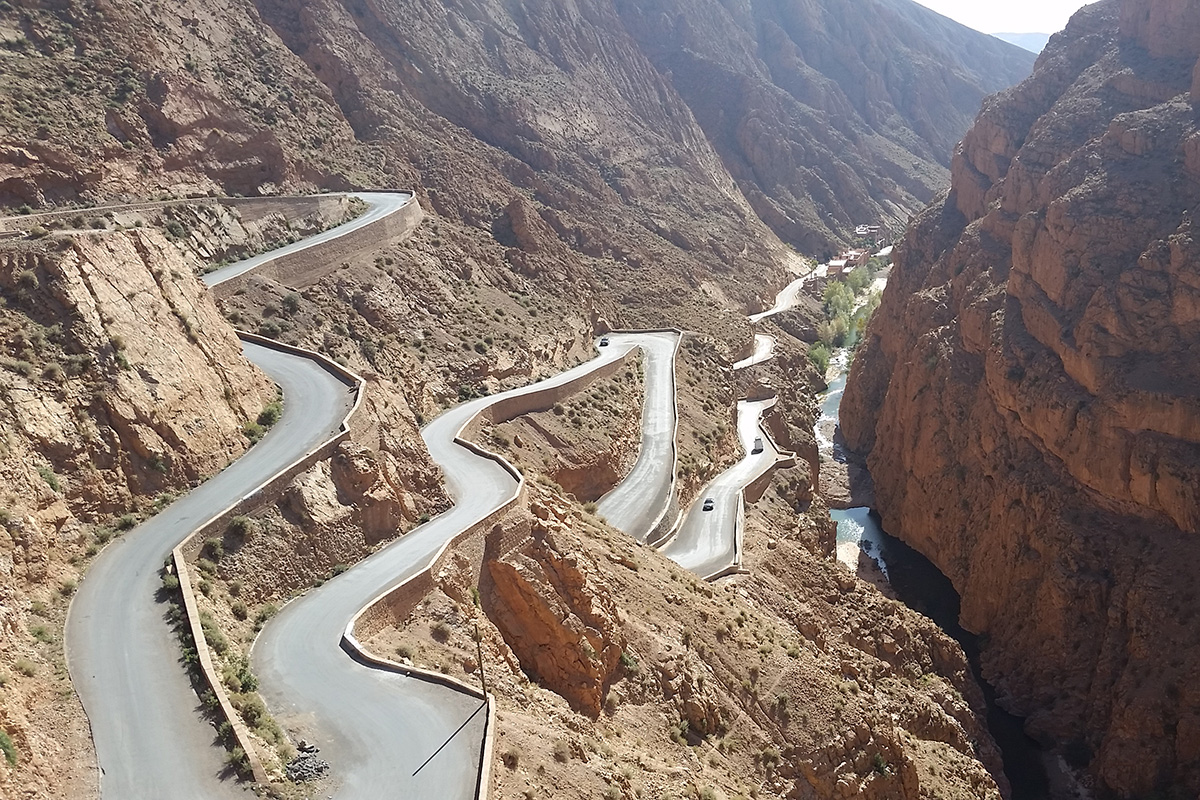
Dades Gorge
Dades Gorge, near Ouarzazate in south-central Morocco

What did a typical day look like?
We taught at all different times and in different locations, at school and at different businesses. Saturday was our busiest day when we both had three classes (two two-hour classes and one three-hour class). We taught kids aged 7–18 and adults, business English and general, and also SAT and GMAT prep. So we got a lot of different teaching experiences in our nine months.

Were there TESL/TEFL instructors from other countries at your school?
Yes, from Canada, England, Scotland, and Morocco.

Do you have anecdotes to share: small world occurrences, unexpected humor, places you explored?
The kids we worked with loved watching Mr. Bean cartoons. They’re nearly silent, so they’re easy for ESL students to understand and enjoy. Also, we had a tough time initially understanding when to get certain dishes from restaurants. Eventually, we figured out that they only serve couscous on Fridays. That was a surprise, but it fits in with how Moroccans make and serve couscous in their homes (only on Friday, too).

How was the food?
Terrific. We had couscous every Friday, Moroccan tea, and tajine — it’s usually chicken or beef cooked with a variety of vegetables over charcoal in a clay pot. Very yummy. We were in Morocco for Ramadan so got to try many of the sweets that are made especially for that season, like for Christmas.

Tell us about some of the friendships you made.
We lived in the same building as one of our fellow teachers and got to know him well. However, the most surprising friendship is with a young woman we met on the tram. She helped us get new SIM cards for our cell phones when we first arrived, and we got together for lunch about once a month. She even invited us to her parent’s house for lunch.

Hassan II Mosque
Hassan II Mosque in Casablanca

Was teaching abroad everything you hoped it would be?
It was interesting, it was challenging, but it was a lot of fun. We had expected to teach rich and poor alike, but we really only taught business people and kids from rich families. I am not convinced I made a difference in anyone’s life, but who can tell that right away? I only had one class where I felt like everyone was enthusiastic and really learning things; that was a great feeling and it told me I should be teaching beginners more because they are so excited to be learning something new every day. But I think a lot of those issues were due to where we chose to teach.

What do you think are the biggest strengths of the TESL/TEFL Certificate program at SDSU?
The fact we got to spend so much time in classrooms with real ESL students made me feel much more comfortable when I had a two-hour class to prepare for and run on my very first day at the school.

What words of advice do you have for anyone contemplating teaching English abroad?
Go for it! You can’t really tell if it’s for you until you try it out. And anytime you get to travel when someone else is paying you, it’s a good deal.

Anything you’d like to add?
I’m an author of four self-published novels, the most recent entitled, The Navel of the World. I’m working on a new novel that could be of interest to ALI folks because it will introduce the world to my suggestions of how English can be simplified to make it a more useful international language.
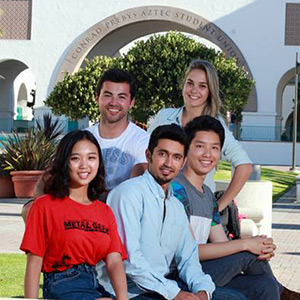
International Students Thrive at SDSU’s American Language Institute

IEC Students

Students at SDSU’s American Language Institute enjoy being on campus for a variety of reasons.

From the teachers at ALI to the lifestyle of San Diego to the activities available, there are plenty of ways to keep students happy during their stay in San Diego.

Natalia Mityushina
Natalia Mityushina

Natalia Mityushina from Russia has taken classes in ALI’s Intensive English for Communication (IEC), International Business English (IBE), and Social Entrepreneurship (SE) programs.

“I’ve met a lot of great people here,” she said. “The ALI has great instructors who have helped me a lot. I like the atmosphere. The teachers don’t only talk, they listen to what students have to say. ALI attracts wonderful, enthusiastic, and hard-working students who want to communicate as much as possible in school and out of school. It’s a fantastic learning community, where I want to study and work in the future. I’m lucky to be here.”

Hiroki Matsunaga
Hiroki Matsunaga

Hiroki Matsunaga came from Japan to study in the IEC program because he wanted to improve his English in order to become an airline pilot. He attributes his progress toward his goal to the teachers at the ALI.

“They are very kind,” he said. “When I have a question, the teachers will tell me what something means. They all answer me. I like it.”

The weather also appeals to Matsunaga.

“In Japan, the summers are very hot and the winters are very cold,” he said. “It’s very nice in San Diego. The weather is not hot or cold, it’s medium. It’s also a lot less dangerous here than in other American cities.”

Oleksandr Iakovenko
Oleksandr Iakovenko

Oleksandr Iakovenko, a native of Ukraine, enrolled in the ALI’s Pre-MBA and Pre-Master’s program with hopes of one day obtaining his business MBA.

“The university here is very nice, especially the campus and the teachers,” he said. “The teachers are the best feature of the program; they are great. Everyone here is really kind and willing to help students.”

Yanying Toto Deng
Yanying “Toto” Deng

Students also discover there are plenty of activities through the ALI. Chinese native Yanying “Toto” Deng came to improve her English through the IEC and IBE programs. Little did she know she would stay longer than planned to help improve other people’s lives by taking part in the first Social Entrepreneurship (SE) class at ALI, which focuses on creating businesses that solve social problems.

“We were like a family at the ALI,” she said. “We did a lot of things together. We went to lunch, dinner, hung out together, and traveled to Las Vegas.

“I really liked San Diego,” she added. “I felt very comfortable. I was able to have a more open personality in San Diego. The people were really friendly.”

Sofia Gonzalez
Sofia Gonzalez

Sofia Rodriguez of Mexico came to the ALI hoping to improve her English speaking skills and expand her vocabulary through IEC and IBE. Not only did she improve her skills, she also found the SDSU community to be welcoming.

“I liked a lot of things about San Diego State,” she said. “But I think the best thing about it were all of the activities available on campus.”

In addition, Rodriguez found the San Diego community to her liking.

“San Diego is an awesome place,” she said. “Everything is nice … the weather, the people, the beaches. You can hang out with your family or friends. There are many interesting places to visit where you will have fun.”

Fadi Sassine
Fadi Sassine

Fadi Sassine from Lebanon came to ALI at age 37 to improve his digital and internet skills through the IBE program.

“I like the entire family of SDSU,” he said. “You can go to the pool, watch kids play basketball, play football (soccer), or go to the gymnasium. It’s not only an educational institution, it’s a lifestyle.”


Neighborhood Spotlight – Downtown San Diego/Gaslamp

Gaslamp Quarter in San Diego

Gaslamp Quarter in San DiegoThere are always many activities in Downtown San Diego and its famous Gaslamp Quarter.

From April through September, the San Diego Padres baseball team plays more than 80 home games at Petco Park. This facility also hosted the World Baseball Classic semifinals in March, featuring the Dominican Republic, Puerto Rico, United States, and Venezuela.

Comic-Con International: San Diego hosts 130,000 visitors each July at the San Diego Convention Center. This multi-genre entertainment and comic convention offers close to 700 special events featuring comics and all aspects of the popular arts. Forbes magazine refers to Comic-Con as “the largest convention of its kind in the world,” and “the granddaddy of pop culture festivals in the U.S.”

Dining in the Gaslamp includes a culinary journey of dishes from all over the world, with restaurants ranging from casual to upscale. The annual Taste of Gaslamp, San Diego’s original culinary and cultural tour, takes place each June and showcases the excellent dining, live music, art gallery, and retail options available in this vibrant district.

The annual San Diego Mardi Gras/Gaslamp Quarter Parade & Celebration each February has a New Orleans touch that features food offerings from 20 restaurants. Visitors collect plenty of beads just in time to deck themselves out for Fat Tuesday.

Seaport Village is a waterfront shopping and dining complex adjacent to San Diego Bay that has more than 50 one-of-a-kind shops, 13 casual dining eateries, four fine dining waterfront restaurants, and is located in close proximity to local hotels. The USS Midway Museum is a maritime museum that honors the legacy of those who have served America and features an awe-inspiring flight deck.

The San Diego International Film Festival in October is one of the leading stops on the independent festival circuit. This five-day event features 100-plus independent films, studio premieres, panels with celebrities and industry insiders, red carpet events, parties, all-star tributes, and filmmaker awards.

The annual Port of San Diego Holiday Bowl Parade is held each year the week between Christmas and New Year’s Day and is known as “America’s largest balloon parade.” More than 100,000 people line the streets for this parade that is the same day as the Holiday Bowl football game between two of America’s top major college teams.

Downtown San Diego recently added two parks. Waterfront Park, located at the County Administration Center, offers an opportunity to beat the heat with an 830-foot-long fountain with 31 jets that shoot water 14 feet into the air before it falls in a shallow splash area. Horton Plaza Park includes an amphitheater for live music acts, retail Pavilions and a new, interactive fountain.

It all adds up to many exciting events in the Downtown/Gaslamp area.

Downtown Dining

Attractions

ALI Student Profile – Kyoung Seon Na

Kyoung Seon Na
Kyoung Seon Na
IEC Student Kyoung Seon Na

When Kyoung Seon Na attends Intensive English for Communication (IEC) classes at SDSU’s American Language Institute, the native of South Korea is always holding a baseball.

“It ain’t over till it’s over,” is written several times on the baseball, a saying made famous by former New York Yankees catcher Yogi Berra.

Na, who goes by the nickname “Anna,” is proof that something is never over until it’s over. At age 47, she is the oldest student attending the ALI.

Whenever she starts to feel down, she looks at Berra’s quote on the baseball. It immediately gives her motivation to face the rest of the day.

“I think baseball is life,” Anna said. “Like in baseball, we have so many chances. If we don’t give up, we always have a chance to win.”

Anna was recommended to the ALI by her son, a sophomore psychology major at SDSU who attended Torrey Pines High School north of campus while living with a host family. She believes she has hit a home run at the ALI because the IEC program will help her in three ways:

  • She’d like to help children learn how to speak English back home on Jeju Island, the largest island off the coast of the Korean Peninsula.
  • She wants to be able to speak English to the grandchildren she hopes to have one day.
  • An avid reader, she desires to be able to comprehend books written in English.

“The younger ALI students ask me why I study so hard when I already have a job back home,” said Anna, who taught Japanese and Korean before coming to America. “I tell them this is my last chance in life. It has been on my bucket list to study without working. I made it!”

While checking off an item on her bucket list, Anna continues to check in with her fellow classmates.

“Some of them tell me I’m the same age as their mom,” she said. “I have a close relationship with them, and even share Korean food. I enjoy talking with my younger classmates. It helps me understand what young people are thinking.”

Anna speaks fluent Korean and Japanese, as well as some Portuguese and Chinese. Because of that, she’s able to share with numerous ALI students in their native language.

“I love to study foreign languages,” she said. “Greeting other students in their language is my ice breaker.”

Since breaking the ice at ALI, Anna has made great strides in learning English. In fact, while being interviewed she proudly displays an “ALI Reading Award” she earned.

“I have very special and great teachers at ALI,” she said. “I have taught 25 years and love my job. The teachers here motivate me to study. I really appreciate them.”

Hyun Soo Kim
Hyun Soo Kim of the Baltimore Orioles

In her spare time, Anna appreciates watching Major League Baseball in America. Her favorite player is Korean-born outfielder Hyun Soo Kim of the Baltimore Orioles.

“I love him because he is so positive,” Anna said. “He practices so hard and doesn’t give up. He motivates me in study and in life.”

Just like Hyun Soo Kim, who struggled to make the major leagues, Anna knows it’s never over until it’s over when it comes to improving in life.

ALI Student Profile – Hiroki Matsunaga

Hiroki Matsunaga

Hiroki MatsunagaWhen Hiroki Matsunaga heard about SDSU’s American Language Institute it was like music to the ears of someone who has played piano since childhood.

Not only would he learn English as he dreamed of becoming an airline pilot; he would also be close to the Mexican city of Tijuana.

“I want to study English somewhere that is very close to Mexico,” said Matsunaga, who’s enrolled in the Intensive English for Communication (IEC) program at the ALI. “If I want to be a pilot in Japan, I’ll have to pass a company exam. Then, I’ll have to pass a very difficult English exam.”

Since the age of 6, he has desired to be an airline pilot. Why?

“When my family was in an airport in Hawaii, I met an airline pilot wearing a suit,” he answered. “When he asked my name in English, my parents and grandparents had taught me to say, ‘my name is Hiroki Matsunaga.’ I was very impressed with the pilot and wanted to be like him.”

In order to be like the pilot, Matsunaga said it’s imperative that he do well during his two semesters at ALI. The IEC program is focused on speaking and listening, grammar, reading, and writing. IEC provides students the opportunity to practice their skills with teachers, American students, and classroom facilitators.

Before coming to America, Matsunaga was a junior at Sophia University in Tokyo with a Spanish major because of his interest in the Latin American culture and economy.

“In Japanese education, we learn grammar, reading, and writing,” he said. “We do not focus on speaking and listening like we do here at ALI. It has helped me a lot.”

He attributes his progress to his teachers at the ALI.

“They are very kind,” he said. When I have a question, the teachers will tell me what something means. They all answer me. I like it.”

Matsunaga also enjoys the weather in San Diego – much different than what he is accustomed to.

“In Japan, the summers are very hot and the winters are very cold,” he said. “It’s very nice in San Diego. The weather is not hot or cold, it’s medium. It’s also a lot less dangerous here than in other American cities.”

In his spare time, Matsunaga still plays the piano. He’s a big fan of the Japanese band “Sekai no Owari” (End of the World), which is famous in Japan and recently announced its plans to debut internationally with an English language album currently in production and expected to be released next year.

Hiroki Matsunaga Playing BaseballHis other favorite pastime is baseball, which he played through elementary, junior high, and high school as an outfielder. While in San Diego, he attended a Major League Baseball game between the San Diego Padres and the Boston Red Sox at Petco Park downtown.
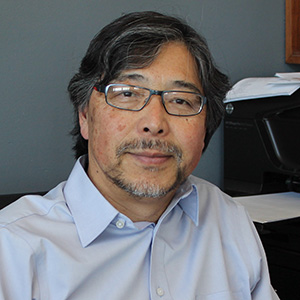

“It was very interesting,” he said. “The stadium is much bigger than the ones in Japan. The players are very powerful. They hit home runs very easily.”

By coming to San Diego and the ALI, Matsunaga has certainly hit a home run in his life.

Former ALI Student is Now Director of SDSU’s School of Art and Design

When Kotaro Nakamura came from Yokohama to learn English at SDSU’s American Language Institute (ALI) in 1977, he thought he’d be on campus for a couple years before going back to Japan.
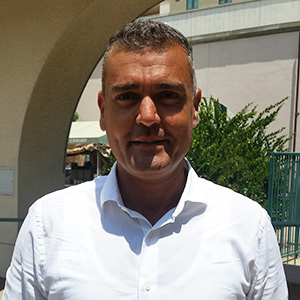

Nearly four decades later, he’s still on campus now, as the director of SDSU’s School of Art and Design.

After passing the TOEFL test through ALI, Nakamura became a graduate student at the School of Art and Design from 1978-80. A professor convinced him to stick around for a year and complete his practical training by teaching.

“At that point, I planned on going back to Japan,” he said. “Then I met a girl on campus and decided to stay.”

The girl, Katherine, was an English major. She and Nakamura have been married 36 years.

“This is not how I planned it,” he said. “Things happened that way. I had planned on going back to Japan to be with my friends and family. In hindsight, I’m very lucky to be here.”

Nakamura remembers coming to the ALI when classes were held in a two-story apartment building near the former SDSU student health center, which was across Campanile Drive from the modern Gateway Center that now hosts the ALI.

“The teachers were great,” he said. “They really cared about students. They helped you make the transition from a foreign student to a native speaker. I appreciated their care.”

Their nurturing extended beyond the classroom. Nakamura noted that his teachers even helped him with tasks such as using a checkbook.

Nakamura came to SDSU before the days of the internet, discovering the campus through a Tokyo travel agency brochure. He said he was attracted to the university because of its environmental design program.

When Nakamura arrived at SDSU, he could not speak English even though he had studied the language for several years through middle school, high school, and three years at a Japanese university.

“The Japanese education is based on reading and writing, not speaking,” he said. “I hung around Japanese students and spoke Japanese because I was scared. My English became much better after I met my girlfriend.”

Even after all these years in San Diego, Nakamura sometimes wonders what life back in Japan would have been like for him.

“Once in a while, I do get to go back,” he said. “My friends there seem so old. It’s a very tough life in Japan. The stress level there is much higher versus San Diego.”

Nakamura advanced to the level of interim director at SDSU’s College of Art and Design in 2013, and became the permanent director in 2015.

Outside of SDSU, Nakamura is the owner of RNT Architects, an architectural design and master planning business.

“My teaching and practice feed off each other,” he said. “What I teach in the classroom is directly influenced from my practice. If I was just teaching, I wouldn’t learn what is going on in the practice of design.”

Nakamura also reaches out to advanced level ALI students at their orientation to enroll in regular courses on campus.

“I tell the students that I was once one of them,” he concluded. “It’s interesting to look at the students and see myself from years ago.”

ALI Student Profile – Fadi Sassine

Fadi Sassine

Fadi SassineSan Diego State University’s American Language Institute (ALI) is part of SDSU Global Campus, whose motto is “Never Stop Learning.”

ALI student Fadi Sassine is a perfect example of the slogan.

At age 37, the Lebanon native came to ALI a month ago to improve his strategic digital and internet skills through the International Business English (IBE) program.

“I came here for the essence,” Sassine said. “You should never stop learning.”

Sassine studied business and economics at Lebanese University. He spent the next 14 years in Kuwait, five years in the banking industry and nine as a advertising director for the BBDO Advertising Agency.

He had vacationed in California two years ago and thought San Diego would be a perfect place to study.

“We lacked digital and internet skills in the Middle East,” Sassine said. “I decided to resign and go study English to improve my content and writing skills in parallel with the technical. I needed to write English every minute. I wanted to improve myself, which is what I believe in.”

He discovered SDSU and the ALI through a Google search.

“I like the entire family of SDSU,” he said. “You can go to the pool, watch kids play basketball, play football (soccer), or go to the gymnasium. It’s not only an educational institution, it’s a lifestyle.”

After finishing his education in San Diego, Sassine will have the option of either going back to any of the Gulf Cooperation Council (GCC) countries or Lebanon.

“As a digital marketer, there are a lot of opportunities,” he said. “Generally, whatever you learn and bring from the West can be an added value to any local or international corporate place.

Sassine said he really enjoys the mild weather in San Diego compared to the “microwave” of Kuwait. He also likes American food such as hot dogs, hamburgers, french fries, ice cream, and chocolate.

Most of all, he’s happy to be learning skills necessary to the higher-management level.

“You should always learn and improve yourself, regardless of your age,” he said. “Life can change quickly.”

Program Spotlight – ALI Students Raise $800 to Help Syrian Refugees

IBE Peace tshirt

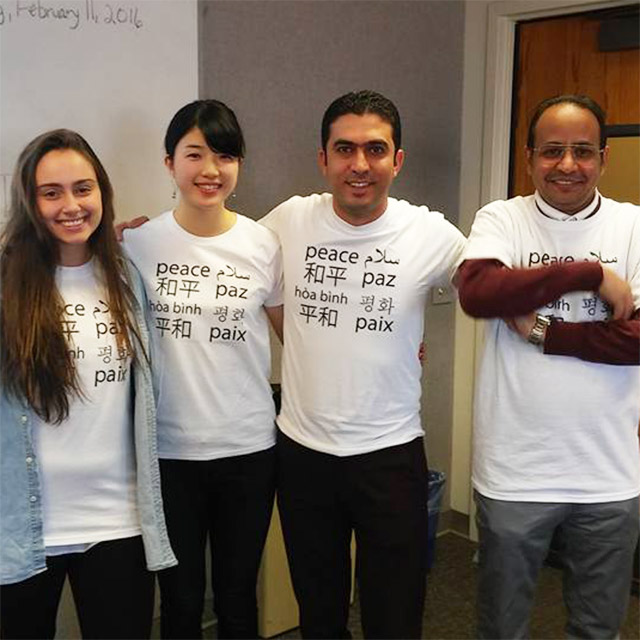
IBE Peace tshirtStudents from an oral communications class at SDSU’s American Language Institute took a project one step further by making it literal rather than theoretical.

The group of four students, from a class of 15, decided to create a real-life project and raised $800 to help Syrian refugees by creating and selling T-shirts with “Peace” written on them in their eight native languages: Arabic, English, French, Japanese, Korean, Mandarin, Portuguese, and Vietnamese. Fittingly, they called themselves “The Humanity Group.”

Instructor Bobby Smith, who taught the class through the International Business English (IBE) program, said the students  were assigned to come up with a solution to a real-world problem. After discussing the project, The Humanity Group members decided they wanted to help less fortunate people and started a page at GoFundMe.com/thgbuildashelter – with the assistance of their instructor – to help Syrian refugees.

“This particular group did something outside of what they were required to do,” Smith said. “When they talked about Syrian refugees, they discussed everything from the international economy to terrorism.”

The Humanity Group subsequently designed the “Peace” T-shirt and reached out through one-on-one talks and social media to family, friends, classmates, and ALI staff, among others. The suggested selling price was $25, but students took whatever donations individuals chose to give, ultimately ranging from about $5 to nearly $100.

Smith sent the funds to USA for UNHCR (United Nations High Commissioner for Refugees), The UN Refugee Agency. The organization responded by letter to Smith with the following:

“Your gift is providing warm blankets for freezing children, emergency food, and shelter from rain, snow, and wind. You are helping us provide emergency treatment for the ill and injured. And you are helping UNHCR be on the scene to protect refugees’ rights and connect them to assistance programs.”

“We did it because we wanted to make a difference to the community while working hard for a good cause,” said student Isabela Zaremba of Brazil, the group manager. “When we discovered that we raised more than our goal of $600, we were amazed.

“It was an indescribable feeling to know that we were helping these people for real. I couldn’t be more proud about my group and my teacher’s work.”

ALI Student Profile – Natalia Mityushina

Natalia Mityushina
Natalia Mityushina
Natalia Mityushina

Natalia Mityushina came to SDSU’s American Language Institute for the first time in 2012 at the advice of her mother’s friend in San Diego, who told her how wonderful of a place it is to live.

Natalia certainly did enjoy the area and her education during her two months of studying Intensive English for Communication (IEC) to improve her English and find a good job in her hometown of Moscow, Russia.

Little did she know that, a little more than two years later, she would be back at the ALI in the International Business English (IBE) program after working in Russia’s financial world.

“I wanted to make changes in my life,” she said. “I wanted to study business in a U.S. university. I needed a lot of preparation to be accepted.”

Natalia started back at the ALI in January 2015 with IBE. When that session ended, she heard about the new Social Entrepreneurship (SE) program and wanted to give it a try. The SE program focuses on creating businesses that solve social problems.

“Some of my classmates were involved and liked it,” she said. “I tried it and loved the program.”

The SE program taught her the importance of helping other people. “SE showed me how people can be more successful in business and how you can help improve lives throughout the world,” she said.

Natalia’s proposed SE project was to one day open a fitness school for people who had never tried it before, remembering how it was when she first went to a gymnasium and felt out of place.

She also took the Pre-MBA and Pre-Master’s programs in hopes of building up her resume to obtain a Ph.D. in business through an American university. Natalia just completed the TESL/TEFL (Teaching English as a Second Language/Teaching English as a Foreign Language) program with hopes of one day teaching English to non-native speakers either in the U.S. or abroad.

“Non-native speakers come with a lot of issues in English,” she said. “Learning English is important. I want to be able to help them.”

Natalia added that the ALI has been of significant help to her.

“I’ve met a lot of great people here,” she said. “The ALI has great instructors who have helped me a lot. I like the atmosphere. The teachers don’t only talk, they listen to what students have to say. ALI attracts wonderful, enthusiastic, and hard-working students who want to communicate as much as possible in school and out of school. It’s a fantastic learning community, where I want to study and work in the future. I’m lucky to be here.”

Feature Story – San Diego State University Campus Events

Cox Arena Basketball at SDSU

Cox Arena Basketball at SDSUThere are many outstanding events on the San Diego State University campus that are open to students from the American Language Institute (ALI).

The 12,000-seat Viejas Arena hosts events from concerts to comedies, along with the SDSU men’s basketball team, which is traditionally among the top teams in America.

Recording artist Toby Mac performed at the arena Feb. 28, and comedian Jeff Dunham brings his act March 12. English singer, songwriter, and multi-instrumentalist Ellie Goulding performs on stage April 23. Famous singer and songwriter Rihanna will perform at Viejas Arena on May 9.

SDSU’s basketball team plays 16 home games from mid-November until its final regular season game March 5 against its top rival from the University of Nevada Las Vegas. The Aztecs have been among the top 16 teams out of more than 350 in the nation twice in the last five years.

The SDSU Theater features student work in state-of-the-art facilities. Spring events are: Best of the Best Film Fest, Feb. 11-12; The Drowsy Chaperone, March 4-13; The Big Friendly Giant, April 22-May 1; and Emerging Filmmakers Showcase, May 11.

The Cal Coast Credit Union Open Air Theater is a great place to watch concerts under the stars primarily during the summer months. The schedule includes: Walk the Moon, May 26; Halsey, July 16; Shawn Mendes, July 23; and Ray Lamontagne, Sept. 13.

Arts Alive SDSU promotes ongoing events on campus. Among the activities are jewelry and metalwork displays, an energy forum, world music series, SDSU opera, and SDSU symphony.

The Tony Gwynn Baseball Classic took place Feb. 26-28 in honor of the former SDSU baseball coach, who died almost two years ago and is a member of the Major League Baseball Hall of Fame. Universities entered include SDSU, Bryant, Kentucky, Santa Barbara, San Diego, Nebraska, Tulane, and Arizona.

All in all, there are plenty of activities and events to keep ALI students busy on the SDSU campus.