AUGUST August 28 – IEC/IBE/SE Flex Entry Date August 29 – TESL/TEFL Certificate Night Sessions Begins
SEPTEMBER
Sept. 4 – Labor Day (office is closed)
Sept. 14 – IEC Discover California Ends
Sept. 18 – IEC/IBE/SE Flex Entry Date
OCTOBER
Oct. 12 – Fall 2107 IEC/IBE/SE Session A Ends
Oct. 16 – Fall 2107 IEC/IBE/SE Session B Begins
Oct. 30 – IEC/IBE/SE Flex Entry Date
NOVEMBER
Nov. 9 – TESL/TEFL Certificate Night Sessions Ends
Nov. 10 – Veterans Day Observed (office is closed)
Nov. 13 – IEC/IBE/SE Flex Entry Date
Nov. 23-24 – Thanksgiving Break (office is closed)
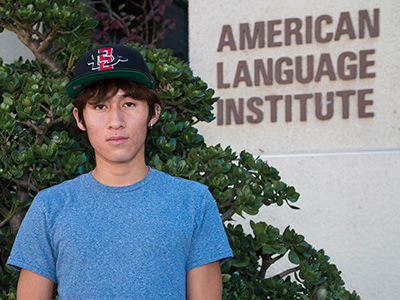
When Saad Alajmi graduated from Al Jahra High School in June 2016, he decided to study in the United States and, after extensive googling, chose San Diego. “It has the best setting in America,” said Alajmi, who is from the town of Al Jahra in Kuwait, 20 miles west of Kuwait City.
Months later he landed in America’s Finest City for the start of the fall 2016 semester at SDSU’s American Language Institute. He enrolled in the English for Academic Purposes program, designed for students who plan to enter an American college or university at the undergraduate level.
Alajmi already had a command of the English language — students in his native country begin studying English in first grade — but he enthusiastically embraced his new opportunity to use it. “My favorite class is [Academic] Speaking because I speak English all the time,” he said. “The most I speak Arabic is with my friends and my brother.”
He also “really loves” his teachers. “They are really friendly and my two best teachers in ALI are Joel [Ortiz] and Elizabeth Osmund,” said Alajmi. “They are both funny and friendly and they smile all the time. They make the class fun with games and activities.” One example is the Kahoot! app, a game-based learning platform that makes it fun for students to see who can be the first to get the right answer.
Alajmi also took advantage of the free additional English-language support available to ALI students. “I was using the Homework Lab a lot for my essays,” he said. “It’s very helpful. I was asking the teachers for my mistakes.” Students can also benefit from the Pronunciation Clinic and the Grammar Lab.
Cultural immersion is another important aspect of the ALI, and Alajmi participated in many activities through the Student Life Office. He went to baseball games, football games, a community clean-up, and even fed the homeless downtown. Alajmi’s favorite outing was to the San Diego Zoo. “I saw animals I never saw before, like the panda and flamingo,” he said.
How does San Diego compare to Al Jahra? “The weather is mostly the same, but San Diego is much better because they have a lot of beaches and a lot of things to do,” said Alajmi. “The people are friendly and all the places are really cool. I like it.” After a pause, he added with a laugh, “I LOVE it. I’ve met people from all over the world and they’re really nice. It’s cool we can understand each other in English because we all have a different language.”
Alajmi graduated this summer from the ALI and, although SDSU was his first choice, he was accepted into Cal State Fullerton where he plans to major in computer engineering.
“I recommend ALI because it has a perfect location next to the SDSU campus … they have a lot of things to do … and I have great memories with my international friends,” he said. “They are from China, Japan, Vietnam, Korea, Taiwan, and Venezuela.”
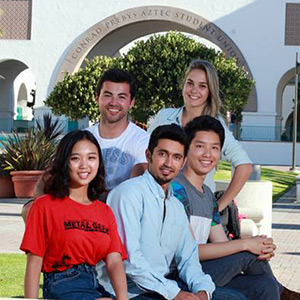
Students at SDSU’s American Language Institute enjoy being on campus for a variety of reasons.
From the teachers at ALI to the lifestyle of San Diego to the activities available, there are plenty of ways to keep students happy during their stay in San Diego.
Natalia Mityushina
Natalia Mityushina from Russia has taken classes in ALI’s Intensive English for Communication (IEC), International Business English (IBE), and Social Entrepreneurship (SE) programs.
“I’ve met a lot of great people here,” she said. “The ALI has great instructors who have helped me a lot. I like the atmosphere. The teachers don’t only talk, they listen to what students have to say. ALI attracts wonderful, enthusiastic, and hard-working students who want to communicate as much as possible in school and out of school. It’s a fantastic learning community, where I want to study and work in the future. I’m lucky to be here.”
Hiroki Matsunaga
Hiroki Matsunaga came from Japan to study in the IEC program because he wanted to improve his English in order to become an airline pilot. He attributes his progress toward his goal to the teachers at the ALI.
“They are very kind,” he said. “When I have a question, the teachers will tell me what something means. They all answer me. I like it.”
The weather also appeals to Matsunaga.
“In Japan, the summers are very hot and the winters are very cold,” he said. “It’s very nice in San Diego. The weather is not hot or cold, it’s medium. It’s also a lot less dangerous here than in other American cities.”
Oleksandr Iakovenko
Oleksandr Iakovenko, a native of Ukraine, enrolled in the ALI’s Pre-MBA and Pre-Master’s program with hopes of one day obtaining his business MBA.
“The university here is very nice, especially the campus and the teachers,” he said. “The teachers are the best feature of the program; they are great. Everyone here is really kind and willing to help students.”
Yanying “Toto” Deng
Students also discover there are plenty of activities through the ALI. Chinese native Yanying “Toto” Deng came to improve her English through the IEC and IBE programs. Little did she know she would stay longer than planned to help improve other people’s lives by taking part in the first Social Entrepreneurship (SE) class at ALI, which focuses on creating businesses that solve social problems.
“We were like a family at the ALI,” she said. “We did a lot of things together. We went to lunch, dinner, hung out together, and traveled to Las Vegas.
“I really liked San Diego,” she added. “I felt very comfortable. I was able to have a more open personality in San Diego. The people were really friendly.”
Sofia Gonzalez
Sofia Rodriguez of Mexico came to the ALI hoping to improve her English speaking skills and expand her vocabulary through IEC and IBE. Not only did she improve her skills, she also found the SDSU community to be welcoming.
“I liked a lot of things about San Diego State,” she said. “But I think the best thing about it were all of the activities available on campus.”
In addition, Rodriguez found the San Diego community to her liking.
“San Diego is an awesome place,” she said. “Everything is nice … the weather, the people, the beaches. You can hang out with your family or friends. There are many interesting places to visit where you will have fun.”
Fadi Sassine
Fadi Sassine from Lebanon came to ALI at age 37 to improve his digital and internet skills through the IBE program.
“I like the entire family of SDSU,” he said. “You can go to the pool, watch kids play basketball, play football (soccer), or go to the gymnasium. It’s not only an educational institution, it’s a lifestyle.”
APRIL Apr. 3 – IEC/IBE/SE Flex Entry Date
Apr. 17 – IEC/IBE/SE Flex Entry Date Apr. 20 – TESL/TEFL Certificate Night Sessions Ends
MAY
May 11 – Spring 2017 IEC/IBE/SE End
May 12 – Spring 2017 EAP/Pre-MBA and Pre-Master’s/Semester at SDSU Ends
May 15-19 – Academic Break (no classes for EAP/Pre-MBA and Pre-Master’s/IEC/IBE/SE students)
May 22 – Summer 2017 IEC/BGEP/SE Full Term and Session A Begin
May 23 – Summer 2017 EAP/Pre-MBA and Pre-Master’s Begin
May 29 – Memorial Day (office is closed)
JUNE
June 5 – TESL/TEFL Certificate Day Sessions Begins
June 5 – IEC/IBE/SE Flex Entry Date
June 26 – Semester at SDSU Fall 2017 Application Deadline
June 29 – Summer 2017 IEC/IBE/SE Session A Ends
June 30 – TESL/TEFL Certificate Day Sessions Ends
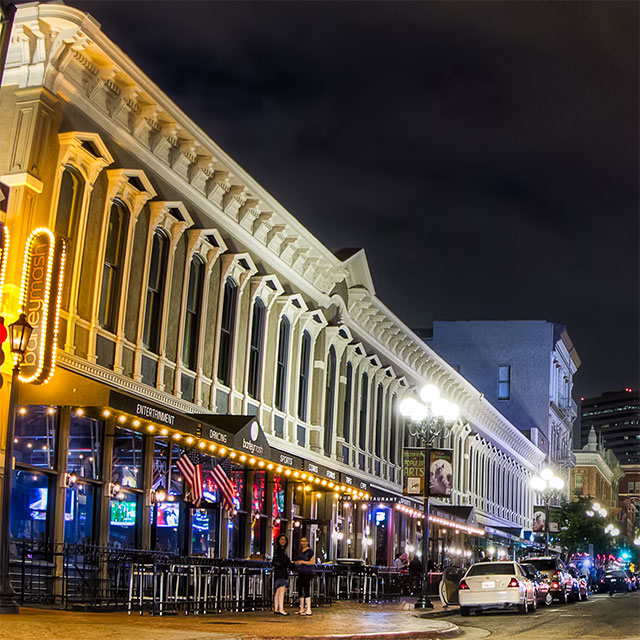
There are always many activities in Downtown San Diego and its famous Gaslamp Quarter.
From April through September, the San Diego Padres baseball team plays more than 80 home games at Petco Park. This facility also hosted the World Baseball Classic semifinals in March, featuring the Dominican Republic, Puerto Rico, United States, and Venezuela.
Comic-Con International: San Diego hosts 130,000 visitors each July at the San Diego Convention Center. This multi-genre entertainment and comic convention offers close to 700 special events featuring comics and all aspects of the popular arts. Forbes magazine refers to Comic-Con as “the largest convention of its kind in the world,” and “the granddaddy of pop culture festivals in the U.S.”
Dining in the Gaslamp includes a culinary journey of dishes from all over the world, with restaurants ranging from casual to upscale. The annual Taste of Gaslamp, San Diego’s original culinary and cultural tour, takes place each June and showcases the excellent dining, live music, art gallery, and retail options available in this vibrant district.
The annual San Diego Mardi Gras/Gaslamp Quarter Parade & Celebration each February has a New Orleans touch that features food offerings from 20 restaurants. Visitors collect plenty of beads just in time to deck themselves out for Fat Tuesday.
Seaport Village is a waterfront shopping and dining complex adjacent to San Diego Bay that has more than 50 one-of-a-kind shops, 13 casual dining eateries, four fine dining waterfront restaurants, and is located in close proximity to local hotels. The USS Midway Museum is a maritime museum that honors the legacy of those who have served America and features an awe-inspiring flight deck.
The San Diego International Film Festival in October is one of the leading stops on the independent festival circuit. This five-day event features 100-plus independent films, studio premieres, panels with celebrities and industry insiders, red carpet events, parties, all-star tributes, and filmmaker awards.
The annual Port of San Diego Holiday Bowl Parade is held each year the week between Christmas and New Year’s Day and is known as “America’s largest balloon parade.” More than 100,000 people line the streets for this parade that is the same day as the Holiday Bowl football game between two of America’s top major college teams.
Downtown San Diego recently added two parks. Waterfront Park, located at the County Administration Center, offers an opportunity to beat the heat with an 830-foot-long fountain with 31 jets that shoot water 14 feet into the air before it falls in a shallow splash area. Horton Plaza Park includes an amphitheater for live music acts, retail Pavilions and a new, interactive fountain.
It all adds up to many exciting events in the Downtown/Gaslamp area.
When Kyoung Seon Na attends Intensive English for Communication (IEC) classes at SDSU’s American Language Institute, the native of South Korea is always holding a baseball.
“It ain’t over till it’s over,” is written several times on the baseball, a saying made famous by former New York Yankees catcher Yogi Berra.
Na, who goes by the nickname “Anna,” is proof that something is never over until it’s over. At age 47, she is the oldest student attending the ALI.
Whenever she starts to feel down, she looks at Berra’s quote on the baseball. It immediately gives her motivation to face the rest of the day.
“I think baseball is life,” Anna said. “Like in baseball, we have so many chances. If we don’t give up, we always have a chance to win.”
Anna was recommended to the ALI by her son, a sophomore psychology major at SDSU who attended Torrey Pines High School north of campus while living with a host family. She believes she has hit a home run at the ALI because the IEC program will help her in three ways:
She’d like to help children learn how to speak English back home on Jeju Island, the largest island off the coast of the Korean Peninsula.
She wants to be able to speak English to the grandchildren she hopes to have one day.
An avid reader, she desires to be able to comprehend books written in English.
“The younger ALI students ask me why I study so hard when I already have a job back home,” said Anna, who taught Japanese and Korean before coming to America. “I tell them this is my last chance in life. It has been on my bucket list to study without working. I made it!”
While checking off an item on her bucket list, Anna continues to check in with her fellow classmates.
“Some of them tell me I’m the same age as their mom,” she said. “I have a close relationship with them, and even share Korean food. I enjoy talking with my younger classmates. It helps me understand what young people are thinking.”
Anna speaks fluent Korean and Japanese, as well as some Portuguese and Chinese. Because of that, she’s able to share with numerous ALI students in their native language.
“I love to study foreign languages,” she said. “Greeting other students in their language is my ice breaker.”
Since breaking the ice at ALI, Anna has made great strides in learning English. In fact, while being interviewed she proudly displays an “ALI Reading Award” she earned.
“I have very special and great teachers at ALI,” she said. “I have taught 25 years and love my job. The teachers here motivate me to study. I really appreciate them.”
Hyun Soo Kim of the Baltimore Orioles
In her spare time, Anna appreciates watching Major League Baseball in America. Her favorite player is Korean-born outfielder Hyun Soo Kim of the Baltimore Orioles.
“I love him because he is so positive,” Anna said. “He practices so hard and doesn’t give up. He motivates me in study and in life.”
Just like Hyun Soo Kim, who struggled to make the major leagues, Anna knows it’s never over until it’s over when it comes to improving in life.
San Diego State University has one of the top athletic programs in America and all SDSU students, including ALI students, get free admission to the football and basketball games, as well as all other athletic events on campus.
Since the 2010-11 school year, the Aztecs have the third-best combined record in the country for their men’s basketball and football teams.
The basketball team played 11 straight seasons in postseason games in the National Collegiate Athletic Association (NCAA) and National Invitational Tournament (NIT) tournaments, which are reserved for the top teams in America. SDSU, which sells out every home game at the 12,414-seat Viejas Arena has twice made the prestigious Sweet 16 in the NCAA Tournament (meaning it’s among the top 16 out of more than 350 universities).
In football, the Aztecs play in their seventh straight bowl game in December 2016 or early January 2017. These games are primarily for teams that win at least half of their games during a season. SDSU plays at Qualcomm Stadium, the same site as the San Diego Chargers of the National Football League.
In the last four sports seasons, the Aztecs won 32 conference championships, more than any other in the 12-team Mountain West Conference. The Mountain West teams come from an area that spans about 3,400 miles (more than 5,400 kilometers) from Hawaii to the Rocky Mountain region of Colorado and Wyoming.
Here are some other facts about SDSU athletics:
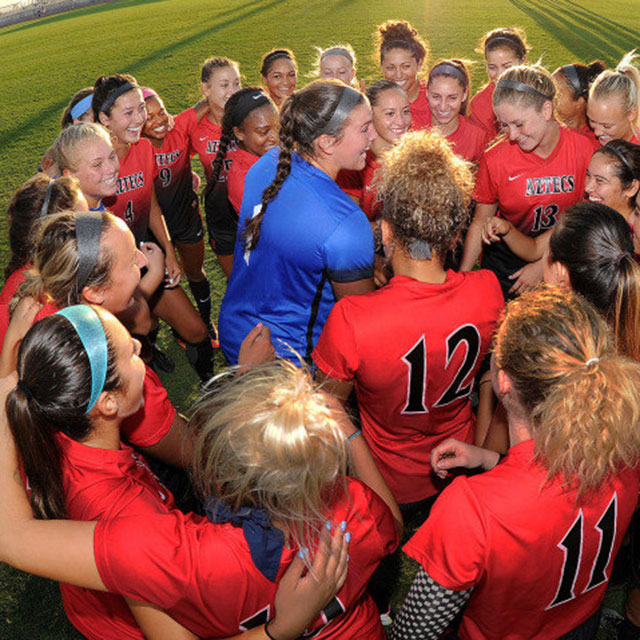
Women’s soccer won three out of the last four Mountain West Conference championships before this season
Women’s softball made the NCAA Tournament nine straight seasons until 2016, and won at least 30 games in 11 straight seasons
Women’s golf earned a place in the NCAA Tournament six of the last seven years
Women’s water polo finished among the top eight in America last season
Men’s baseball played in the NCAA Tournament three straight years before 2016. Its stadium is named after former coach Tony Gwynn, who died in 2015 and is in the Major League Baseball Hall of Fame.
Men’s golf finished among the top five teams in the nation last spring
Ashley Henderson of SDSU finished second nationally in the NCAA Outdoor Track and Field Championships last spring
Fourteen members of the women’s swimming and diving team were named to the all-Mountain West Conference team for finishing in the top eight during the finals
On top of it all, SDSU set a school record for the second straight year with 72 student-athletes earning Mountain West All-Academic honors for the spring 2016 semester. This year’s spring total surpasses the old record of 69, which was set in spring 2015.
To be eligible for selection, student-athletes must have completed at least one academic term at SDSU while maintaining a cumulative grade-point average of 3.0 (B or better), and be a starter or significant contributor on their team.
November 2016
November 24-26 – Thanksgiving Break (office is closed)
December December 15 – Fall 2016 EAP/Pre-MBA and Pre-Master’s Ends
December 15 – Fall 2016 IEC/IBE Full Term and Session B Ends December 21 – Fall 2016 Semester at SDSU Ends
December 21-27 – Winter Break (office is closed)
January 2017
January 1 – New Year’s Day (office is closed)
January 3 – Spring 2017 EAP/Pre-MBA and Pre-Master’s Begins
January 4 – Spring 2017 IEC/IBE/SE Full Term and Session A Begins
January 9 – Spring 2017 Semester at SDSU Begins
January 16 – Martin Luther King Jr. Day (office is closed)
January 23 – IEC/IBE/SE Flex Entry Date
January 23 – TESL/TEFL Certificate Day Sessions Begins
January 30 – IEC/IBE/SE Flex Entry Date
February February 24 – Spring 2017 IEC/IBE/SE Full Term and Session A Ends
February 27 – Spring 2017 IEC/IBE/SE Full Term and Session B Begins
When Hiroki Matsunaga heard about SDSU’s American Language Institute it was like music to the ears of someone who has played piano since childhood.
Not only would he learn English as he dreamed of becoming an airline pilot; he would also be close to the Mexican city of Tijuana.
“I want to study English somewhere that is very close to Mexico,” said Matsunaga, who’s enrolled in the Intensive English for Communication (IEC) program at the ALI. “If I want to be a pilot in Japan, I’ll have to pass a company exam. Then, I’ll have to pass a very difficult English exam.”
Since the age of 6, he has desired to be an airline pilot. Why?
“When my family was in an airport in Hawaii, I met an airline pilot wearing a suit,” he answered. “When he asked my name in English, my parents and grandparents had taught me to say, ‘my name is Hiroki Matsunaga.’ I was very impressed with the pilot and wanted to be like him.”
In order to be like the pilot, Matsunaga said it’s imperative that he do well during his two semesters at ALI. The IEC program is focused on speaking and listening, grammar, reading, and writing. IEC provides students the opportunity to practice their skills with teachers, American students, and classroom facilitators.
Before coming to America, Matsunaga was a junior at Sophia University in Tokyo with a Spanish major because of his interest in the Latin American culture and economy.
“In Japanese education, we learn grammar, reading, and writing,” he said. “We do not focus on speaking and listening like we do here at ALI. It has helped me a lot.”
He attributes his progress to his teachers at the ALI.
“They are very kind,” he said. When I have a question, the teachers will tell me what something means. They all answer me. I like it.”
Matsunaga also enjoys the weather in San Diego – much different than what he is accustomed to.
“In Japan, the summers are very hot and the winters are very cold,” he said. “It’s very nice in San Diego. The weather is not hot or cold, it’s medium. It’s also a lot less dangerous here than in other American cities.”
In his spare time, Matsunaga still plays the piano. He’s a big fan of the Japanese band “Sekai no Owari” (End of the World), which is famous in Japan and recently announced its plans to debut internationally with an English language album currently in production and expected to be released next year.
His other favorite pastime is baseball, which he played through elementary, junior high, and high school as an outfielder. While in San Diego, he attended a Major League Baseball game between the San Diego Padres and the Boston Red Sox at Petco Park downtown.
“It was very interesting,” he said. “The stadium is much bigger than the ones in Japan. The players are very powerful. They hit home runs very easily.”
By coming to San Diego and the ALI, Matsunaga has certainly hit a home run in his life.
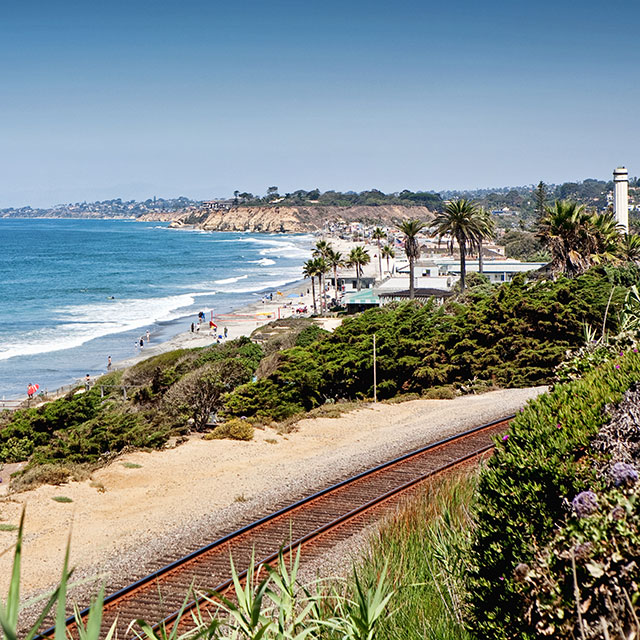
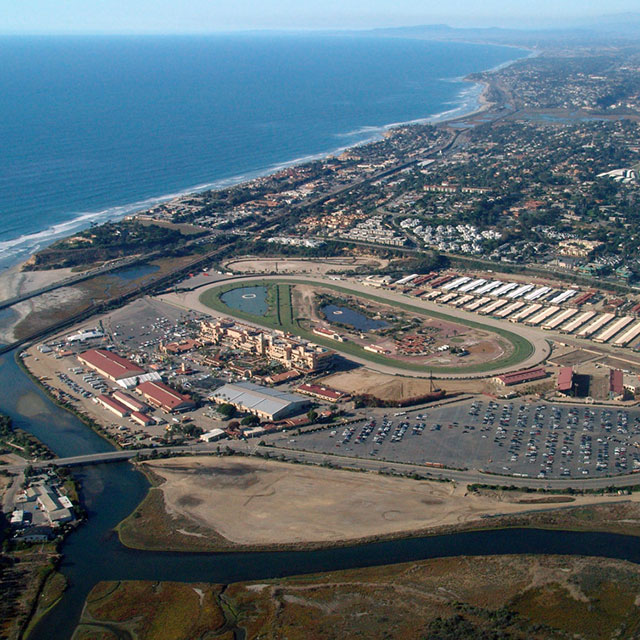
There is a lot to do in Del Mar, such as going to the San Diego County Fair, summer horse races, and the beach.
About 1.6 million people attend the San Diego County Fair each June and July. While there, you can eat various foods such as French toast bacon, fried pizza, deep fried nachos, fresh fried chips, lasagna and grilled cheese sandwiches, many different types of hamburgers and hot dogs, deep fried twinkies, ice cream, and kettle corn.
You can also attend concerts, take part in a variety of rides and games, view livestock, and visit halls where you’ll see products like sharpeners, slicers, peelers, woodworking, gems, minerals, quilts, and sewing demonstrations. The 2017 San Diego County Fair runs June 2-July 4 and features a “Wild, Wild, West” theme.
The Del Mar Thoroughbred Club is the place to watch horse racing each year from late July through early September. Gather at the seaside racetrack to bet on your favorite horses and maybe even get a look at famous stars who often come to the track from Hollywood, located just over 100 miles (160 kilometers) north of Del Mar. Enjoy free concerts after each of the Friday races.
The city also has popular beaches: North Del Mar City Beach, considered by many as San Diego’s finest beach; South Del Mar City Beach, a long, cliff-lined, and isolated area that is great for long walks or jogs; and The River Mouth (Dog Beach), which is broad, wide, and dog-friendly.
Del Mar Village offers outdoor shopping, a dining promenade, and many art galleries surrounded by sculptures and fountains. At the Farmers Market on Saturday, there are organic and pesticide-free fruits and vegetables, flowers and orchids, international cuisine, eggs, seafood, cheese, hummus, guacamole, bread and baked goods including gluten free products.
At Del Mar Plaza, there are spectacular ocean views and more than 30 fine shops, boutiques, and restaurants for your enjoyment.
If you like golf, the Grand Golf Club will challenge you with its rolling hills and many bunkers hidden within those hills. Nearby La Jolla features the Torrey Pines Golf Course, which hosts the professional Farmers Insurance Open each February.










 His other favorite pastime is baseball, which he played through elementary, junior high, and high school as an outfielder. While in San Diego, he attended a Major League Baseball game between the San Diego Padres and the Boston Red Sox at Petco Park downtown.