
From Kazakhstan to San Diego – A Student’s Journey – Alisher Kalibekov

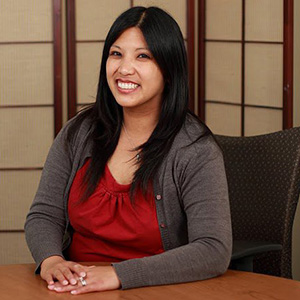
Alisher Kalibekov
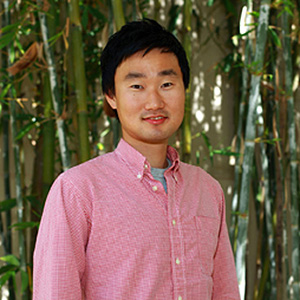
Alisher Kalibekov
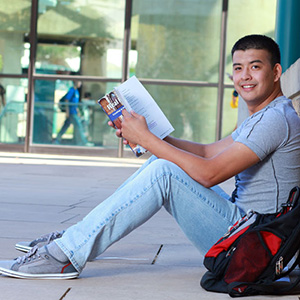
Alisher Kalibekov

In a very diplomatic way, Zhenis Kalibekov would love to see his son, Alisher, follow in his footsteps. Zhenis is the Republic of Kazakhstan’s diplomat to China, following four years as his country’s diplomat to Russia.

Alisher enrolled this semester in the English for Academic Purposes (EAP) program through SDSU’s American Language Institute.

As Zhenis was recently taking part in an English interview, his son sat intently listening to all that was said. Alisher does not speak English, but he plans to perfect the language through the EAP program.

“This is a big step for my son,” Zhenis said. “He is very proud to be accepted by the American Language Institute. He’ll take English, get to a high level and choose where he will go. I want my son to help people and his country.”

The EAP program will help Alisher develop the skills needed to succeed at a U.S. university. He will most likely learn English for one year at SDSU, and then go to either Harvard or UCLA to study international law.

Alisher actually preceded his father, who is based in Beijing, by one year in China. The son studied Mandarin in China for two years before graduating in July. According to his father, Alisher studied Chinese for 13 hours daily from 8 am-9 pm.

“He was one of the best students in the school,” his father said. “In China, the rules are very tough. He knew nothing when he went to China; but he liked it. In a short time, it was necessary for him to communicate with the Chinese people.”

Why did Alisher leave China to enroll at SDSU? Bill Price, executive director of the ALI at SDSU, was the executive vice president at the now defunct OSULA Education Center when Zhenis studied there a decade ago. Zhenis remembers Price as being “the best friend of all the students when I studied in Los Angeles,” so he was only too happy to send his son to be under Price’s direction at the ALI.

“Dr. Price was always giving good suggestions and advice,” Zhenis said. “As students, we could always speak openly to Dr. Price. He gave me good direction to go to Russia as a diplomat. Now that I’m in a high position as a diplomat, I’m very proud of it and very proud of Dr. Price.”

Zhenis is also very proud of his son for coming to SDSU as a way of learning English and eventually becoming a diplomat. “Being a diplomat is very interesting,” Zhenis said. “I now have the knowledge to protect my citizens and companies in foreign countries. I tell my son to get a good education and use it in a professional field.”

Neighborhood Spotlight – University Heights

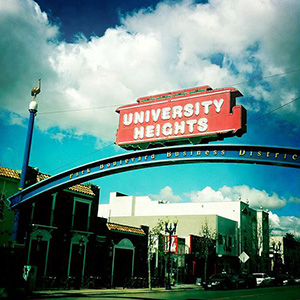
University Heights Sign

University Heights SignThe small community called University Heights is located eight miles west of San Diego State University and can be easily reached by car or public transportation.

University Heights is known for having an excellent selection of places to eat that offer diverse menus, many types of decorations and intimate settings. It also has many coffee shops, gift and clothing stores, custom furniture makers, woodworkers, and hair stylists. The main street through town is Park Boulevard, which includes the University Heights sign as well as many of the restaurants, bars and shops in the area

More features in the area include a number of churches, grammar schools, a school of the arts and a library. Although this is very much a business area, it is also casual as you will see lots of people walking the streets and even starting conversations with each other. Among the things to see and do are: Trolley Barn Park, the destination of San Diego’s first trolley line; the University Arts Open and Taste of University Heights; the Concert in the Park Series; and the “Ostrich on the Roof” that shows which way the wind is blowing. Find out more at the University Heights Community Association or University Heights Community Development Corporation.

Highlights

The Trolley Car Gate – Located at the corner of Park and Meade, you’ll see the replica of the trolley car in the artwork of the gate if you stand back.

The Neighborhood Castle – Famous San Diego sportswriter Jack Murphy lived in this home that looks like a castle.

The Dog That’s Always on Watch – On Park Boulevard, near Meade, there’s a dog who is always watching who’s going by.

The Highest Flag in the Neighborhood – This flag flies all of the time on top of an antenna on Golden Gate Drive.

University Heights Elephants – Two ceramic elephants watch over the entrance to a home on Meade and Florida.

Popular Restaurants

Parkhouse Eatery – Known for its big portions of food, this establishment features three casually romantic seating areas.

Soltan Banoo – This restaurant features eclectic Persian cuisine.

Muzita Abyssinian Bistro – This is food and African hospitality at its best in a unique environment.

Loving Hut – This is a vegan (vegetarian) restaurant with many menu items.

Circa Restaurant – Serves rustic, slow-cooked California comfort food paired with craft beers and great wines.

Grains – San Diego’s new fully vegan vegetarian restaurant in the space formerly occupied by Adams Avenue Grill.

El Zarape Taco Shop – This very popular place includes a great selection of Mexican food and is known for its lobster burritos and fish tacos.

Lestats on Park – This coffee shop is a great place to study, is open 24 hours a day and has free WiFi as well as a nice selection of coffee, pastries, and sandwiches.

Staff Profile – Lynnette Torres – Academic Advisor and Marketing Assistant

Lynnette TorresLynnette Torres has worked for ALI for almost four years and her experiences have shaped her understanding of living and studying abroad. She knows all about being a new face in a different country. She worked abroad with the Jet Program. “I moved to Japan and worked there for two years teaching English at elementary and junior high schools. I taught English for two years in Chichibu Saitama.  It’s a city about an hour and half north of Tokyo,” says Torres.


Coming back to the states was a big culture shock, “I wanted to integrate my overseas experience with work, so I decided to work in education. When I returned in 2007, it wasn’t long before I found the American Language Institute.”  Since she traveled all over Asia she feels that her experience has given her insight to be the academic adviser for ALI she is today.

ALI is a place of diverse people, as are Torres’s observations of the students she helps.  She works for the academic program assisting students to gain entrance to universities and helping them with the application process.  She says it’s important to get all the information for the scholastic journey ahead.

Her invaluable time teaching in Japan gives her the ability to relate to students. Lynnette says, “It’s nice to talk with students and share their experiences.  I enjoy working here and seeing all the people from different cultures.  With any country, there are cultural differences and experiencing living abroad helps when relating to the students.”

Lynnette’s advice is to be prepared to study the language.  She adds that students may not get all the information they need back home, and that a lot of research will help.

ALI Student Sound-Off: Xie Baifan

Xie Baifan


Xie Baifan
Xie Baifan

Many students come to the American Language Institute to improve their English so they can move on and be successful at the university level. One student, Xie Baifan, is studying English so she can study to be a filmmaker at San Diego State University. After learning English at the ALI, Baifan applied to SDSU’s master’s program and was admitted to the Television, Film,and New Media (TFM) department in fall 2011. We caught up with Baifan and talked about her ALI experiences and what her goals are for the future.

Where are you from?
Changsha, Hunan, China. I earned my bachelor’s degree in Media and Communications at Zhejiang University.

How long have you been at SDSU?
About nine months – I arrived at the end of August 2010. I spent two semesters in the EAP program and now this semester I’m an IEC student.

Why did you choose SDSU?
A friend of the family lives in San Diego and she suggested SDSU since she went here and loved it.

Where is your favorite place to eat?
I love the Thai restaurant across from campus, and I like the restaurants on Convoy street – and 99 Cent Ranch, but I mostly cook for myself.

What is your favorite thing about San Diego?
The beaches, no doubt. Coronado is my favorite and then La Jolla.

Have you made many friends here?
I made American friends making a video, and Korean, Brazilian and Japanese friends.

How did your time at the ALI help you prepare for going to main campus, SDSU?
Before arriving, I couldn’t speak an entire sentence of English. The environment here is so helpful. The ALI teachers taught me so much – especially Lind and Rebecca. They helped with my application submission to SDSU graduate school.

What do you plan on doing with your degree?
Well, I want to learn American media and I want to be a filmmaker. There are not many female filmmakers in China so that is my goal.

From Korea to San Diego – A Student’s Journey – Dohwan Lee

Dohwan Lee

Dohwan LeeThe ALI supports the concept of study combined with outside activity in order to practice classroom lessons in the real world. Our students take what they learn and apply it to everyday situations like playing sports or exchanging opinions in informal gatherings.
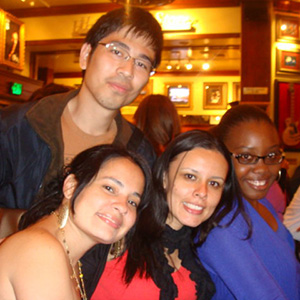

“When I play basketball and tennis the atmosphere here is really different from Korea. Like when we play in Korea we play with strangers, so we just play. That’s it. But in America we say ‘Hello’ to each other and ‘Hey what’s your name’ and we talk. It’s very good since I’m an international student and it allows me to talk in English. It’s helpful when trying to make American friends,” says ALI student Dohwan Lee.

“Because of American personalities they really want to help me. They want to speak. Americans don’t really like silence, but in Korea we are accustomed to silence. If I say hello to strangers they would think I’m strange. But in America, saying ‘Hello,’ ‘Good morning’ and whatever to strangers is fine. I have become accustomed to the American lifestyle thanks to my time at the ARC.”

Lee was so happy by the advantages of using his Aztec Recreation Center (ARC) membership (one of the benefits of being a student at the ALI is that you receive a free membership to the ARC) that he was inspired to write an English essay about his experiences. His essay, “Get Rid of Stress” points out the obvious – regular visits to the gym protects and reduces your chances of many ailments – but he also includes his many chances to meet American friends by playing basketball and tennis, and even engaging in small talk while sitting in the hot tub.

The benefit of outside-the-classroom activities is not lost on Lee who mentions why he now believes that students should exercise as well as focus on studies. “When I was in high school and middle school in Korea my class started at 7 am and ended about 9 pm. Students spend time doing assignments and homework. Americans, I feel make time to enjoy their leisure time and play sports like surfing and snowboarding and this helps with studies. It’s really different. I want to come back to America when I have children. I want them to see and experience Americans enjoying life with exercise and studying.”

Lee learned a very important lesson: He not only improved his health by outside activity but also improved his English by interactions at the gym with Americans, where there is a monthly average of 15,000 ARC active members, providing plenty of opportunity for foreign students to meet and speak with American students in a fun and healthy environment.

Program Spotlight – Fulbright Preacademic Training Program

Fulbright Program

Fulbright ProgramTo “increase mutual understanding between the people of the United States and the people of other countries” the U.S. government created the Fulbright Program – an international educational exchange. Since its inception in 1946, over 310,000 students­ (chosen because of their leadership and academic standing) study, teach, research, and exchange ideas at universities around the world.
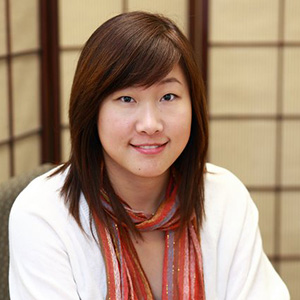

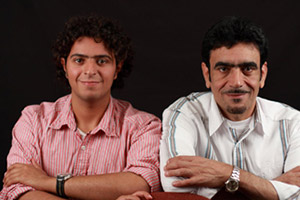
One of those universities, San Diego State University, also hosts the Fulbright Preacademic Training Program at the American Language Institute. The three-week program provides Fulbright grantees with a combination of U.S. academic culture orientation, English language training and field-of-study preparation, and accordingly the skills needed for academic study at U.S. institutions of higher education. The program is also designed to provide a basic understanding of current issues in U.S. society and assist Fulbright grantees in developing an understanding of U.S. social values, which is necessary for successful intercultural communication in their host communities. Fulbright programs are intended to promote not only students’ professional development but also a mutual understanding among all peoples.

Program Specifics

  • Three weeks
  • All students stay in the same residential hotel. That helps them bond almost immediately.  They take public transportation to and from campus, thus learning to navigate that system.
  • The English refinement portion of the program consists of speaking, listening and writing lessons in the mornings.  We also schedule a library tour and computer application instruction.
  • Afternoon sessions consist of SDSU faculty lectures on topics such as the U.S. economy, cultural diversity in the U.S., the role of the media and an overview of social media and mobile applications, everyday geographies in a multicultural neighborhood, etc.; a grad/SDSU Fulbright student panel to alleviate some of the students’ fears about what they’re about to encounter; a volunteer opportunity at a local public library and science summer camp.
  • Various fieldtrips (to Coronado via ferry, SeaWorld, Disneyland) and a city tour expose the students to Southern California and help them connect with each other outside the academic environment.
  • A two-day, two-night homestay allows them to experience American family life first-hand.
  • All expenses (room, board, small allowance for incidentals and post-program travel) are paid for through the Fulbright Preacademic Program. During the week students buy breakfast and lunch on campus with a meal plan just like other SDSU students, and for evening and weekend meals they are given a cash allowance.

Fulbright Facts

  • Program was named after its sponsor, U.S. Senator James William Fulbright
  • It’s one of the most prestigious award programs in the world
  • There are 144 countries involved in program
  • More Fulbright alumni have won Nobel Prizes than those of any other academic program


Famous Fulbright Scholars

  • Samuel L. Kountz
  • Thomas R. Pickering
  • John Lithgow
  • Hedwig Gorski
  • Sylvia Plath
  • Boutros Boutros-Ghali
  • Charles Kennedy
  • Renée Fleming
  • Joseph Heller

For more information, see ali.sdsu.edu/fulbright

Staff Profile – Yuan “Miffy” Yingna – Recruiting Coordinator

Miffy Yuan
Miffy Yuan
Miffy Yuan

When Miffy Yuan came to the U.S. five years ago, she never imagined working for San Diego State University (SDSU). She traveled to the U.S. to work in Maryland. “I worked at the Marriott hotel in my hometown of Guangzhou and then came to the states to work at the Marriott in Baltimore,” says Yuan. After about a year and a half in the U.S., she decided to apply to the American Language Institute at SDSU.

“I did one semester as a pre-MBA student and then two semesters in the Semester at SDSU Hospitality, Tourism, and Recreation Management certificate program. It never crossed my mind that I would get a job here.”

Today, Miffy is a recruitment assistant where the bulk of her work is engaging with Chinese students. “I spend about one to two hours per day talking with people in China via QQ [a Chinese IM service]. I also spend time each day communicating via email with students from many countries. I like working with students from different countries since cultures are different and everyone can learn from each other,” says Yuan.

With experience as a student at SDSU behind her, Miffy shares insight on student life in the U.S. and what she enjoys about San Diego, “Be prepared that there is a lot of independence here. Try to be expressive – don’t hesitate to say ‘Thanks.’ Being more communicative with everyday experience is something that I needed to get used to. And, what I like best about San Diego is the weather and friendly people.”

The learning environment is definitely important; however, Yuan stresses that students need to look at other areas when choosing a school. Yuan says, “Studying and learning English are important, but students should review the school’s other services. For me, the ALI provided detailed service, advising me on things like housing. It’s really beneficial to students since they need these things but don’t think about them. The ALI helps students go through the entire application process. They care about students and it shows.”

A Journey from Saudi Arabia to San Diego – Two Generations, One School

Faisal and Ghusson Azizs
From Saudi Arabia to San Diego – Faisal and Ghusson Azizs

In a home in Saudi Arabia last year, a father (Ghusson) and son (Faisal) were both excited and nervous. Faisal’s acceptance letter to study in the U.S. had arrived. That excitement turned to total shock, when Faisal got the good news — he was accepted to be a part of the 2010 San Diego State University American Language Institute (ALI) English program.

The ALI has been teaching students for many years. It has welcomed many students from over 115 different countries for 37 years; however, it has never had two generations of family members attend the same program. Until now.

“I knew he was applying to schools, but I had no idea he applied to SDSU. When he told me I couldn’t have been more proud,” says Ghusson. “And when I told Faisal I went to SDSU in the 80s, well he was surprised.”

“Yeah, I was shocked. I couldn’t believe it was the same school. He started telling me about where he lived and other small things like how to pronounce ‘El Cajon.’ My father told me before I came here, ‘Don’t say El Ca-joan,” laughs Faisal.

Ghusson and Faisal recently reunited (Faisal has been in the U.S. for several months) on SDSU’s campus and discovered that yet their experiences in the classroom were very similar, the surroundings changed a bit. “The campus is completely different, but the beautiful garden is the same,” Ghusson explains. “It’s very emotional – I’m happy I can share a good education with my family. I knew ALI’s culture and they are like a family and my son is in safe hands.”

They have done a lot during their visit. Faisal showed his father downtown, which is something Ghusson hadn’t seen during his time in San Diego, and they spent some time at the Bay. Faisal has an American roommate and his family mentioned that when his father came to town that they all should go out to dinner. So they did. Faisal adds, “My roommate’s family lives in San Diego, so they all spoke about San Diego 30 years ago and mentioned things we didn’t know.” All agreed it was a great night of learning, sharing, and making new friends.

When father and son discuss their first day in the U.S., Faisal says that his first day was memorable to say the least, “I was like a little kid who went into a toy store where he’s just exploring the place, watching everything. I had never been to the U.S. before so everything was like a dream, a new experience.”

Ghusson mentions that the city’s reputation extends around the world. “San Diego is a beautiful city, and ALI and SDSU have a great reputation in Saudi Arabia. SDSU is known to provide an excellent education.”

The conversation continues and switches to learning English, and Faisal chuckles about how his English has changed since arriving at the ALI, “If we had this conversation when I first came here, we’d probably be here for two hours just so I could explain myself. My roommate helps me when I have difficulties, especially writing.”

Faisal also provides advice for those who are studying English. “I tell my friends that sometimes I don’t have a problem communicating [English] with people. By the end they will understand what I’m trying to say. Start thinking in English, don’t think in Arabic. When you wake up in the morning, don’t think in Arabic, ‘I will go take a shower, get my coffee, and go to school.’”

So what does the future hold for Faisal? Well, his father has an answer for that, “I want my son to earn a degree and come back home of course. Use his knowledge he learns here, since he is getting a good English education. I haven’t used my English in probably 15 years, and as you can see I can still speak English. It shows you I got a good education.”

Today, Ghusson is back in Saudi Arabia and Faisal is planning to pursue a degree at an American university in business administration. As for the ALI, it will be here when Faisal decides to send the third generation of Azizs to learn English at SDSU.