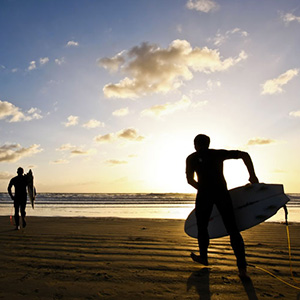

Neighborhood Spotlight – Ocean Beach

Ocean Beach

Ocean BeachThis beachfront neighborhood, known to locals as O.B., Ocean Beach is located about 10 miles west of San Diego State University and is easily accessible by car or public transportation.

One of the highlights of O.B. is the countless mom-and-pop shops, i.e., small and independent businesses. The main street, Newport Avenue, started developing when many family-owned businesses opened in the 1930s. The residents are so community-focused that they actively oppose chain businesses – meaning you will find it difficult to find a McDonalds or a Hilton hotel.

Apart from the local business focus, the area has a laidback beach atmosphere. A visitor will probably see shirtless and shoeless surfers going to the beach, and young adults enjoying food at the many open-front restaurants. Other sites and activities are: the kite festival; the Summer OB Street Fair and Chili Cook-off; Oktoberfest; weekly farmer’s market with live bands; and surfing competitions.

Highlights

Dog Beach – Located at the northernmost end of Ocean Beach, this dog retreat has been around for generations. Dogs can run leash-free, dig in the sand, and swim in the ocean.

OB Pier – Almost 2,000 feet long, this pier is the longest on the West Coast.

Point Loma Light House – This landmark and museum allows visitor viewing.

Sunset Cliffs Park – This park includes 50 acres of hillside trails that provide visitors panoramic ocean views.

Robb Field – A park to satisfy the entire family, enjoy its many baseball fields, soccer and football areas, tennis courts, handball courts, a workout gym, basketball courts and skateboard park.

Favorite Restaurants and Bars

South Beach Bar and Grille – known for its fish taco, sit at the wooden bar and watch the sun set.

OB Noodle House – try Asian fusion noodles as well as Vietnamese bbq and Japanese teriyaki.

Azucar – fresh desserts and Cuban specialties like croquetas, pastelitos, and Cuban sandwiches.

Pizza Port – a classic menu of pizza and chicken wings with a San Diego twist.

Hodad’s – visit one of the top 5 hamburger restaurants in the nation, but prepare to stand in line because this place is popular.

Getting There

Car: Parking near the beaches and storefronts are free and abundant.

Bike: Biking in O.B. is good fun – you will see plenty of Beach Cruisers!

Bus: There are three buses (Routes 15, 35 and 923) that leave SDSU’s campus and drop you off on Newport Avenue. And the cost is only $2.25.


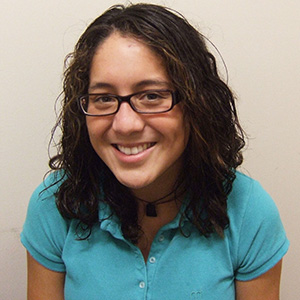
ALI Student Sound-Off: Camila Bernal Sierra

Camila Bernal Sierra


Camila Bernal Sierra

For Camila Bernal Sierra, living in San Diego hasn’t been that much of a culture shock. She believes growing up in South America made her more familiar with American culture. Camila is currently enrolled at the ALI at SDSU and plans to some day run her own company. For now, she is happy to be living in San Diego and meeting other students from around the world.

Where are you from?
Medellin, Colombia

How long have you been at SDSU?
I came to the ALI around April, and I spent five months in Boston – 2009 – before I came here.

Why did you choose SDSU?
I found it online and I like the location and the pre-MBA program.

Where is your favorite place to eat?
Most of the time I cook, but I do like Sushi.

What is your favorite thing about San Diego?
I can’t name one thing, I like everything here. I swim, bike, go to the beach and gym. Los Angeles is so close too. Whatever you want, formal outings or relaxed atmosphere, you find it – there is not enough time to do everything.

Where do you live?
I live in an apartment with three other students near campus. My roommates right now are from Germany, Denmark, and Taiwan. We hang out together. My old roommate from Tunisia actually came back to visit and is staying with me for three days. You can form good friendships with your roommates.

What is in your future?
I want to earn my MBA. Right now I’m studying for the GMAT. I will apply to SDSU and other schools. My focus I hope will be a mix of marketing and entrepreneurship. I would like to work in a large company for a few years, then work with my family then eventually own my own company.

What do you think about American culture and your San Diego experience?
I believe the biggest surprise was that there isn’t Spanish speaking on campus at the ALI. I wasn’t sure I wanted to come to San Diego because it was so close to Mexico. I figured that many places, I went people would speak Spanish, and I wanted to learn English. People do speak Spanish outside of the campus but it’s up to you. Most merchants know both but they let you choose whether you want to use Spanish or English.

ALI Student Sound-Off: Raquel Munoz Ruiz

Raquel Munoz Ruiz


Raquel Munoz Ruiz
Raquel Munoz Ruiz

Many American Language Institute (ALI) students attend classes to improve their English and better their chances to enroll to the main campus of San Diego State University (SDSU). In 2008, Raquel Munoz Ruiz enrolled in English for Academic Purposes (EAP) classes and studied for two semesters. She then enrolled for one semester in Intensive English Communications (IEC) program courses. She applied to main campus and was accepted into SDSU and is currently majoring in biology with an emphasis in zoology.

Where are you from?
I’m from a city called Santa Cruz in Bolivia.

How long have you been at SDSU?
I came to the U.S. about two and a half years ago. I attended the ALI, then took classes at another school, and then applied to SDSU.

Why did you choose SDSU?
I love San Diego and for my major I wanted to go to SDSU. My dream job is to work at the zoo. My goal is to be a herpetologist. My father is one and my mother worked with snakes for 25 years, so it runs in the family. I like snakes and lizards. I eventually want to earn my Ph.D.

Where is your favorite place to eat?
I have a few but on campus I have a new favorite, Las Casitas. There are so many restaurants in San Diego that I like, I also enjoy eating Korean and Vietnamese.

What is your favorite thing about San Diego?
The weather and the beach. There’s no place like San Diego, there is so much diversity here. You see people from all over the world, so you don’t have to travel far to meet people from other countries. I also love that it’s laidback here.

Have you made many friends here?
A lot! I play tennis and that helps. I play sports and I’ve learned a lot about the culture from sports. I learned to surf, box, wakeboard and I play soccer too. I surf in La Jolla. My perfect weekend is surfing. There is no ocean in my country, but here there are so  many beaches. I go to the beach all the time.

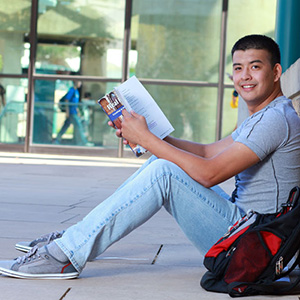
From Kazakhstan to San Diego – A Student’s Journey – Alisher Kalibekov

Alisher Kalibekov
Alisher Kalibekov
Alisher Kalibekov

In a very diplomatic way, Zhenis Kalibekov would love to see his son, Alisher, follow in his footsteps. Zhenis is the Republic of Kazakhstan’s diplomat to China, following four years as his country’s diplomat to Russia.

Alisher enrolled this semester in the English for Academic Purposes (EAP) program through SDSU’s American Language Institute.

As Zhenis was recently taking part in an English interview, his son sat intently listening to all that was said. Alisher does not speak English, but he plans to perfect the language through the EAP program.

“This is a big step for my son,” Zhenis said. “He is very proud to be accepted by the American Language Institute. He’ll take English, get to a high level and choose where he will go. I want my son to help people and his country.”

The EAP program will help Alisher develop the skills needed to succeed at a U.S. university. He will most likely learn English for one year at SDSU, and then go to either Harvard or UCLA to study international law.

Alisher actually preceded his father, who is based in Beijing, by one year in China. The son studied Mandarin in China for two years before graduating in July. According to his father, Alisher studied Chinese for 13 hours daily from 8 am-9 pm.

“He was one of the best students in the school,” his father said. “In China, the rules are very tough. He knew nothing when he went to China; but he liked it. In a short time, it was necessary for him to communicate with the Chinese people.”

Why did Alisher leave China to enroll at SDSU? Bill Price, executive director of the ALI at SDSU, was the executive vice president at the now defunct OSULA Education Center when Zhenis studied there a decade ago. Zhenis remembers Price as being “the best friend of all the students when I studied in Los Angeles,” so he was only too happy to send his son to be under Price’s direction at the ALI.

“Dr. Price was always giving good suggestions and advice,” Zhenis said. “As students, we could always speak openly to Dr. Price. He gave me good direction to go to Russia as a diplomat. Now that I’m in a high position as a diplomat, I’m very proud of it and very proud of Dr. Price.”

Zhenis is also very proud of his son for coming to SDSU as a way of learning English and eventually becoming a diplomat. “Being a diplomat is very interesting,” Zhenis said. “I now have the knowledge to protect my citizens and companies in foreign countries. I tell my son to get a good education and use it in a professional field.”

Staff Profile – Lynnette Torres – Academic Advisor and Marketing Assistant

Lynnette TorresLynnette Torres has worked for ALI for almost four years and her experiences have shaped her understanding of living and studying abroad. She knows all about being a new face in a different country. She worked abroad with the Jet Program. “I moved to Japan and worked there for two years teaching English at elementary and junior high schools. I taught English for two years in Chichibu Saitama.  It’s a city about an hour and half north of Tokyo,” says Torres.
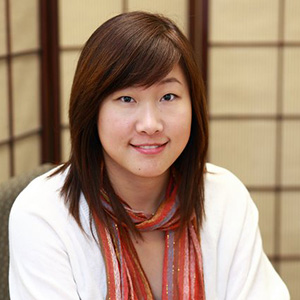

Coming back to the states was a big culture shock, “I wanted to integrate my overseas experience with work, so I decided to work in education. When I returned in 2007, it wasn’t long before I found the American Language Institute.”  Since she traveled all over Asia she feels that her experience has given her insight to be the academic adviser for ALI she is today.

ALI is a place of diverse people, as are Torres’s observations of the students she helps.  She works for the academic program assisting students to gain entrance to universities and helping them with the application process.  She says it’s important to get all the information for the scholastic journey ahead.

Her invaluable time teaching in Japan gives her the ability to relate to students. Lynnette says, “It’s nice to talk with students and share their experiences.  I enjoy working here and seeing all the people from different cultures.  With any country, there are cultural differences and experiencing living abroad helps when relating to the students.”

Lynnette’s advice is to be prepared to study the language.  She adds that students may not get all the information they need back home, and that a lot of research will help.

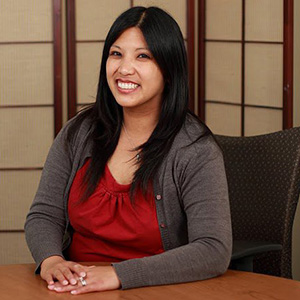
Staff Profile – Yuan “Miffy” Yingna – Recruiting Coordinator

Miffy Yuan
Miffy Yuan
Miffy Yuan

When Miffy Yuan came to the U.S. five years ago, she never imagined working for San Diego State University (SDSU). She traveled to the U.S. to work in Maryland. “I worked at the Marriott hotel in my hometown of Guangzhou and then came to the states to work at the Marriott in Baltimore,” says Yuan. After about a year and a half in the U.S., she decided to apply to the American Language Institute at SDSU.

“I did one semester as a pre-MBA student and then two semesters in the Semester at SDSU Hospitality, Tourism, and Recreation Management certificate program. It never crossed my mind that I would get a job here.”

Today, Miffy is a recruitment assistant where the bulk of her work is engaging with Chinese students. “I spend about one to two hours per day talking with people in China via QQ [a Chinese IM service]. I also spend time each day communicating via email with students from many countries. I like working with students from different countries since cultures are different and everyone can learn from each other,” says Yuan.

With experience as a student at SDSU behind her, Miffy shares insight on student life in the U.S. and what she enjoys about San Diego, “Be prepared that there is a lot of independence here. Try to be expressive – don’t hesitate to say ‘Thanks.’ Being more communicative with everyday experience is something that I needed to get used to. And, what I like best about San Diego is the weather and friendly people.”

The learning environment is definitely important; however, Yuan stresses that students need to look at other areas when choosing a school. Yuan says, “Studying and learning English are important, but students should review the school’s other services. For me, the ALI provided detailed service, advising me on things like housing. It’s really beneficial to students since they need these things but don’t think about them. The ALI helps students go through the entire application process. They care about students and it shows.”

A Journey from Saudi Arabia to San Diego – Two Generations, One School

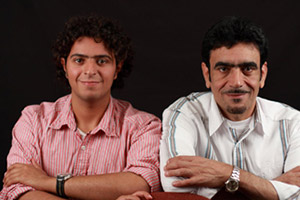
Faisal and Ghusson Azizs
From Saudi Arabia to San Diego – Faisal and Ghusson Azizs

In a home in Saudi Arabia last year, a father (Ghusson) and son (Faisal) were both excited and nervous. Faisal’s acceptance letter to study in the U.S. had arrived. That excitement turned to total shock, when Faisal got the good news — he was accepted to be a part of the 2010 San Diego State University American Language Institute (ALI) English program.

The ALI has been teaching students for many years. It has welcomed many students from over 115 different countries for 37 years; however, it has never had two generations of family members attend the same program. Until now.

“I knew he was applying to schools, but I had no idea he applied to SDSU. When he told me I couldn’t have been more proud,” says Ghusson. “And when I told Faisal I went to SDSU in the 80s, well he was surprised.”

“Yeah, I was shocked. I couldn’t believe it was the same school. He started telling me about where he lived and other small things like how to pronounce ‘El Cajon.’ My father told me before I came here, ‘Don’t say El Ca-joan,” laughs Faisal.

Ghusson and Faisal recently reunited (Faisal has been in the U.S. for several months) on SDSU’s campus and discovered that yet their experiences in the classroom were very similar, the surroundings changed a bit. “The campus is completely different, but the beautiful garden is the same,” Ghusson explains. “It’s very emotional – I’m happy I can share a good education with my family. I knew ALI’s culture and they are like a family and my son is in safe hands.”

They have done a lot during their visit. Faisal showed his father downtown, which is something Ghusson hadn’t seen during his time in San Diego, and they spent some time at the Bay. Faisal has an American roommate and his family mentioned that when his father came to town that they all should go out to dinner. So they did. Faisal adds, “My roommate’s family lives in San Diego, so they all spoke about San Diego 30 years ago and mentioned things we didn’t know.” All agreed it was a great night of learning, sharing, and making new friends.

When father and son discuss their first day in the U.S., Faisal says that his first day was memorable to say the least, “I was like a little kid who went into a toy store where he’s just exploring the place, watching everything. I had never been to the U.S. before so everything was like a dream, a new experience.”

Ghusson mentions that the city’s reputation extends around the world. “San Diego is a beautiful city, and ALI and SDSU have a great reputation in Saudi Arabia. SDSU is known to provide an excellent education.”

The conversation continues and switches to learning English, and Faisal chuckles about how his English has changed since arriving at the ALI, “If we had this conversation when I first came here, we’d probably be here for two hours just so I could explain myself. My roommate helps me when I have difficulties, especially writing.”

Faisal also provides advice for those who are studying English. “I tell my friends that sometimes I don’t have a problem communicating [English] with people. By the end they will understand what I’m trying to say. Start thinking in English, don’t think in Arabic. When you wake up in the morning, don’t think in Arabic, ‘I will go take a shower, get my coffee, and go to school.’”

So what does the future hold for Faisal? Well, his father has an answer for that, “I want my son to earn a degree and come back home of course. Use his knowledge he learns here, since he is getting a good English education. I haven’t used my English in probably 15 years, and as you can see I can still speak English. It shows you I got a good education.”

Today, Ghusson is back in Saudi Arabia and Faisal is planning to pursue a degree at an American university in business administration. As for the ALI, it will be here when Faisal decides to send the third generation of Azizs to learn English at SDSU.