ALI Student Profile – Oleksandr Iakovenko

Oleksandr Iakovenko
Oleksandr Iakovenko
Oleksandr Iakovenko

Oleksandr Iakovenko has always been into adventures of his own and others.

Growing up, the Ukraine native enjoyed skiing and snowboarding in his homeland and several surrounding countries.

Then, after attending a private Ukrainian university as a business administration major, he went to work as a manager in the airline business.

His adventure from there? He is enrolled in the pre-MBA program at the San Diego State University American Language Institute with hopes of one day obtaining his business MBA.

“After years of working, I realized that I needed more knowledge for my career,” he said. “I observed information on the Internet and found that the ALI pre-MBA and pre-Master’s programs are among the best in the United States. That’s why I came here.”

Oleksandr plans to return to his Ukrainian home, located about 40 kilometers (25 miles) from the Russian border, after attending one semester at ALI. His goal is to work back home for several months, then return to America and enroll in an MBA program, possibly at SDSU.

“The university here is very nice, especially the campus and the teachers” he said. “The teachers are the best feature of the program; they are great. Everyone here is really kind and willing to help students.”

Among other items, Oleksandr has been pleased with how much ALI instructors have helped him with his English pronunciation and grammar. He speaks four languages: Ukrainian, Russian, English, and French.

According to Oleksandr, he has been helped greatly being surrounded in his classes by students from more than 20 countries such as Brazil, South Korea, Saudi Arabia, and China.

“It has been very useful to exchange stories and ideas with students from other countries,” he said. “It’s a different approach; it’s more than just learning from books.”

No matter where his career takes him, there are certain to be many more adventures for the Ukrainian student.

TESL/TEFL Student Continues His English Teaching Career

Joe Candelario

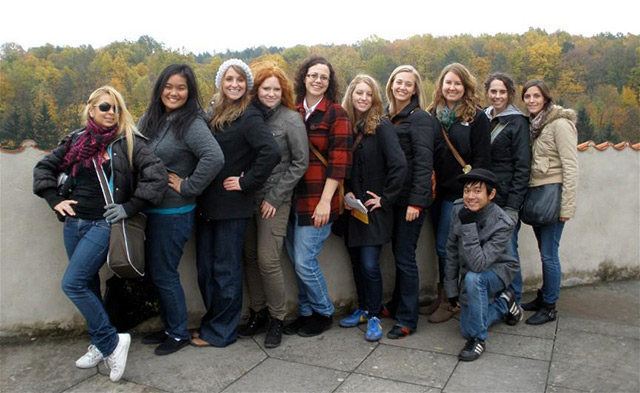
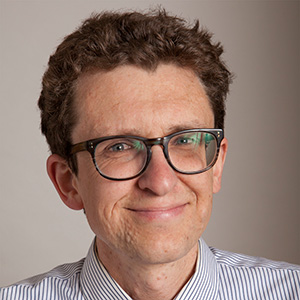
Joe CandelarioEditor’s note: The ALI will be updating its student profiles to let you know what some of our former students are doing today. Here is the original blog on Joe Candelario, posted Aug. 16, 2013, along with a look at his current status. Today Joe Candelario is on a clear career path – he recently came back from teaching English in the Czech Republic, and is working as a facilitator at the American Language Institute (ALI) at San Diego State University (SDSU). However, after graduating college Candelario wasn’t so sure of a direction. When a friend told him about the ALI, he decided to take a chance and move forward with his future. “I thought the teacher training program sounded like a good idea, so after thinking about it for a couple months, I decided to go through with it and enrolled in the TESL/TEFL certificate program,” he said. After graduating from the program, Candelario found a position as an English teacher in the Czech Republic. He taught young children from the age of kindergarten to third grade, and credits the ALI teacher training program with helping him teach English successfully. “One of the most important things that I got from Van [director] was to be prepared, have contingency plans, and always be flexible, so you can pull something out of your hat if something goes wrong. I can’t tell you how many times I forgot to bring my lesson plans or English cards. I would have to think of something on the spot, so that flexibility and multifaceted skill-set really helped out teaching in the Czech Republic.” Candelario has taught at a summer camp in France and still plans to teach abroad either in Europe or South America. He definitely recommends the program for “anyone who is adventurous and is always looking to learn new things.” He also advises that, “It pays off to know, to meet, and to network when you are living abroad because you never know what is in your future.” Czech Republic

Update on Joe

Did you get to teach in Europe or South America? If so, how did it work out? I taught in Podebrady and Nymburk, Czech Republic, which were less than an hour from Prague. It went really well for a first job teaching children. The most difficult thing was creating my own curriculum for five different age groups. I also taught at an English immersion camp in France called “American Village” for two summers. Those were both great experiences. Will you share an anecdote or two of your experiences? In the Czech Republic, I remember teaching a group of 5-6 kindergarteners who were by far my most difficult group at that level. There were two boys who were quite rowdy, a couple well-behaved children, and one little girl who was always silent during the lessons. A few months into teaching this group – right when I’d just about had it – the little girl finally responded in English. It made everything all worthwhile. In the American Village, it was like going off to Neverland. My first summer, I worked at a gorgeous, centuries-old Burgundian Chateau which was loaded with history. Surrounding the stone walls of the grounds were rolling vineyard hills. Each day after breakfast we’d teach ESL, then put on skits, followed by different “American” games and activities. The counselors were a vibrant mix of travelers, linguists, raconteurs, intellectuals, musicians, and people in search for meaning in life. I’d do it again in a heartbeat. How long did you teach as a facilitator at ALI, and how did it help you? I taught as a facilitator for a couple months in 2012 and again in 2013 upon returning from Europe. It was a good opportunity to observe skilled teachers and to gain experience working with international students. What are you doing nowadays? Since then, I’ve been teaching at EF (Education First) San Diego. (Editor’s note: This is an international language school in San Diego where students come to study English.) It’s a solid job. I work with Allen Yang, who also did the TEFL program and worked as a facilitator at ALI. How much of a factor has the TESL/TEFL program been in your life? I’m grateful for my experience doing the teacher training program and facilitating at ALI. The staff were supportive and encouraging and were invaluable in helping me in my job hunt early on.

TESL/TEFL – Changing Your Life Can Change Many Other Lives

Alicia Wszelaki, TESL/TEFL Certificate Graduate

Editor’s note: The ALI will be updating its student profiles twice monthly to let you know what some of our former students are doing today. Here is the original blog on Alicia Wszelaki, along with a look at her current status.
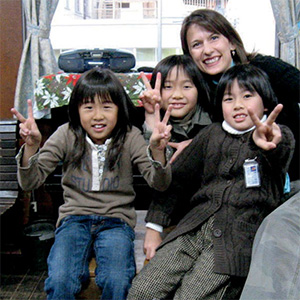
Alicia Wszelaki, TESL/TEFL Certificate GraduateIf you’re like most people, you are probably wondering how you can travel the world, make a difference, and still make a living doing so. One way to see the world and pay the bills is through teaching English overseas. A way to start is completing a TEFL certificate program. This program focuses on the development of effective and innovative teaching methods for an international classroom, with the added benefit of helping graduates find jobs overseas.

Alicia Wszelaki completed the TESL/TEFL program at SDSU’s American Language Institute (ALI), then traveled the globe teaching English. She shares her experiences here.

The Program
The program teaches you how to be a teacher. They prepare you to go someplace where you are a foreigner and now you have to become a part of that culture. So the program goes over, not only the essentials of how to teach students a language, but also how to be a part of, and respect that culture. You learn methodologies about teaching and you go through a lot of the theories. This helps you not only in the classroom, but also outside the classroom since you’re communicating everywhere that you go.  I recommend the program at ALI to anybody thinking of changing their career because it gives you a chance to change yourself too, to challenge yourself. The program builds a lot of confidence in people. Before I took it, I was totally afraid to speak in front of a group of people. It became my vehicle to change my life.

Best Candidates for Success
I think the program is a great opportunity for somebody who is willing to take a challenge and willing to step out of their safety role. The program can be for everyone. And I think, in general, if someone is looking into the program, they already have what it takes to go because they’ve already thought about it. Somewhere the seed has been planted and they have what it takes to do it.

Change Your Life
I feel like I started again. I felt like I was going to school for the first time and I really wanted to be there. It empowered me to go out and do something different. Those four weeks really changed my perspective and gave me a lot of confidence. I think that’s the main thing. I think the program gives you confidence because I’ve never taught before. They give you everything that you need; all of the tools. In the morning, you’re in the classroom, then in the afternoon you are in another classroom where you’re actually watching a teacher firsthand and you are interacting with the international community.

Proudest Moment
I was teaching in Japan. I had a group of about 30 kindergartners. Teaching kindergartners involves a lot of songs and activities. There was one girl that would sit in the back of the room and stare at me. She didn’t sing a word, she didn’t clap her hands, she didn’t do ‘head, shoulders, knees and toes;” nothing. I didn’t know how to break through. Then one day the girl was screaming at the top of her lungs. Every single word that I ever taught in the class – every single word to every single song, and doing all the motions. I was like, “Wow, everybody gets it when they’re ready to get it.”

Advice
Just do it. It’s a bit scary to change your life, to say I’m going to leave everything behind and try this without having a safety net. It’s so easy once you do it. People want everything answered for them when they go abroad and start teaching. And sometimes, you just can’t do that because everybody is going to have a different experience. Answers will come when you get there. Put yourself out there and everything will come to you. I encourage anybody to try the program, because even if you never leave the country, the program gives you tools to being a successful communicator. In our country, you still have to work with international people, so even if you don’t step outside or get a stamp in your passport, the program still makes you change.

UPDATE ON ALICIA
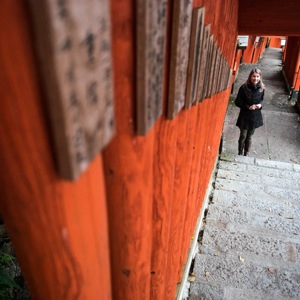
Alicia WszelakiWhat is your current occupation?
I’m owner of Path 88 Productions, a media production company located in San Diego. In addition to producing documentaries, we specialize in photography and video projects for the travel industry, corporations, and private businesses. Some of our recent films include, Camino The Journey to Santiago and Long Distance.

We understand you are doing a documentary on a Japanese woman who ran an English newsletter for 30 years. Please tell us about that.
Our latest film, The Newsletter, tells the story of a group of women in Kure, Japan who for the last 30 years have published Parkway, an English-language newspaper with global readership. It is a tale of passion, friendship and how life happens between the lines.

This short documentary is a direct result of taking the TESL/TEFL program at the American Language Institute. It is through my time teaching in Japan that I was introduced to the staff of Parkway, who asked me to be their English editor, a position that I have enjoyed since 2008.

You have traveled the world since you were an ALI student. How much of a factor was the TESL/TEFL program in getting you started as a globetrotter?
Being a graduate of the TESL/TESFL program has given me added confidence to travel.  It has opened up opportunities to work and live in other countries. Since my graduation in 2003, I have had the chance to visit, live, work, and teach in over 30 countries.

Do you continue to stay in touch with any of your former classmates or the staff at ALI?
There is a bond with individuals who make the decision to become ESL instructors, whether they stay at home or travel abroad. Teachers share an underlying sense of adventure and a desire to make a difference in people’s lives. It inspires and motivates me to know that my closest friends are the ones I have met abroad and at the ALI.

Do you still consider the TESL/TEFL program a life changer?
Taking The TESL/TEFL program at ALI started a chain of events that have led me to where I am today. I frequently travel the world and interact with various cultures. I tell other people’s stories through photography and motion pictures; my passions. Would this have happened without the course? No. A life Changer, Yes! And thank you.

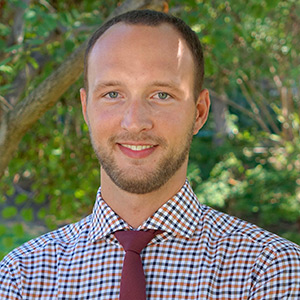
Becoming an Expatriate. ALI: The Keys to the Kingdom.

Zachary York

By Zachary York

Zachary York
Zachary York

My transition into a professional life from that of academia is riddled with twists and turns, as it is for most people that I know. Throughout my undergrad at the University of Arizona, I studied creative writing and the Italian language. It was there that I got my first taste of being abroad; study abroad in Italy was an eye-opening experience.

After I completed my degree, I sought direction and took to the open road. I backpacked around Europe for two months with my best friend. It was somewhere on our train journey through Italy and France that I decided to return to school and pursue a master’s in Special Education.

I found a program at SDSU and made quick work of taking the prerequisite courses. During said courses, I was afforded the opportunity to take a short internship at the Western Academy of Beijing, where I gained firsthand experience in international classrooms, building scaffolding for the students with different learning styles.

During some off time, I was able to observe an ESL/ EFL class; I was bitten by the bug. When I returned to the U.S. after what seemed like a couple days but in actuality was five weeks, I switched my focus to Teaching English as a Foreign language. It just so happens that SDSU has the American Language Institute (ALI) and I started to get my things in order so I could start the program.

Among those things was the realization that the trailhead in front of me was the culmination of my language education and my desire to elevate the everlasting itch for all things foreign, to paraphrase Melville. Most of all, however, this job utilizes my empathetic personality and strong drive to help people.

This is where I played my hand and committed to studying at the ALI; easily one of the best choices of my young life. The curriculum included everything that will start me on my path to become a global educator and to expatriate-hood. One of the best parts, in my opinion, was the mentorship program. I have always aligned myself with those from whom I can learn. The mentorship program was just what I needed to build that personal bridge in-between what I was learning and the production stage. I first started having an academic mentor in high school; haven’t looked back. This type of relationship really works for me and my style of learning.

With the wide program of classes offered by the ALI, I now step forward to my job at a local school in the land of 1000 smiles [Thailand] with a strong confidence and preparedness. I was able to utilize the network I cultivated here in America to build a relationship with the powers that be at that school, in addition to some expatriates in other countries.

John Dewey said, “To find out what one is fitted to do, and to secure an opportunity to do it, is the key to happiness.” ALI has given me those opportunities and, helped me to hone my focus to embrace my itchy feet.

As I look forward into the very near future of my adoption of an expatriate lifestyle, I see many tasks and hoops to jump through. But as the time draws close and my ducks get in their rows,

I am afforded a view of my new home: the Far East. This lifestyle has always been one that I dreamt of adopting and, I credit the ALI with helping me to find the tune which makes my heart sing.

Follow Zachary York’s expat adventures at zacyork.wordpress.com

ALI Student Profile – Yanying “Toto” Deng

Yanying Toto Deng
Yanying Toto Deng
Yanying “Toto” Deng

Chinese native Yanying “Toto” Deng came to SDSU’s American Language Institute to improve her English through the Intensive English for Communication (IEC) and International Business English (IBE) programs.

Little did she know she would stay longer than planned to help improve other people’s lives by taking part in the first Social Entrepreneurship (SE) class at ALI, which focuses on creating businesses that solve social problems.

After spending 15 months in San Diego, Toto left in early June to complete the final year of her master’s degree in cross-cultural communications at a Japanese university. Then she will head into the working world in corporate communications and continue her SE work through volunteer cross-cultural programs.

While at the ALI, she showed her entrepreneurial spirit by organizing a multi-cultural event for more than 100 students from local community colleges and universities. Among the countries represented were Brazil, Japan, Saudi Arabia, Africa, Switzerland, Turkey, and Mexico.

During the festivities, Toto played a Chinese guitar, known as a pipa.

“It’s really a special instrument,” she said. “I played it to introduce my culture. The people in Japan were interested when I played it there, too.”

The event was among many reasons Toto believed it was special to have stayed at ALI four extra months to take part in the first semester of the SE program.

“We were like a family,” she said. “We did a lot of things together. We went to lunch, dinner, hung out together, and traveled to Las Vegas.”

Always the adventurous and outgoing type, Toto first began displaying her personality early in elementary school. She was selected by her second-grade teacher to emcee an event on campus.

“She picked me and asked me to speak loudly,” Toto said. “I didn’t feel afraid. I became the emcee for two years at our school.”

The Beijing native continued her education through high school in China, then moved to Tokyo as an undergraduate to major in business management. She finished the first of two years working toward a master’s degree in Japan before coming to the ALI to learn English.

“My English has improved a lot since I came here,” she said. “Some of my teachers say it is a miracle for me. My goal was to study English so I would be able to work for an international company and be able to travel the world focusing on speaking and communication.”

Toto hopes to be an organizer in the entertainment business, perhaps helping develop commercials for the Internet. When that happens, she will fondly recall developing her skills at the ALI.

“I really liked San Diego,” she said. “I felt very comfortable. I was able to have a more open personality in San Diego. The people were really friendly.”

Being friendly is a trait that certainly matches her personality.

ALI Student Profile – Sofia Rodriguez

Sofia Gonzalez
Sofia Gonzalez
Sofia Gonzalez

Sofia Rodriguez was assigned by an international placement agent in Mexico to attend the American Language Institute at San Diego State University. As it turned out, it was a wise choice.

“I’m glad I was able to go to school there,” said Sofia, a former student in the Intensive English for Communication (IEC) and International Business English (IBE) programs who has moved back to Mexico City.

Sofia came to the ALI hoping to improve her English speaking skills and expand her vocabulary. She said both were accomplished because of the outstanding faculty at the ALI.

“I learned a lot with them,” Sofia said. “They were really interested in teaching us the best possible way. Also, they were very accessible to answer our questions.”

While at the ALI, Sofia said she made many new friends that she still keeps in touch with.

“I use the skills I learned at ALI when I talk with my new friends,” she said. “And, I can watch movies and listen to music in English and understand more than before.”

Sofia grew up in Mexico City with a variety of interests. As a child, her favorite activities included soccer, dancing, and reading.

She was able to continue with each of these interests while at SDSU. The university has an outstanding intramural program where she played soccer, the ALI offers a dance class each Friday, and there were many reading activities available through the ALI. She also enjoyed going to such events as a football game between SDSU and the University of Idaho that featured a spectacular fireworks show afterwards.

“I liked a lot of things about San Diego State,” Sofia said. “But I think the best thing about it were all of the activities available on campus.”

In addition, Sofia found the San Diego community to her liking.

“San Diego is an awesome place,” she said. “Everything is nice … the weather, the people, the beaches. You can hang out with your family or friends. There are many interesting places to visit where you will have fun.”

Certainly, Sofia could not have made a better choice than the ALI and SDSU.

ALI Student Profile – Tomomi Aoki

Tomomi Aoki

Tomomi AokiWearing a black San Diego State T-shirt while being interviewed, Tomomi Aoki was all smiles as she discussed topics from her worldwide travel, to her stay in San Diego, to studying International Business English (IBE) at the SDSU American Language Institute.

The Osaka, Japan native had visited countries such as Korea, Thailand, Vietnam, France, Italy, Cambodia, Sweden, Finland, Morocco, Estonia, Latvia, Laos, India, Spain, and Lithuania before settling in at SDSU for a four-month educational stay.

“I like to see places,” she said. “I wanted to be more confident in myself. I like to know about different cultures.”

Tomomi likes what she sees so far of SDSU and the San Diego area. She is taking IBE to learn English and take it back to her native country where she would like to work for a company in an employment field she has yet to choose.

The IBE certificate program is designed for students such as Tomomi with intermediate to advanced English-language proficiency and a high level of commitment. This certificate course is for students and professionals interested in learning more about American business practices as they relate to business around the world; many times taking those practices back to their homeland as Tomomi plans to do.

“Learning English helps me a lot,” said Tomomi, who actually was majoring in Spanish at a university near Osaka before coming to SDSU.

“I wanted to study abroad in English,” she said. “I also wanted to study Spanish. San Diego is next to Mexico and many people speak Spanish here. It helps me out.”

Tomomi came to SDSU at the recommendation of both a friend and an ALI agent. Since being at SDSU, she has been pleasantly surprised by what it has to offer beyond education, noting how impressed she has been by the university’s Aztec Recreation Center (ARC), theater, and library.

“In Japan, my university is very, very small,” she said. “It’s not like this. This university is very big. This is a good place to study.”

In addition, she finds San Diego a good place to live.

“I love it,” she said. “San Diego has nice weather and very friendly people. It’s a nice place for the beach. I like the sunset, too.”

All of which is adding up to a wonderful four-month stay while preparing for the next step in her career.

French Journalist Finds Herself Studying English Abroad

Marion Urban

Marion UrbanWhen Marion Urban finished her journalism studies in Strasbourg, France, she decided to go to French Guiana and start a newspaper with four other journalists. After four months, the newspaper collapsed and she found a job at a local radio station, where she worked for two years. After that Urban traveled to Brazil, Haiti, and Montreal, Canada and decided to make a major jump and travel to Africa.

In Africa, Urban became a freelance journalist in Nairobi working for Swiss and French  newspapers, for radio stations – (French desk) for South African Broadcasting Corporation, BBC, Radio Nederland, Deutsche Welle, Radio Suisse Internationale, CBC (Radio Canada) – and reported for Radio France Internationale (RFI). She worked for RFI on a regular basis, and became a staff journalist until 2007. Urban went on to Mali to train radio producers for a French NGO, where she traveled to Senegal, Chad, Cameroon and Republic of Congo (Brazzaville).

As a journalist for RFI, she was based in Kenya and Somalia and worked in Africa for four years. She became an expert in the area. Urban adds, “I was lucky to work for a news agency while in Somalia. I didn’t cover the wars, I covered farming issues. I was running after cattle.

Africa changed me – it gave me a sense of space and time. Today, I am able to distinguish the different people of Africa. There is a way of speaking, there is a way of behaving, there is a way to stand, you can feel that from the people from each country – they carry the history of their country.”

Today, Urban lives in Paris after spending a semester at the American Language Institute (ALI) at SDSU in the English for Academic Purposes program. “I wanted to know much more about the American culture, so I decided to study in U.S. I had two choices, Boston or San Diego.

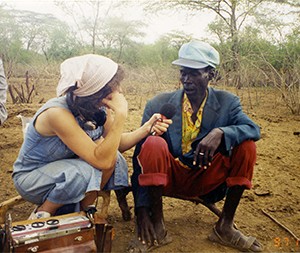
Marion Urban InterviewingBoston is much more European, so I decided to come to San Diego for four months.” Studying English in the U.S. was a very new experience for Urban since she has only studied English for a few years. She learned there are often different meanings behind words. Urban adds, “I will be more careful using words, especially the word ‘productive.’ The meaning of the word isn’t defined the same way worldwide.”
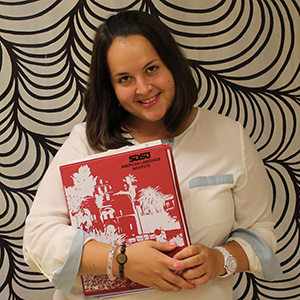


Never wanting to be stationary, after her study at the ALI, Urban made a cross-country trip across the U.S., where she says the highlights were hanging with Navajo Native Americans in Arizona and experiencing the city of New Orleans. Her next step is to return to Kenya to work with a small data agency collecting data for the NGOs. “They have a huge network of volunteers to collect data on health and education in Africa. We digest the data and present it to the NGO,” she says.

After Kenya, Urban’s plan is to continue her English study at the University of Birmingham in England to study online, investigative, and data journalism to “find a new way of practicing journalism by knowing more about social media and networking.”

ALI Student Sound-Off: Natalia Mityushina

Natalia Mityushina
Natalia Mityushina
Natalia Mityushina

Natalia Mityushina left her mother, father, older brother and sister-in-law in Moscow, Russia to enroll in ALI’s Intensive English Communications (IEC) program so she could improve her English and find a better job after her study. She has been in San Diego for only two weeks, but has had many experiences and shares her observations.

Why did you choose SDSU?
When I was looking at English language programs in the U.S., I saw San Diego State’s ALI IEC program and I thought it would be a perfect fit for me and my goals – and, the weather is so different than in Russia. It’s warm here all year round.

What do you do when you are not in class or studying?
I go to the ARC to exercise and swim or go off campus with friends from Spain, France, Japan, South Korea, Thailand, and Germany. I just went to Old Town and had a great time.

Have you had any opportunities to talk with Americans?
Yes, I have a lot of opportunities to talk with Americans. There are so many American students around so there are a lot of opportunities to speak to them. I also live in a dorm and there are many Americans who live there, so I talk with them all the time.

What is your favorite thing about San Diego?
You can talk to anyone here. Everybody is friendly and they are always smiling. The city is cute. There are great beaches and weather, and lots of places to see, experience, and learn about. And, there are plenty of chances to practice English.

Where do you live?
I live in the dormitory Tenochca Hall and have a Japanese roommate.

Where is your favorite place to eat?
Campus makes it convenient to eat so I usually end up going to the East Commons food court. I also go off campus to eat sushi with some of my new Japanese friends.

What is in your future?
I graduated with a master’s in financial management from Moscow State University. I want to improve my English and eventually work in a big finance company or run my own business in Russia. I also want to learn how to surf when I’m in San Diego. I have my first lesson on Friday.

What do you think about American culture and your San Diego experience?
I like American culture. Americans are always willing to give you a smile and talk to you. On campus the clothes are less formal – I saw a student this morning who had a dress on and also tennis shoes. I don’t think you would see that in Moscow. It’s like in the movies because I see many students wearing SDSU sweaters and t-shirts. They are proud of their university so they wear clothes to show that.

ALI Student Sound-Off: Camila Bernal Sierra

Camila Bernal Sierra


Camila Bernal Sierra

For Camila Bernal Sierra, living in San Diego hasn’t been that much of a culture shock. She believes growing up in South America made her more familiar with American culture. Camila is currently enrolled at the ALI at SDSU and plans to some day run her own company. For now, she is happy to be living in San Diego and meeting other students from around the world.

Where are you from?
Medellin, Colombia

How long have you been at SDSU?
I came to the ALI around April, and I spent five months in Boston – 2009 – before I came here.

Why did you choose SDSU?
I found it online and I like the location and the pre-MBA program.

Where is your favorite place to eat?
Most of the time I cook, but I do like Sushi.

What is your favorite thing about San Diego?
I can’t name one thing, I like everything here. I swim, bike, go to the beach and gym. Los Angeles is so close too. Whatever you want, formal outings or relaxed atmosphere, you find it – there is not enough time to do everything.

Where do you live?
I live in an apartment with three other students near campus. My roommates right now are from Germany, Denmark, and Taiwan. We hang out together. My old roommate from Tunisia actually came back to visit and is staying with me for three days. You can form good friendships with your roommates.

What is in your future?
I want to earn my MBA. Right now I’m studying for the GMAT. I will apply to SDSU and other schools. My focus I hope will be a mix of marketing and entrepreneurship. I would like to work in a large company for a few years, then work with my family then eventually own my own company.

What do you think about American culture and your San Diego experience?
I believe the biggest surprise was that there isn’t Spanish speaking on campus at the ALI. I wasn’t sure I wanted to come to San Diego because it was so close to Mexico. I figured that many places, I went people would speak Spanish, and I wanted to learn English. People do speak Spanish outside of the campus but it’s up to you. Most merchants know both but they let you choose whether you want to use Spanish or English.