Reminder to all students: To be in status with your F-1 visas, you must be enrolled full-time. Full time is defined as 12 undergraduate units or 9 graduate units.
There is a per-unit charge of $282 (undergraduate) and $342 (graduate) for any units above 12 undergraduate or 9 graduate.
If you are enrolled in more than 12 undergraduate units or 9 graduate units after the schedule adjustment deadline of February 2nd at 7:59 p.m. , you will have to pay for the additional units.
If you wish to purchase a parking permit for the Spring 2021 semester, the permit cost is $174. You will need the vehicle license number, make, and model to purchase one.
You may purchase a semester a parking permit online with SDSU Parking Services, but you must have a credit card and a valid San Diego mailing address since the permit will be mailed to you. Students who do not yet have a local San Diego mailing address, please contact the ALI for further assistance.
If you wish to purchase the parking permit in person, the Parking Services Office is located in the Public Safety Building on campus. In Spring 2021, please call or email them to confirm their opening hours.
On behalf of the University Police Department, welcome to the new semester. Your safety is our top priority. We encourage you to review the following safety information and reminders.
Call 9-1-1 from your cell phone or any campus phone to report a crime in progress or life-threatening emergency. “Blue Light” emergency phones are located throughout campus and can be used for reporting emergencies.
Call 619-594-1991 to report non-emergencies or to contact the police department.
Be aware of your surroundings and avoid distractions such as talking on your cell phone. Walk in groups whenever possible and report suspicious activity by calling 9-1-1.
Aztec Shield App is a free app for text and video reporting of crimes and other police-related issues. You may download this app from your app store.
Secure your belongings by locking your doors and windows, including properly locking your bike and keeping valuables out of sight.
Free bicycle U-locks are available when you register your bike at the SDSU Police Department.
Do not leave valuables unattended such as backpacks, laptops or cellphones.
Use the Safety Escort Service available from dusk to dawn to and from on-campus locations by calling 619-594-6659. The SDSU library shuttle also operates from the library to any on-campus location or parking area.
SDSU Alert is the primary way the campus communicates during emergencies. You may register to receive emergency text messages at sdsu.edu/SDSUAlert.
After working in aerospace satellite engineering for more than 20 years, Kyle and Angela Roessler were ready for a change. “We wanted a job where we can travel the world, see different places and meet interesting people,” said Kyle.
From the SDSU website, the Roesslers learned about the American Language Institute’s 130-hour TESL/TEFL certificate program, which they completed in just four weeks by choosing the intensive daytime program. (There’s also the option of 11 weeks of nighttime courses.) Two months later, the Roesslers were teaching English in Casablanca. Talk about taking action on a dream.
Kyle Roessler answered a few questions about their experience abroad.
How did the program’s free worldwide job placement assistance work?
We received lots of interesting options from the ALI assistant director of teacher training the program coordinator, but in the end we found our job in Casablanca from Dave’s ESL Café [a popular, free web resource for English as a Foreign Language teachers all over the world].
What made you choose Morocco?
We wanted somewhere we had never been and that sounded exotic. Casablanca fit those two requirements.
Where did you live?
We rented an apartment near the center of town. Our apartment was near a tram stop, as was the school, so it was easy to get to work.
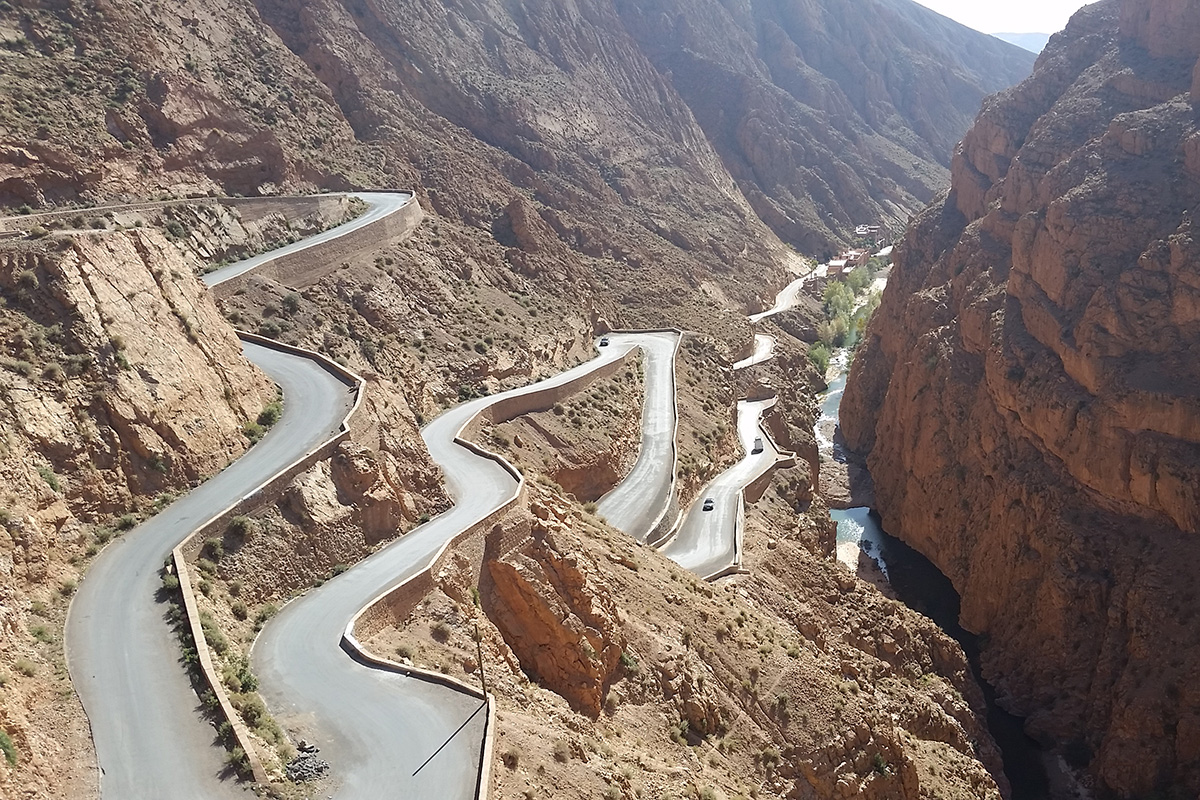
Dades Gorge, near Ouarzazate in south-central Morocco
What did a typical day look like?
We taught at all different times and in different locations, at school and at different businesses. Saturday was our busiest day when we both had three classes (two two-hour classes and one three-hour class). We taught kids aged 7–18 and adults, business English and general, and also SAT and GMAT prep. So we got a lot of different teaching experiences in our nine months.
Were there TESL/TEFL instructors from other countries at your school?
Yes, from Canada, England, Scotland, and Morocco.
Do you have anecdotes to share: small world occurrences, unexpected humor, places you explored?
The kids we worked with loved watching Mr. Bean cartoons. They’re nearly silent, so they’re easy for ESL students to understand and enjoy. Also, we had a tough time initially understanding when to get certain dishes from restaurants. Eventually, we figured out that they only serve couscous on Fridays. That was a surprise, but it fits in with how Moroccans make and serve couscous in their homes (only on Friday, too).
How was the food?
Terrific. We had couscous every Friday, Moroccan tea, and tajine — it’s usually chicken or beef cooked with a variety of vegetables over charcoal in a clay pot. Very yummy. We were in Morocco for Ramadan so got to try many of the sweets that are made especially for that season, like for Christmas.
Tell us about some of the friendships you made.
We lived in the same building as one of our fellow teachers and got to know him well. However, the most surprising friendship is with a young woman we met on the tram. She helped us get new SIM cards for our cell phones when we first arrived, and we got together for lunch about once a month. She even invited us to her parent’s house for lunch.
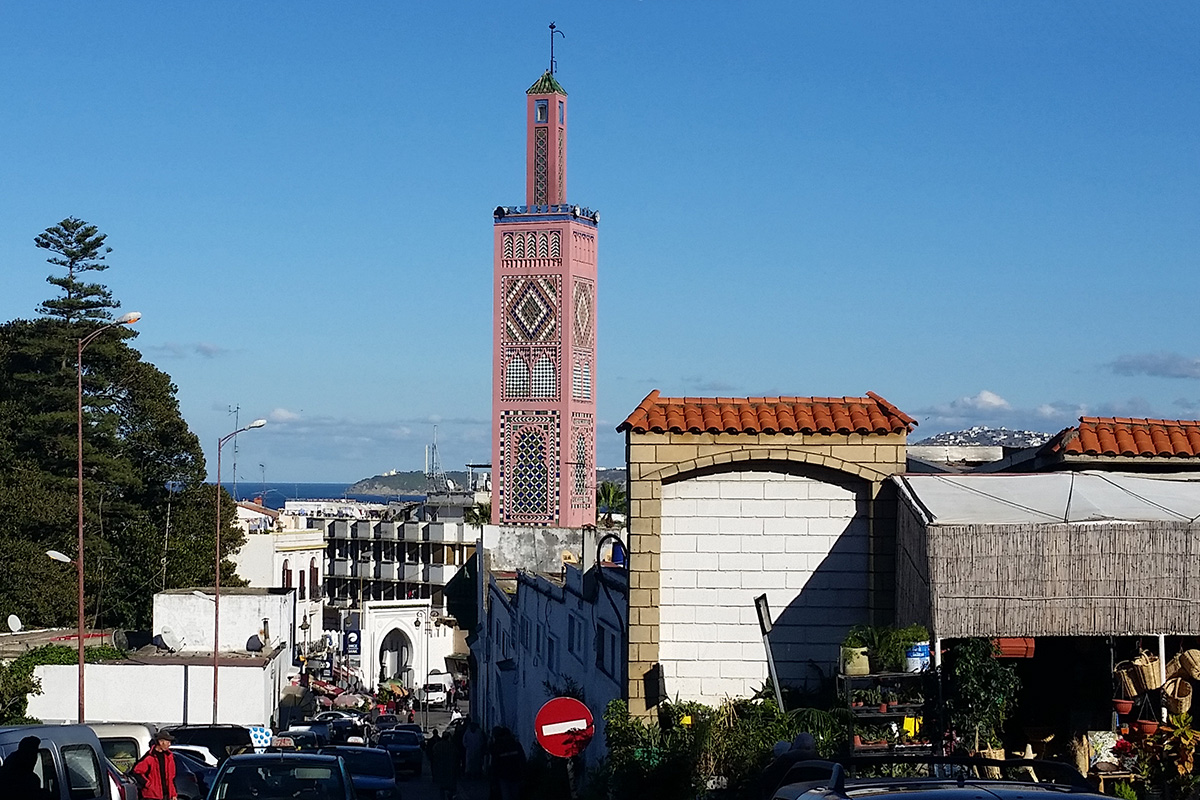
Hassan II Mosque in Casablanca
Was teaching abroad everything you hoped it would be?
It was interesting, it was challenging, but it was a lot of fun. We had expected to teach rich and poor alike, but we really only taught business people and kids from rich families. I am not convinced I made a difference in anyone’s life, but who can tell that right away? I only had one class where I felt like everyone was enthusiastic and really learning things; that was a great feeling and it told me I should be teaching beginners more because they are so excited to be learning something new every day. But I think a lot of those issues were due to where we chose to teach.
What do you think are the biggest strengths of the TESL/TEFL Certificate program at SDSU?
The fact we got to spend so much time in classrooms with real ESL students made me feel much more comfortable when I had a two-hour class to prepare for and run on my very first day at the school.
What words of advice do you have for anyone contemplating teaching English abroad?
Go for it! You can’t really tell if it’s for you until you try it out. And anytime you get to travel when someone else is paying you, it’s a good deal.
Anything you’d like to add?
I’m an author of four self-published novels, the most recent entitled, The Navel of the World. I’m working on a new novel that could be of interest to ALI folks because it will introduce the world to my suggestions of how English can be simplified to make it a more useful international language.
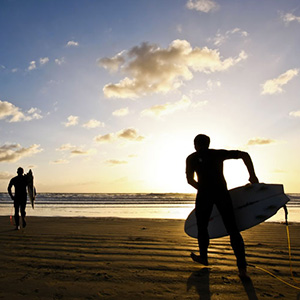
This beachfront neighborhood, known to locals as O.B., Ocean Beach is located about 10 miles west of San Diego State University and is easily accessible by car or public transportation.
One of the highlights of O.B. is the countless mom-and-pop shops, i.e., small and independent businesses. The main street, Newport Avenue, started developing when many family-owned businesses opened in the 1930s. The residents are so community-focused that they actively oppose chain businesses – meaning you will find it difficult to find a McDonalds or a Hilton hotel.
Apart from the local business focus, the area has a laidback beach atmosphere. A visitor will probably see shirtless and shoeless surfers going to the beach, and young adults enjoying food at the many open-front restaurants. Other sites and activities are: the kite festival; the Summer OB Street Fair and Chili Cook-off; Oktoberfest; weekly farmer’s market with live bands; and surfing competitions.
Highlights
Dog Beach – Located at the northernmost end of Ocean Beach, this dog retreat has been around for generations. Dogs can run leash-free, dig in the sand, and swim in the ocean.
OB Pier – Almost 2,000 feet long, this pier is the longest on the West Coast.
Sunset Cliffs Park– This park includes 50 acres of hillside trails that provide visitors panoramic ocean views.
Robb Field – A park to satisfy the entire family, enjoy its many baseball fields, soccer and football areas, tennis courts, handball courts, a workout gym, basketball courts and skateboard park.
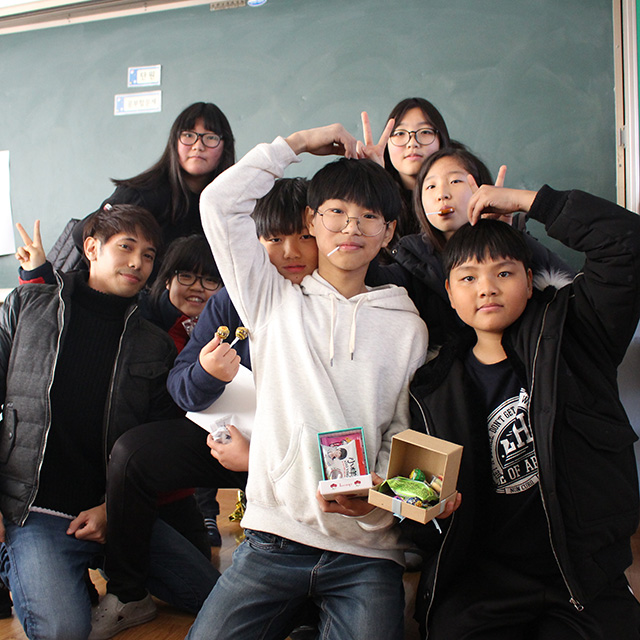
Andrew Toledo (bottom left) with his Advanced After-school English Club, in mid-Secret Santa gift-exchange.
Andrew Toledo had always wanted to teach abroad, so after he graduated from San Diego State University with a degree in psychology, he did a Google search and found that his alma mater had the very thing he was looking for — a TESL/TEFL Certificate program, through the American Language Institute.
Because he had a part-time job at the time, Toledo chose the 11-week nighttime program to complete the 130-hour certificate. (There’s also an accelerated daytime option of four weeks of intensive study.) Then he took advantage of the program’s free worldwide job placement assistance.
“It was great,” said Toledo. “I was able to get a job in South Korea on my first try. This could also be due to my facilitating experience with the Intensive English Program at the ALI, boosting my résumé and chance of getting hired.” He answered a few questions about the program, and his experience teaching English abroad.
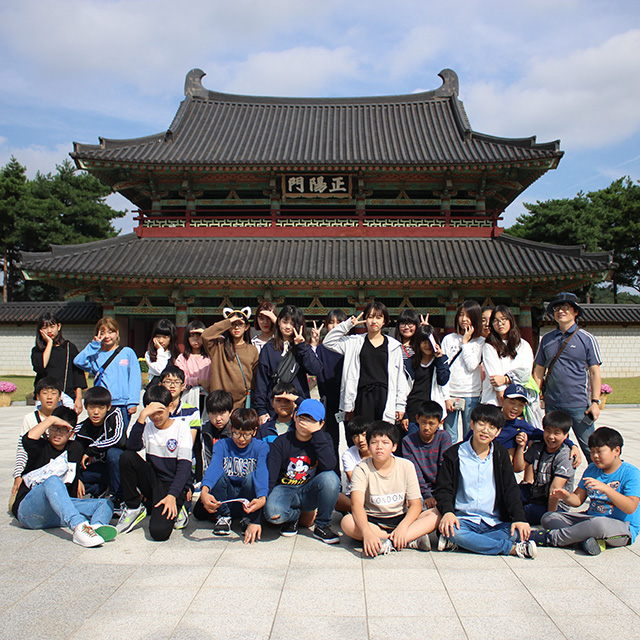
Andrew Toledo’s 6th grade students in from of the Gyeongbokgung Royal Palace in Jongno-gu, near the Seoul main district.
What made you choose South Korea?
I chose it because I somewhat studied the language independently and have several South Korean-American friends. I felt pretty comfortable with the culture and already enjoyed the food, so it was an easy choice. At first I wanted to try Taiwan, but it was quite difficult for an Asian-American to find a job there.
Why is it difficult for an Asian-American to find a job in Taiwan?
Lots of private English schools in Taiwan are still a business, so they require that “White American” look in order to sell their services to parents. I would look great on paper, however due to many CVs and resumes requiring a photo of yourself in Asia, I was turned down quite a bit. I even used my connections in Taiwan where my friend’s mother was able to ALMOST get me a job. They were in the process of hiring me, but once they saw that I wasn’t White (not fitting the American stereotype), I was quickly ghosted.
Where did you live in South Korea?
I lived in Geoje-Do, the second largest island in South Korea, just south of Busan. The island isn’t necessarily isolated from the mainland and is connected by a large bridge named Goga Daegyo. It’s an industrial island famous for its shipyards. My village (Hacheong-Myeon) was small, consisting of elders and Daewoo ship workers. It’s an old traditional farming village reminiscent of Korea in the 1980s. I invited some of my Korean friends from Seoul to my village, and they were amazed and said it looked like a movie set! Although it was quite rural, I enjoyed every single day and did not necessarily feel lonely at all. It was refreshing to see kids playing outside, elders taking walks, people using the bus system constantly, all while being surrounded by nature. It was a great mixture of nature and social life. Keep in mind it’s a village, so stores and restaurants don’t stay open very late. That being said, all I had to do was hop on a bus and head to the downtown area, which was only 15 minutes away, if I felt like having a nightlife. If I wanted to go to Busan (second largest city in Korea), I could just hop on a bus and be there in about 1 hour. By the way, buses are always on time. It’s great!
What did a typical day look like?
I would wake up at 6:30 am to have breakfast in my apartment and walk a whopping 1/4 mile to work, which started at 8:30 am. I liked waking up early because I don’t like rushing to get myself ready. I worked at three schools in three different villages. Because I built such a strong relationship with my co-workers, I was offered rides to work and didn’t need to rely on the bus for my morning commutes. My students were all elementary students with very little English skills and pure hearts. I have heard great things about rural children compared to those who live in the city, and I believe it. Although students were a little hyper and rowdy, they were interested in learning, usually respectful, and enjoyed interacting with me (both in and out of the classroom). I still wonder about them today and hope they are getting a quality education.
Were there TESL/TEFL instructors from other countries at your school?
Nope, I was the only foreigner at my school. In fact, the whole village only had two foreigners in total! It was a challenge, but my Korean language skills definitely improved and I made several South Korean friends that I still keep in touch with today.
The annual Jinju light festival.
Do you have anecdotes to share: small world occurrences, unexpected humor, places you explored?
Two years in Korea, so I have sooooo many! I’ll only report about two briefly.
1) I was there for the impeachment of Park-Geun-Hye. [Editor’s note: The 11th president of South Korea, 2013–2017, and the first woman.] It was actually illegal for me to be near protests, but you can’t stop the protest from coming to you. I was on the bus heading to Seoul when some protesting farmers decided to walk their cows on the freeway as a form of demonstration. It was interesting and I couldn’t avoid it, but it did hold up traffic and I reeeally needed to use the bathroom.
2) My first instance of homesickness was somewhere in my first two months of South Korea. My co-workers wanted to play volleyball (we played every week), but I wasn’t emotionally willing on this particular day. I had feelings of loneliness, missing home, and culturally isolated. My co-workers went outside without me and I could hear them having fun, but I stayed in my office to work on lessons to keep my mind busy. All of a sudden, I heard my name being yelled from outside. My windows were closed, so the voices were faint. I opened the window and saw my school yelling for me to come out and play. It was heart-touching and I couldn’t say no after seeing that! So I ran out and joined them for volleyball. I ended up losing because I’m terrible at volleyball, but it was worth it!
How was the food?
I love Korean food! I loved it here in San Diego, and I liked it even better in Korea! The meat was so fresh and had a distinct quality that only South Korea has. It is probably impossible to replicate here due to the way our food is processed in the U.S. My new favorite dish is a pork soup called Dwaeji-Gukbap.
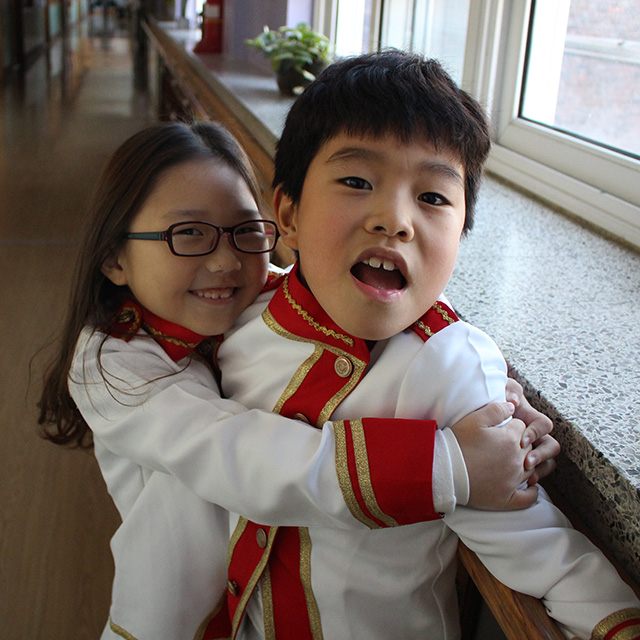
First-grade students in their music festival uniforms.
Tell us about some of the friendships you made.
So many! My co-workers, previous students I facilitated at the ALI, friends of friends, my boss from my part-time job in the U.S. and her friends, the random people I met in the cities and villages. I was quite social and enjoyed the amount of people I met. More importantly, I valued the few friends who I built strong relationships with. I still contact them to this day and we talk about visiting each other again almost every month.
What do you think are the biggest strengths of the ALI’s TESL/TEFL Certificate program?
The activities and how they support their graduates through facilitation opportunities. I have a notebook of all the different games and activities that I learned through the ALI.
What are you doing now?
I’m pursuing my M.A. in International Education at SIT Graduate Institute in Vermont. I hope to work with International students coming into the U.S., preferably at the ISS (International Student Services) center at a university. I’m in my practicum phase at the moment and will be doing a 6–9 month internship at Colby-Sawyer College in New Hampshire.
Anything you’d like to add?
Two things!
1) Reverse culture-shock is real. One way I have been battling it is through food. I learned how to cook several South Korean dishes, so I like to bring those to parties and potlucks. It’s a great way for me to re-visit my experience and show others about my experiences without feeling pretentious. Let’s put it this way, I spent two years in Korea and when someone asks “What was it like?” they’re mostly saying “tell me in less than 5 minutes.” There is no way I can do that justice, and a majority of my story and experiences cannot be told without them losing interest. The only people who understand this feeling are those who have worked/studied abroad as well. Food is a great bridge to connect others to your experiences.
2) For anyone else thinking of working in South Korea, it’s not always easy. There are social norms you must respect, many South Koreans are quite shy, and socializing takes a bit of effort. Just remember, you are a guest in a new country, and sometimes guests are scary! There will be rocky times, and times where it is smooth sailing. With effort, a good heart, and a strong will to stand back up and try again, your journey will have more positive moments than negative ones.
In preparation for a study abroad program in her senior year at San Diego State University, Chandler Marshall made a few visits to SDSU Global Campus, through which the program is administered. It’s there that she saw an American Language Institute flyer for Teaching English as a Second Language, which spoke to all her interests — her lifelong desire to teach, and her passion for travel and experiencing other cultures.
“I went home and did some online research,” said Marshall. “Soon after, I went and spoke with my counselor to get an overview of the program. She gave me a lot of information and contact to the ALI assistant director of teacher training.”
Shortly after graduating with a B.A. in social science, Marshall enrolled in the TESL/TEFL certificate program, choosing the accelerated daytime schedule — four weeks of intensive study. “It was so fun and informational that the time actually went by very fast,” said Marshall. The 130-hour certificate program also has the option of 11 weeks of nighttime courses.
“This program is one-of-a-kind and one of the best decisions I could have made after graduating from SDSU,” said Marshall. She answered a few questions about the program, and her experience teaching English in Japan.
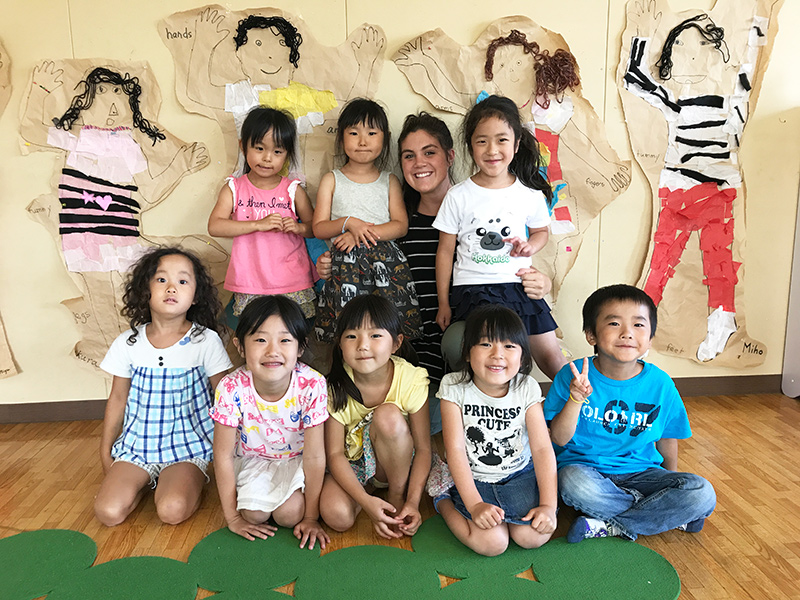
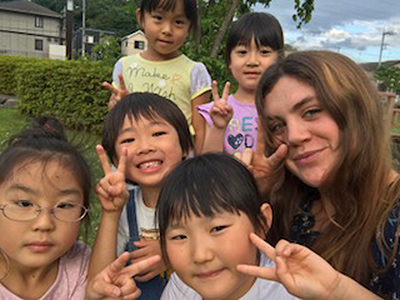
Kindergarten 1 class.
How did the TESL/TEFL program’s free worldwide job placement assistance work?
The worldwide job placement assistance is one of the best benefits of the TESL program through the ALI. I never expected to get so much help and support from a program as I did from the TESL/TEFL certificate program coordinator, the program director, and the rest of the professors. The team does an amazing job of being available to help and guide you in the direction that is best suitable for you. Throughout the program, the instructors give you a ton of information on locations, cultural differences, salaries, and all else you would need to know prior to living and teaching abroad.
After graduation, the directors and professors from the ALI are so helpful and supportive. I went into the office many times to meet with the program coordinator and he would have brochures, and contact information for jobs in the location I was interested in. Since I wanted to work in Japan, and the program coordinator actually lived in Japan for many years, he had many recommendations. Not only that, but he would constantly check in to see how the job hunting was going and to offer more ideas. On top of that, they are able to write letters of recommendation when I was applying to jobs. They continue to frequently send other job offerings and information on events that are good to attend for future work.
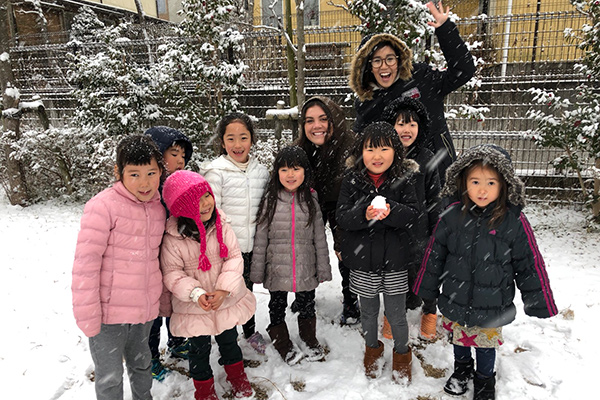
Snowy day fun in Japan!
How soon after completing the program were you teaching English abroad?
I completed the program in August 2016, and I moved to Japan in June 2017. I wanted to stay in San Diego for around a year after completing and take my time in the job hunt.
What made you choose the country you chose?
The main reason I wanted to live in Japan was I wanted to experience an extreme culture difference. Japan is an amazing country in so many aspects. The level of respect that the Japanese people have toward one another as
well as their country was very interesting and exciting to me. I knew from the start I wanted to teach in Asia. After doing the TESL program, it was solidified that I wanted to work in Japan. I met many incredible students from all over the world, but I really admired my Japanese students and all that they had to say about Japan as a whole.
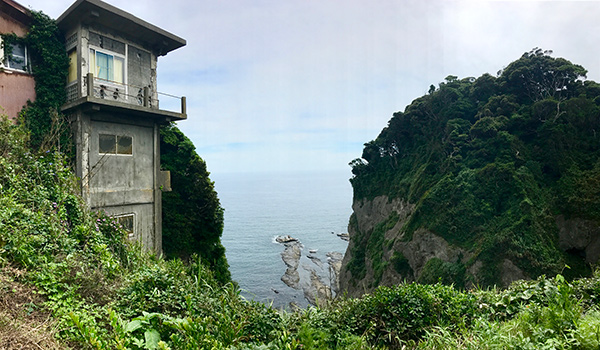
Utsunomiya, Tochigi, where Chandler Marshall lived while teaching abroad.
Where did you live?
I lived in the Tochigi Prefecture. The city I lived in was Utsunomiya, which is the capital of Tochigi. It’s a short 50-minute Shinkansen (bullet train) ride to Tokyo.
What did a typical day look like?
I worked for a private school where the program coordinator was good friends with the owner/boss. Two times a week I would have Baby Class (2–3 years old) from 9 am–12 pm. I would get to the school anywhere between 7:30/8 am to set up and prepare. Every day from 12–2pm I had a lunch break/time to lesson plan or prepare for classes. From 2:20–4:30 pm I taught my kindergarten class (5–6 year olds). From 4:30–6:30 pm I taught an elementary class (7–8 year olds). Once or twice a week I had an evening class until 7:30. These kids were ages 9–12 depending on the class or week.
Were there TESL/TEFL instructors from other countries at your school?
I worked at a small private school so the teachers I taught with were from America. In Utsunomiya, I met many expats/TESL instructors from all over the world.
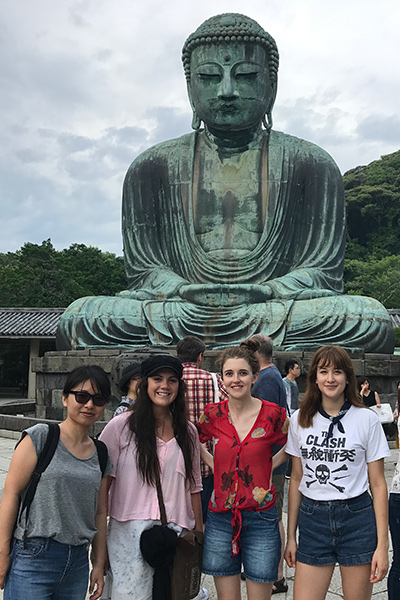
The Great Buddha (“Daibutsu”) of Kamakura is one of Japan’s most fascinating historical landmarks.
Do you have anecdotes to share: small world occurrences, unexpected humor, places you explored?
Something that was amazing to me was the level of respect in Japan. For example, no one talks on their phone on the trains out of respect for others who may want to sleep or just simply want it quiet. Also going up and down escalators was so intriguing because everyone stays on the left side so that if people want to walk, they have plenty of room on the right side. Also ALL THE VENDING MACHINES WERE LIFE SAVERS! Haha. They have sodas, teas, coffees, espresso, flavored waters, and even hot drinks in vending machine all throughout the country. You can’t walk more than 100 meters without running into a vending machine. Which is great because anytime you’re thirsty or need some coffee, the drinks are super accessible. (They even have some with beer and alcohol.) I explored many parts of Japan as well as many other countries in Asia. We had a good amount of time off, which made it very easy to travel and see what Japan and other countries in Asia had to offer.
How was the food?
The food is absolutely amazing. Options are endless when it comes to food in Japan. Whether you want an amazing sit-down restaurant, to street food/street markets, they have it all. People in Japan truly take pride in their food and very rarely did I have a meal that I wasn’t completely impressed with.
Tell us about some of the friendships you made.
I made many lifelong friendships here in Japan. First off, I have a wonderful relationship with my boss and we plan to stay connected throughout the future. On top of that, the teachers I worked with were great and friends that I will have forever. Outside of work, I met many amazing people from all over. I have friends who are from Japan, and friends who are teaching here as well. Its something really special to teach abroad and meet people you would never get to meet otherwise. These friends truly impact your experience and will be lifelong friends.
How long were you abroad, and what are you doing now?
I was here in Utsunomiya for a year. Though I could have renewed my contract, I will be heading home because there are some big family events happening in the near future. I am looking into other teaching jobs in Asia as well as Europe for the 2019 year. I know that I will return to Japan at some point in the near future and this country holds a special place in my heart.
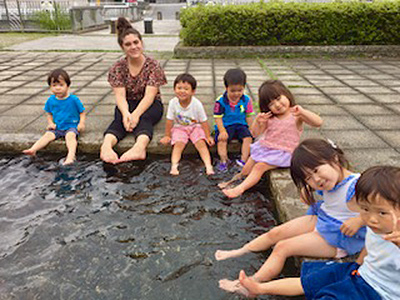
Marshall with summer school students.
What do you think are the biggest strengths of the TESL/TEFL Certificate program at SDSU?
I truly don’t think there is another program like the one at SDSU. It is so hands-on when it comes to observing and actually teaching in the classroom. On top of that, you have a new lesson daily on either English or how to teach English. You also present a lesson at the end of the week to show what you learned, and get constructive criticism to help for the future. It’s very unique compared to many certificates because it isn’t online and you get to practice in front of professionals and people who have been doing this for many years. Not only that, but post TESL certification, you receive so much support and help that can be very hard to do on your own. Which makes it so much easier to find the perfect job for yourself. This program is one-of-a-kind and one of the best decisions I could have made after graduating for SDSU.
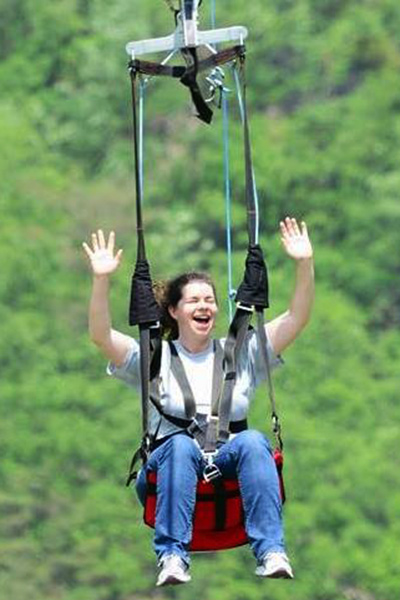
Ziplining at the Arii Hills Skywalk in Jeongseon, Gangwondo, Korea, after the 2016 Annual NET (Native English Teacher) Kickball event.
“Despite being successful in school and at work, and even attaining significant financial security, I never hit upon a career that seemed to fit me,” said Susan Zyphur, a 2006 graduate of UCSD. All that changed when she decided to teach English abroad. In a Google search, she found the SDSU American Language Institute, and within three months of completing the TESL/TEFL certificate program, was teaching in Korea.
“Attending SDSU’s ALI was one of the best decisions I’ve ever made, and it was the best money I’ve ever spent,” said Zyphur. “I would absolutely do it again, and I highly recommend it.”
She answered a few questions about her journey through the program, and her adventures in Korea and Japan.
Please give us a brief overview of your education and career.
I received my bachelor’s in psychology from UCSD. I did well in school, but every career I set as a goal never really worked out. My mother had always told me that I should be a teacher because I really enjoyed tutoring, but after seeing the difficulty my sister had in finding a job, not to mention her low salary, I never seriously considered it as a career. I tried studying other subjects at community college to find a career that spoke to me, and also tried working in business in various fields.
Why did you choose the TESL/TEFL Certificate program at SDSU’s American Language Institute?
I knew that I wanted to attend physical classes for my certificate and looked for a program that would provide in-class teaching experience. I had originally planned to enroll in UCSD’s certificate program, but after attending their open house I knew that it wasn’t for me. I did a Google search and found SDSU’s ALI program, and after emailing and meeting with the program director, I knew that SDSU’s ALI program would be perfect for me. The people I spoke with were friendly and liked their jobs, the students I met were happy to be there, the program could accommodate my full-time work schedule, and I could be teaching within a few months — there were no downsides!
How long did it take to complete?
I attended the evening program and finished in about 3 months.
How did the program’s free worldwide job placement assistance work?
It proved very helpful for me. The teacher training program coordinator provided me with the necessary documents to apply for the English program in Korea (EPiK). After teaching for a year in Korea, I found a job in Japan thanks to a job notification email from the program director. Just prior to returning home, I received another job notification email from the program director about a position in San Diego, and am now working at that school.
How soon after completing the program were you teaching English abroad?
I completed the program in November 2015 and left for Korea in mid-February 2016.
What made you choose the country you chose?
Being new to teaching, I wasn’t sure if I’d want to do it for more than a year. So, I wanted my first contract to be in a country that paid well, provided benefits and housing, and would pay for my flight to and from the country. I also wanted to work for a program with a good reputation so I wouldn’t worry about losing my job for reasons such as funding, etc. Korea’s government-sponsored EPiK was a good fit. Plus, I was looking forward to experiencing a culture that’s very different from my own.
Where did you live?
I lived in a tiny village in Gangwon-do in Korea, about 90 minutes from the North Korean border. In Japan, I lived in the city of Koriyama, in Fukushima province.
Templestay (sampling temple life) in Korea with foreign and native Korean friends.
What did a typical day look like?
In Korea I taught elementary and middle school students at several schools, and I went to a different school every day. But I never taught more than 20 “teaching hours” (40–45 minute blocks) per week, and no more than 40 hours per week (teaching hours + office hours). In Japan I taught ages 2–12, with 40 hours per week of actual teaching (preparation was done on my own time). I taught 2–4 year olds two mornings per week for 3 hours, and always taught ages 5–12 in the afternoons. One day a week I went to a local kindergarten and taught 3 different classes in the morning, and two days a week I had private lessons in the evenings. My weekends were always free.
Were there TESL/TEFL instructors from other countries at your school?
Yes! In Japan I worked with teachers from South Africa and the Netherlands. I was the only instructor at my schools in Korea, but there was another teacher in my village who taught at a few local elementary schools. He was from Canada.
Do you have anecdotes to share: small world occurrences, unexpected humor, places you explored?
I honestly can’t list all of the crazy, funny, interesting things that happened to me in Korea. It was an incredible experience and the culture is very different. For the most part, my experiences were good and the people were very friendly and kind. In Japan, I found the culture to be unique but more Western than Korea, so it felt a little more like home.
What dinner looks like in Korea.
How was the food?
I miss Korean food a lot! I’ll never forget the mudfish soup a local restaurant made — it doesn’t sound very appetizing, but it was delicious! I like spicy food so I adapted very easily to the food there. Unfortunately, I had a bad sushi experience in the U.S. years ago, so I’m not a big sushi fan. But I love onigiri (rice balls), and I have to say that the Japanese really know how to make good desserts. You can buy delicious eclairs everywhere, including every convenience store. I miss milk pudding, it was my favorite!
Asha the cat, born in Korea, now a U.S. citizen.
Tell us about some of the friendships you made.
I made incredible friendships in Korea that will stay with me forever. The other teacher who lived in my village became like my little brother, and we still talk. The Korean teachers that I worked with, and the Korean friends that I made, all have an open invitation to come stay with me in San Diego. They also became valuable resources when I applied to graduate school — all of my letters of recommendation came from my Korean coworkers. I even made a very unique friendship that followed me to Japan and then back to the U.S. — my cat, Asha, was born on a farm next to one of my schools in Korea. I also really valued my co-workers in Japan, who I still talk to, but I didn’t have as much time for socializing while I was there.
How long were you abroad?
I lived in Korea for a year and then in Japan for a year.
What are you doing now?
I’m back in San Diego for graduate school (I’ll be studying TESOL), and I’m working at an English school in Little Italy called Q International School. I love getting paid to do something I enjoy!
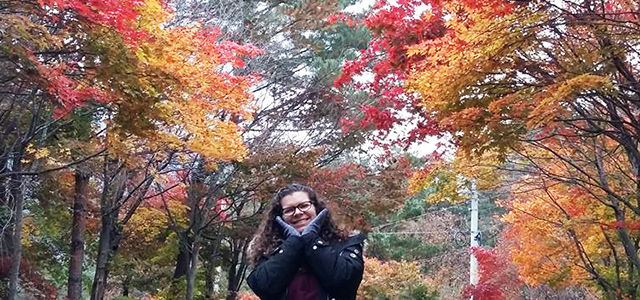
Autumn foliage in Injegun, Gangwondo, Korea.
What do you think are the biggest strengths of SDSU’s TESL/TEFL Certificate program?
The fact that all of the instruction is in-class makes a big difference; I was better prepared and had fewer problems because of it. The instructors are experienced and knowledgeable, and they can answer any questions you might have about the material you’re learning or the experience of teaching abroad. The evening program was also a huge factor in choosing SDSU’s ALI because I was working full time and my work schedule wasn’t very flexible. But the biggest benefit for me was the in-class experience requirement — learning by doing, with real students. My mentor, an ALI instructor, was very helpful and supportive, and I learned a lot from her.
Anything you’d like to add?
My life changed a lot after completing the program, and although my experiences abroad weren’t always fun, they were always interesting. I’ve grown so much as a person as a result of living and working abroad, and I’ve finally found a career that I feel passionate about. I owe part of that to the program director, the program coordinator, and the other ALI instructors for helping to prepare me to be a great EFL teacher.
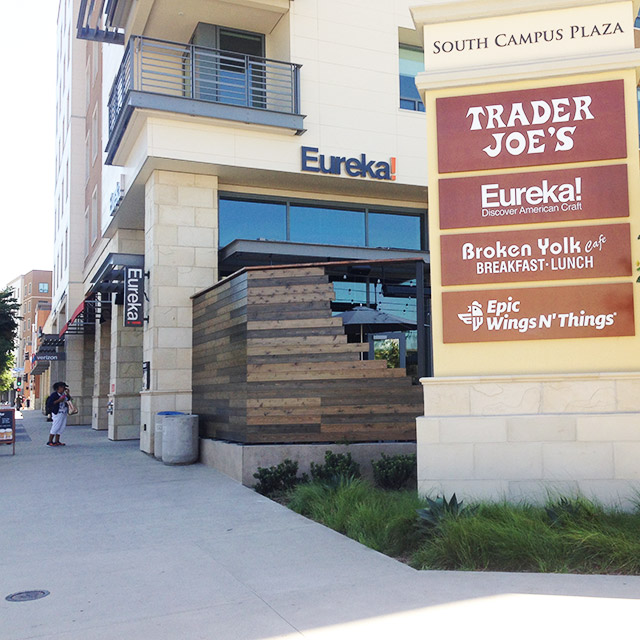
South Campus Plaza at the intersection of College Avenue and Lindo Paseo
The most perfectly located grocery store in America opened on May 19. At the intersection of College Avenue and Lindo Paseo, in the southeast corner of South Campus Plaza, is a gleaming new Trader Joe’s. Students had already left for summer break, so they don’t yet know the glory of this proximity to amazing food and drink from around the globe, plus free daily samples of treats like spicy gochujang-favored almonds, or mango and sticky-rice spring rolls.
More recently, on August 21, the California-based Eureka! opened on the north end of the plaza. This “All-American Scratch Kitchen & Craft Bar” specializes in gourmet burgers and American classics with a twist, such as Mac N’ Cheese Balls with beer cheese sauce and Fresno chiles, or Falafel Tacos. They also have 40 craft beers on tap – 22 are permanent, 19 are from local breweries, and one is from Redlands, in homage to the home of the first Eureka! restaurant, in northern California. The 3,000 square-foot outdoor patio overlooks the park next door, and will no doubt be a popular gathering place after live music or sporting events on campus.
Not new but certainly exciting is the Viejas Arena on the west end of campus, with its continuous line-up of live entertainment events. At the ticket office, students can also get discounted theme-park tickets to SeaWorld, Legoland, the San Diego Zoo, the San Diego Zoo Safari Park (formerly the Wild Animal Park), Six Flags Magic Mountain (Santa Clarita), Knott’s Berry Farm (Buena Park), and Universal Studios (Los Angeles). Transit passes (trolley and bus) are also available, as are AMC theater tickets good for movies that have been in theaters for at least two-weeks.
The Aztec Recreation Center (ARC) has world-class facilities — a state-of-the-art gym plus classes ranging from yoga and spin, to kickboxing and kayaking. Across the street is the Aztec Aquaplex with a 20-person spa and two large outdoor solar-heated pools — one with a gently sloping “beach entry” and the other with an inflatable obstacle course. There are also tennis courts next door.
On the east end of campus, the Conrad Prebys Student Union is yet another epicenter of fun, with the ARC Express satellite fitness center, and the Aztec Lanes bowling and games center with 12 bowling lanes, five professional-grade billiards tables, two professional-grade table tennis tables, and eight big-screen TVs.
For adventures beyond SDSU, the on-campus trolley is a quick and easy way to get to the Mission and Fashion Valley shopping centers, as well as watch SDSU football games at Qualcomm Stadium.
Additional Area Restaurants
The Daily Grind – A popular family-owned breakfast café (til 4 pm) with college-friendly prices.
Woodstock Pizza – A college favorite with great pizza, pints, and events such as Trivia Tuesdays at 8:30 pm.
Trujillos Taco Shop – This is a late-favorite, with unique burritos such as the Sigma Pi — a carne asada- or pollo asada-stuffed quesadilla wrapped in a giant burrito with French fries, guac, salsa, and sour cream.
Yogurtland – A mere mile away, this after-school hotspot has decadent frozen-yogurt flavors and fresh toppings plus a student discount.
Bangkok Poco Thai – Enjoy fantastic Thai and Asian Fusion food at affordable prices. Don’t miss the weekday lunch special.
Bistro Sixty & San Diego Desserts – Homey digs and a patio for simple upscale eats, from pasta to truffle fries, plus desserts and wine.
PHO Fifth Avenue – Traditional Vietnamese cuisine, from banh mi sandwiches to Pho noodles soups, plus smoothies and boba teas.
Just Sushi To Go – Don’t let the name fool you. You can eat in at this cozy, super-fresh sushi spot.Welcome back and enjoy the fall 2017 semester at SDSU!





 This beachfront neighborhood, known to locals as O.B.,